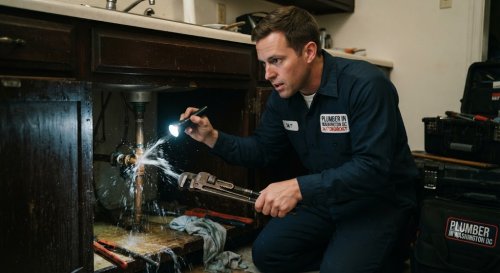
Plumbing Inspection Before Buying a Home in Washington DC
Learn what to look for during a Washington DC home plumbing inspection. Discover hidden pipe risks, sewer lines, old materials, and crucial buyer questions.


Why a Standard Home Inspection Isn't Enough for Plumbing
When purchasing a property, a standard home inspection typically involves running water at faucets, flushing toilets, and glancing under sinks to check for active leaks. While this baseline check is important, it scratches only the surface of how a residential plumbing system actually functions. Hidden supply lines inside walls, aging branch drains beneath floors, and private sewer laterals buried deep underground are rarely evaluated during a general property walk-through.
In Washington, DC, housing stock varies dramatically. A buyer might consider a historic rowhouse in Capitol Hill with multi-generational plumbing modifications, a mid-century detached home in Northwest with original supply piping, or a modern condominium in a converted multi-unit building. Each property type presents distinct structural and mechanical realities that a standard visual inspection cannot fully reveal. Understanding what lies beneath the floors and behind the walls can prevent unexpected repair bills shortly after closing.
Understanding the Anatomy of a Home Plumbing System
Before evaluating a property's plumbing health, it helps to view the system as two interconnected networks: the water supply system and the drainage, waste, and vent (DWV) system. Both networks rely on gravity, pressure, and material durability.
- Water Supply System: Delivers municipal water under pressure to fixtures and appliances. It relies on main shutoff valves, pressure regulators, and supply piping made of various materials depending on the era of construction.
- Drainage and Waste System: Carries wastewater away from sinks, tubs, toilets, and laundry equipment via gravity. It requires proper pipe slope and sizing to prevent blockages.
- Plumbing Vents: A network of vertical pipes extending through the roof that allows air to enter the drainage system. Vents equalize air pressure so water flows smoothly down drains without siphoning fixture traps.
During a pre-purchase evaluation, an inspector looks closely at how well these components interact. A slow drain or fluctuating water pressure is rarely an isolated quirk; it often signals a systemic condition within one of these networks.
Critical Areas to Examine Before Purchase
A comprehensive plumbing assessment looks beyond cosmetic fixtures to examine structural integrity, material longevity, and code compliance. Several key areas deserve special attention.
1. Pipe Materials and Age
The age of a Washington, DC home often dictates the types of piping materials installed. Older properties may still feature legacy materials that require careful evaluation:
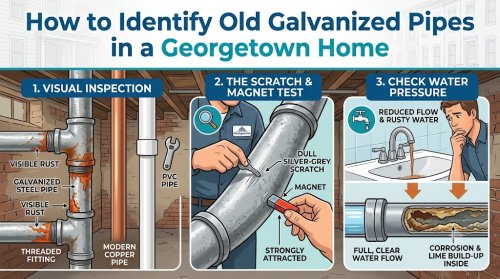
- Galvanized Steel: Common in homes built through the mid-20th century. Over decades, internal mineral buildup restricts water flow and causes rust, eventually leading to leaks or low pressure.
- Cast Iron: Frequently used for main drain and sewer lines in older homes. While durable, cast iron has a finite lifespan and can develop internal scaling, cracking, or bottom-side corrosion from corrosive wastewater.
- Polybutylene: Flexible plastic supply piping found in some homes built from the 1970s to the 1990s, known for potential brittleness and fitting failures.
- Copper and PEX: Modern standards. Copper is durable but can suffer from pinhole leaks in certain water chemistry conditions, while cross-linked polyethylene (PEX) offers flexibility and freeze-resistance.
An inspector should determine whether previous renovations updated only visible supply lines while leaving older, deteriorated pipes hidden in walls or beneath basements.
2. Main Water Shutoff and Pressure
Locating the main water shutoff valve is one of the most critical safety checks for a homebuyer. In an emergency, every second counts. If the main valve is seized, corroded, or hidden behind finished basement walls, stopping a major leak becomes significantly harder.
Additionally, water pressure must be measured. Excessively high pressure—often exceeding 80 pounds per square inch (psi)—places chronic stress on water heaters, washing machine hoses, and fixture valves, increasing the likelihood of sudden joint failures. If a pressure-reducing valve (PRV) is present, its functionality should be tested.
3. Water Heater Age and Condition
Water heaters operate under constant thermal stress. Buyers should check the manufacture date label on the tank, typically located near the rating plate. Most tank-style water heaters have a practical lifespan of 8 to 12 years. Beyond that window, internal tank corrosion can lead to sudden leaks. An evaluation should also check for proper temperature and pressure (T&P) relief valve piping, seismic strapping where applicable, and adequate combustion venting for gas units.
Underground Realities: Sewer Line Inspections
Perhaps the most critical—and frequently overlooked—component of a home purchase is the private sewer lateral. This is the underground pipe that carries all household wastewater from the building foundation out to the municipal sewer connection at the street or alley.
In older Washington, DC neighborhoods, mature street trees and aging clay or cast iron sewer laterals create frequent opportunities for tree root intrusion, offset joints, cracking, and structural collapse. Because a sewer backup can cause extensive property damage and high cleanup costs, requesting a dedicated sewer camera inspection is widely considered a prudent step for homebuyers.
A specialized camera is pushed through the cleanout or main drain to record the interior condition of the pipe. It can reveal bellies (sags where water pools), root masses, grease buildup, or structural damage. However, a camera inspection cannot determine the precise thickness of pipe walls or predict the exact day a pipe will fail, providing instead a clear baseline of its current physical condition.
Rowhouses, Basements, and Shared Plumbing Nuances
Properties in the District often feature architectural layouts that influence plumbing design and maintenance.
- Rowhouse Plumbing: Attached rowhomes share common party walls, and in some older configurations, internal drainage stacks or water supply lines may be closely packed or routed in ways that complicate access. A renovation that enclosed plumbing behind finished drywall can make future repairs more invasive.
- Basements and Sub-Grade Draining: Many DC basements feature floor drains designed to catch surface water or laundry discharge. These often connect to the main sanitary sewer line. In heavy rainfall events, overwhelmed municipal systems can surcharge, causing water to back up through basement floor drains unless a properly maintained backwater valve or overhead sewer system is installed.
- Condominiums and Shared Systems: Buyers purchasing a condo unit must distinguish between private fixtures and building-wide infrastructure. Shared drain stacks, main supply lines, and building boilers usually fall under the responsibility of the condominium association or property management, whereas individual branch lines and fixtures inside the unit belong to the owner. Reviewing governing documents and recent association meeting minutes can reveal historical plumbing issues in the building.
What a Homebuyer Can Safely Check
While an invasive diagnostic evaluation requires specialized equipment, a buyer can perform several safe visual and operational checks during a walkthrough:
- Turn on all faucets simultaneously to check if water pressure drops dramatically at upper-floor fixtures.
- Observe how quickly sinks, tubs, and showers drain. A slow drain can indicate localized hair clogs or a deeper vent or sewer restriction.
- Flush each toilet and listen for proper refill cycles and running water after the flush completes.
- Inspect accessible areas beneath sinks and around the water heater for active dampness, mineral stains, or corrosion on shutoff valves.
- Check the walls and ceilings directly below bathrooms for water stains or fresh drywall patches that might indicate past fixture leaks.
Buyers should never attempt to force seized shutoff valves, cut into drywall, open electrical junction boxes near plumbing components, or tamper with gas supply connections.
Evaluating Repair, Replacement, and Cost Factors
If an inspection reveals plumbing deficiencies, negotiating repairs or credits before closing is standard practice. Understanding what drives plumbing costs helps buyers evaluate contractor estimates realistically.
Plumbing repair costs depend heavily on access complexity. A pipe leak located in an open unfinished basement ceiling is straightforward to repair, whereas a leaking pipe buried beneath a concrete basement slab or hidden inside a finished tile bathroom wall requires labor-intensive demolition and restoration. Similarly, sewer line replacement costs vary based on depth, soil conditions, surface paving (such as concrete sidewalks or historic brick pavers), and whether trenchless lining methods can be used instead of traditional excavation.
Distinguishing between cosmetic updates (replacing an outdated vanity faucet) and structural remediation (replacing corroded galvanized supply lines or a collapsed sewer lateral) is essential when assessing the true financial commitment of a new home.
Questions to Ask Before Approving Plumbing Work or Waiving Contingencies
When reviewing a professional plumbing inspection report, smart buyers ask targeted questions before removing inspection contingencies:
- What is the remaining estimated service life of the water heater and major piping?
- Did the sewer camera inspection show active root intrusion, structural damage, or pipe deformation?
- Are the shutoff valves operational, and can the water supply be completely isolated in an emergency?
- Does the drainage system vent properly, or do fixtures gurgle when multiple appliances operate together?
- For rowhouses or older properties, have previous owners performed partial repiping that leaves older pipe segments in place?
- For condominiums, does the association maintain adequate reserve funds for shared stack and main line replacements?
Verifying current District of Columbia building codes, permit requirements, and utility responsibilities with appropriate local authorities or qualified professionals ensures that any post-purchase plumbing modifications comply with local standards.
Frequently Asked Questions
- Should I always get a sewer camera inspection when buying a home in Washington DC? Yes, particularly for older homes with mature trees or cast-clay sewer laterals. A sewer line replacement can cost thousands of dollars, making a camera inspection a low-cost preventive measure against unexpected post-purchase expenses.
- How can I tell if a home has galvanized steel pipes if they are hidden behind walls? An inspector can check exposed pipe sections in the basement, crawl space, or utility closet. If the main lines are galvanized, it is highly likely that branch lines inside the walls are also galvanized, even if visible supply lines were updated near sinks.
- What does low water pressure throughout an entire house indicate? Whole-house low pressure often points to a failing pressure-reducing valve (PRV), a partially closed main water shutoff, or severe mineral restriction inside older supply pipes. It differs from low pressure at a single fixture, which usually stems from a clogged aerator or local shutoff valve restriction.
- Are basement floor drains in DC homes prone to sewer backups? Yes, during heavy rainfall events, combined municipal sewer systems can become overwhelmed, causing water to back up into lower-level drains. Checking for a functioning backwater valve or installing an overhead sewer system helps mitigate this risk.
- Who is responsible for plumbing repairs in a Washington DC condominium? Responsibility typically depends on whether the component is private or shared. Individual unit owners generally maintain fixtures and branch lines within their walls, while the condominium association manages shared vertical stacks, building supply mains, and common structural elements. Reviewing your condo bylaws clarifies these boundaries.
- Is the age of a water heater enough reason to replace it before moving in? Age alone is not an absolute rule, but units approaching or exceeding 10 to 12 years carry a higher risk of tank failure. If a water heater is past its typical lifespan, buyers often negotiate a credit or replacement to avoid immediate water damage after moving in.