Sewer Backup in Washington, DC: What Should You Do First?
Learn what to do first during a sewer backup in Washington, DC, including safety steps, causes, cleanup, repair options, costs, and prevention tips.
Sewer Backup in Washington, DC: What Should You Do First?
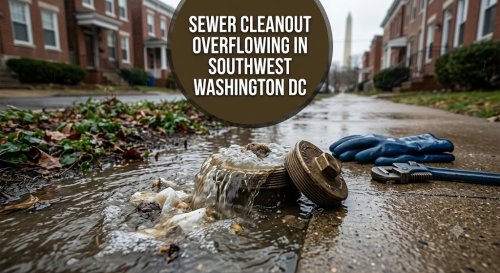
A sewer backup is more than an unpleasant plumbing problem. When wastewater comes back through a toilet, floor drain, bathtub, or sink, it can quickly contaminate your home, damage flooring and walls, create unpleasant odors, and expose your family or employees to potentially harmful contaminants.
For homeowners and businesses in Washington, DC, the first priority is safety and stopping additional wastewater from entering the property. DC Water recommends immediately reporting a sewer backup to its 24-hour Water and Sewer Emergency Line at 844-833-2093. DC Water can investigate whether the public sewer is involved. If the public sewer is clear, the property owner may need a registered master plumber to clear the private sewer lateral serving the property.
Understanding what to do before the plumber arrives can help limit damage and prevent a bad situation from becoming worse.
What Is a Sewer Backup?
A sewer backup occurs when wastewater cannot flow normally through the sewer system and reverses direction, entering a home or business through a plumbing fixture or drain.
You may notice:
- Dirty water coming from a floor drain
- Sewage rising from a basement toilet
- Wastewater backing up into a bathtub
- Foul odors coming from drains
- Multiple drains becoming slow at the same time
- Gurgling toilets or sinks
- Wastewater appearing when another fixture is used
- Standing contaminated water in a basement or lower level
DC Water describes an internal sewer backup as wastewater overflowing through fixtures such as toilets, floor drains, or area drains.
A backup may originate in the property's private sewer lateral, the public sewer main, or from an obstruction or surcharge caused by heavy rainfall.
What Should You Do First During a Sewer Backup?
1. Stop Using Water Immediately
The first practical step is to stop adding water to the plumbing system.
Do not:
- Flush toilets
- Take showers
- Run the washing machine
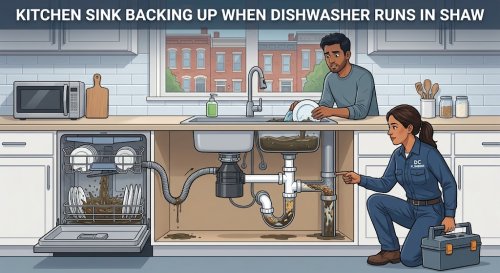
- Run the dishwasher
- Use sinks unnecessarily
- Run other appliances that discharge wastewater
If the sewer line is blocked, additional water has nowhere to go and may come back into the property.
2. Keep People and Pets Away From the Sewage
Do not allow children or pets into the affected area.
Sewage-contaminated water should be treated as potentially hazardous. Avoid unnecessary skin contact, and do not walk through contaminated water unless there is no safer alternative.
If someone must enter the area, appropriate protective equipment and precautions are important.
3. Stay Away From Electrical Hazards
If sewage or standing water has reached electrical outlets, appliances, extension cords, or other electrical equipment, stay out of the affected area.
Do not stand in water while attempting to unplug appliances or operate electrical equipment.
If electrical power can be disconnected safely from a dry location, follow appropriate safety procedures. Otherwise, have a qualified professional handle the situation.
4. Call DC Water
Washington, DC residents experiencing a sewer backup should contact DC Water's 24-hour Water and Sewer Emergency Line at 844-833-2093. DC Water can investigate whether the public sewer system is contributing to the backup.
This step is especially important when the backup is occurring on a lower level or appears to involve more than one fixture.
5. Call a Qualified Plumber When Appropriate
If DC Water determines that the public sewer main is clear, the problem may be located in the private sewer lateral serving your property.
DC Water states that property owners are responsible for maintaining the sewer service line and, when the public main is clear, may need to hire a registered master plumber to clear the private lateral.
A plumber can inspect the private sewer line, locate the obstruction, and determine whether cleaning, repair, or replacement is necessary.
Why Does a Sewer Backup Happen?
There is rarely just one possible cause.
Tree Roots
Tree roots can enter older sewer lines through joints, cracks, or damaged sections. Once inside, roots can collect waste and gradually restrict wastewater flow.
Grease and Fat Buildup
Pouring cooking grease, fats, and oils down drains can contribute to buildup inside sewer pipes. Over time, the opening available for wastewater can become smaller.
Flushing the Wrong Materials
Wipes, paper products, feminine hygiene products, and other materials that do not break down easily can contribute to blockages.
Collapsed or Damaged Sewer Pipes
An aging sewer line may crack, shift, collapse, or develop separated joints. A recurring backup may indicate that the problem is more than a simple clog.
Soil Movement
Settlement or movement around underground plumbing can affect pipe alignment and connections.
Heavy Rainfall
Heavy rain can place additional pressure on sewer systems. DC Water notes that sanitary sewer overflows can occur from excessive rainfall, while properties can also experience backups associated with sewer-system surcharges.
How Can You Tell Where the Blockage Is?
One of the most useful clues is how many fixtures are affected.
If only one toilet or sink is backing up, the blockage may be closer to that fixture.
If several fixtures on the lowest level are backing up at the same time, the problem may be farther downstream in the property's sewer lateral.
For example, if flushing an upstairs toilet causes wastewater to rise from a basement floor drain, that suggests the obstruction may be farther along the drainage system rather than inside the upstairs toilet itself.
This is one reason professional diagnosis matters.
Can You Fix a Sewer Backup Yourself?
A simple fixture-level clog may sometimes be handled with a plunger or appropriate basic tool.
A whole-home sewer backup is different.
Avoid repeatedly flushing toilets or running water to "test" whether the blockage has cleared. You could send additional wastewater into the property.
Chemical drain cleaners are also a poor choice for a serious sewer blockage. They may not reach the obstruction effectively and can create additional hazards for anyone who later has to work on the line.
When multiple fixtures are affected or sewage is entering the property, professional diagnosis is usually the better approach.
How Does a Professional Diagnose a Sewer Backup?
A professional plumber may use several methods depending on the situation.
Initial Inspection
The plumber asks about symptoms, affected fixtures, previous backups, recent weather, and the age and condition of the plumbing.
Drain Cleaning
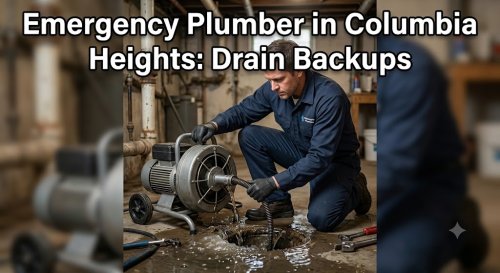
Depending on the blockage, professional equipment may be used to clear accumulated debris, grease, roots, or other obstructions.
Sewer Camera Inspection
A sewer inspection camera can provide a view inside the pipe.
This can help identify:
- Tree roots
- Cracks
- Separated joints
- Heavy buildup
- Pipe deformation
- Collapsed sections
- Foreign objects
- Other structural problems
Locating the Problem
If necessary, specialized equipment can help determine where a damaged or blocked section is located.
Repair Recommendation
After identifying the cause, the plumber can explain whether cleaning is sufficient or whether the sewer line requires repair or replacement.
How Long Does Sewer Backup Repair Take?
The timeline depends on the cause.
A straightforward blockage may be cleared during one service visit.
A severe root intrusion may require more extensive cleaning and inspection.
A collapsed or severely damaged sewer line can take considerably longer because excavation, pipe replacement, permits, restoration, or specialized repair methods may be involved.
If the backup is caused by a public sewer problem, the timeline will depend on the utility's investigation and repair process.
How Much Does Sewer Backup Repair Cost?
There is no reliable fixed price for sewer backup repair.
The cost may depend on:
- Cause of the backup
- Severity of the blockage
- Sewer line location
- Accessibility
- Pipe material
- Pipe diameter
- Root intrusion
- Cleaning requirements
- Camera inspection
- Emergency service
- Repair versus replacement
- Excavation requirements
- Property restoration
- Permits and inspections, where applicable
A simple blockage and a collapsed sewer line are completely different projects.
Ask the plumber whether the quoted work includes diagnosis, cleaning, inspection, and any necessary follow-up repairs.
What Should You Do About Sewage Cleanup?
Stopping the backup is only part of the solution.
Sewage-contaminated areas may require professional cleanup and disinfection, particularly when porous materials such as drywall, carpeting, insulation, or upholstered furniture have been affected.
DC Water advises homeowners to seek immediate relief through their homeowner's insurance when appropriate and notes that cleanup and damage are often the property owner's responsibility.
Do not assume that standard homeowners insurance automatically covers sewer backup damage. The District's Department of Insurance, Securities and Banking notes that sewer-line backup and water-backup protection may require additional coverage or endorsements.
Hidden Truths Homeowners Should Know
The Backup May Not Be Your Plumber's Fault
A backup can originate in the public sewer system or the private sewer lateral. Identifying responsibility requires investigation.
The Visible Water Is Not the Whole Problem
Sewage may travel underneath flooring, behind walls, or into other areas before you notice it.
A Cleared Drain Does Not Guarantee a Healthy Sewer Line
If a plumber clears a blockage but the line has roots, cracks, or structural damage, the backup may return.
Repeated Backups Are a Warning
A sewer line that backs up repeatedly deserves further investigation rather than repeated emergency cleanings.
Heavy Rain Can Change the Situation
During major storms, sewer systems can experience increased flows and surcharges. DC Water encourages residents to report suspected sewer backups through its emergency system.
Common Mistakes to Avoid
Continuing to Use the Plumbing
More wastewater can worsen the backup.
Using Chemical Drain Cleaners
These products are not a dependable solution for a major sewer blockage and can create hazards during subsequent plumbing work.
Flushing Again to Test the Drain
A second flush can send more wastewater into an already blocked system.
Cleaning Sewage Without Proper Protection
Sewage can contain contaminants. Use appropriate precautions or hire a qualified restoration professional.
Ignoring a Recurring Backup
Repeated backups may indicate roots, pipe damage, or a structural problem.
Assuming the Sewer Main Is Blocked
The blockage may be in the private lateral. DC Water recommends reporting the emergency so the public sewer can be investigated.
Failing to Document Damage
Take photographs and keep invoices and repair documentation.
How Can You Prevent Future Sewer Backups?
Regular maintenance can reduce the likelihood of recurring problems.
- Never pour grease down drains.
- Do not flush wipes or unsuitable products.
- Address slow drains promptly.
- Investigate recurring toilet backups.
- Have older sewer lines professionally inspected.
- Consider a sewer camera inspection if backups recur.
- Monitor large trees near underground sewer lines.
- Keep accessible cleanouts clear.
- Ask a plumber about root-control options when appropriate.
- Consider a backwater valve if your property is vulnerable.
- Review your insurance coverage for sewer backup.
- Inspect plumbing after major weather events.
- Keep records of previous sewer repairs.
- Have recurring backups professionally diagnosed instead of repeatedly snaking the line.
Can a Backwater Valve Prevent a Sewer Backup?
A backwater valve can provide an additional layer of protection for some properties.
DC Water explains that a backwater valve, also called a backflow prevention device, can allow wastewater to flow out while helping prevent it from flowing back into a building during certain sewer surcharges or backups.
However, a backwater valve is not a substitute for proper sewer maintenance. It also needs to be appropriate for the property's plumbing configuration and maintained properly.
DC Water notes that installation of a backwater valve requires a DC plumbing permit obtained by a DC-licensed Master Plumber.
When Is a Sewer Backup an Emergency?
Treat a sewer backup as an urgent plumbing problem when:
- Sewage is actively entering the home.
- Multiple drains are backing up.
- A basement is flooding with wastewater.
- Contaminated water is near electrical equipment.
- The backup occurs during heavy rainfall.
- You cannot determine where the blockage is.
- The property has vulnerable occupants, children, or pets.
- The sewer backup continues despite stopping water use.
- There is a strong sewage odor accompanied by visible wastewater.
In Washington, DC, report a suspected sewer backup to DC Water's 24-hour emergency line at 202-612-3400.
People Also Ask About Sewer Backups in Washington, DC
What should I do first when my sewer backs up?
Stop using water, keep people and pets away from contaminated areas, avoid electrical hazards, and report the backup to DC Water. If the public sewer is clear, contact a qualified plumber to investigate the private sewer lateral.
Should I call a plumber or DC Water first?
For a sewer backup in Washington, DC, DC Water recommends immediately reporting the emergency so it can investigate the public sewer. If the public sewer is clear, you may need a registered master plumber for the private sewer lateral.
Why does my basement drain keep backing up?
A recurring basement backup may be caused by a blockage in the sewer lateral, tree roots, grease buildup, damaged pipe, or another restriction farther downstream.
Can heavy rain cause a sewer backup?
Yes. Heavy rainfall can increase flows in sewer systems and contribute to sewer overflows or backups in vulnerable areas.
Is sewer backup water dangerous?
Sewage-contaminated water should be treated as potentially hazardous. Avoid unnecessary contact and keep children and pets away from contaminated areas.
Can I use a plunger for a sewer backup?
A plunger may be appropriate for an isolated fixture clog. If several fixtures are backing up or sewage is entering through a floor drain or lower-level fixture, professional diagnosis is more appropriate.
How do I know if my sewer line is broken?
Recurring backups, unusually slow drainage throughout the property, sewage odors, wet areas, sinkholes, or problems that return shortly after cleaning can indicate a damaged sewer line. A sewer camera inspection can help identify structural problems.
How often should sewer lines be inspected?
There is no universal schedule for every property. Older homes, properties with large trees, and homes with recurring backups may benefit from professional inspection.
Does homeowners insurance cover sewer backups?
It depends on the policy. The District's insurance regulator notes that sewer backup and water-backup coverage may require an endorsement or additional protection.
Can a backwater valve prevent sewer backups?
A properly installed backwater valve can help prevent wastewater from flowing backward into a building during certain sewer surcharges. It is not a complete substitute for sewer maintenance or repair.
How to Choose a Sewer Backup Plumber in Washington, DC
When choosing a plumber for a sewer backup, look for someone who can diagnose the problem rather than simply clear the immediate blockage.
Ask:
- Are you properly licensed for this work?
- Can you inspect the sewer lateral?
- Will you explain what caused the backup?
- Is a sewer camera inspection recommended?
- Does the estimate include cleaning and diagnosis?
- Could the problem involve the public sewer?
- Will additional repairs be necessary?
- Are emergency charges explained before work begins?
- Are permits required for the proposed repair?
A professional should be willing to explain the difference between clearing a blockage and repairing a damaged sewer line.
Why Choose plumberinwashingtondc for Sewer Problems?
For homeowners and businesses looking for sewer plumbing assistance in Washington, DC, plumberinwashingtondc provides a point of contact for discussing plumbing and sewer concerns.
Before authorizing work, ask for a clear diagnosis, scope of work, estimated timeline, and explanation of applicable charges. For significant sewer-line repairs, confirm licensing and any applicable DC permitting requirements.
You can contact plumberinwashingtondc at 844-833-2093 or visit plumberinwashingtondc.
Final Takeaway
When sewage starts backing up into your Washington, DC property, stop using the plumbing immediately. Keep children and pets away, avoid contact with contaminated water, and stay away from electrical hazards.
Then report the sewer emergency to DC Water so the public sewer can be investigated. If the public system is clear, a qualified plumber can inspect and clear the private sewer lateral.
Do not assume that clearing today's blockage means the sewer line is healthy. If the problem keeps returning, ask about a sewer camera inspection and investigate possible root intrusion, pipe damage, or other structural problems.