Introduction
There is nothing quite like the jarring shock of turning on your kitchen faucet only to have water blast violently across the room, splashing everywhere and threatening to crack your ceramic glassware. If you are noticing stiffness in your fixtures, hammering pipes behind the walls, or mysterious leaks forming out of nowhere, you are likely dealing with high water pressure. Property owners across Washington, DC, from historic row houses in Capitol Hill to modern builds in Navy Yard, frequently encounter pressure spikes driven by municipal supply adjustments and aging municipal infrastructure. Ignoring this surging force places an immense strain on your entire plumbing ecosystem. Immediate attention is vital to prevent catastrophic hose blowouts, appliance failures, and costly structural water damage unique to our urban environment.
What Is High Water Pressure? Decoding the Mechanism
To understand this issue, it helps to look at how a healthy residential water system operates. Municipal water utilities deliver water to your property at high velocity to ensure it reaches every neighborhood. However, safe household water pressure typically ranges between 50 and 70 psi (pounds per square inch). Anything consistently pushing past 80 psi crosses into dangerous territory.
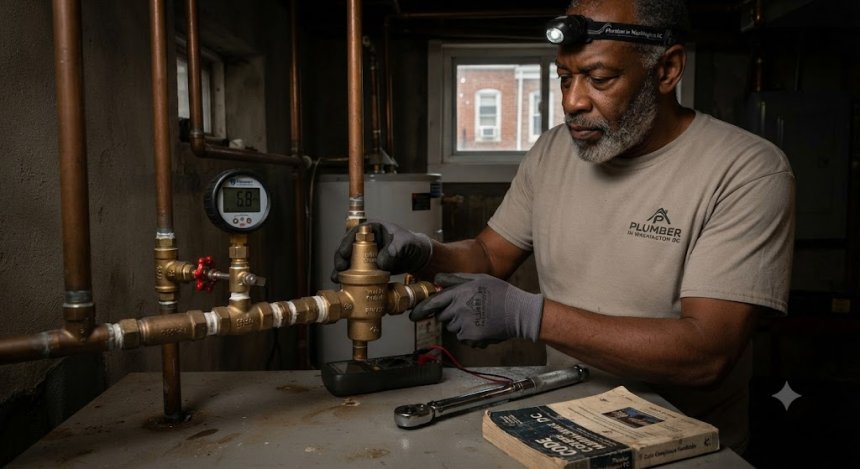
The primary guardian against this surge is a small brass device known as a Pressure Reducing Valve (PRV), usually installed where the main water line enters your home. When a PRV fails or wears down, it stops throttling that incoming velocity.
Picture a historic row house in Dupont Circle: the municipal line surges during low-demand night hours, and an aging, calcified PRV lets that unbridled force slam directly into older supply lines, straining joints and faucet cartridges until they rupture.
Critical Warning Signs: When Your Home is Sounding the Alarm
High water pressure does not always announce itself with a dramatic pipe explosion right away. Often, it leaves subtle clues that smart property owners learn to recognize before structural failure strikes:
-
Auditory Clues: Loud banging noises when turning off a faucet (water hammer), high-pitched whistling sounds echoing through the walls, or constant rattling in the supply lines.
-
Fixture and Appliance Failures: Frequently having to replace dripping faucets, premature burnout of water heater tanks, or washing machine hoses bulging and bursting.
-
Subtle Structural Shifts: Unexplained spikes on your monthly water meter reading even when no fixtures are actively running, damp patches near drywall entries, or weeping joints beneath sinks.
Delaying intervention sets off a cascade of destructive risks. Constant high-velocity stress weakens pipe joints, eventually leading to hidden leaks that fuel mold acceleration, rot subflooring, and compromise your home's structural framing.
Root Causes: Why This Problem Occurs in DC Homes
High water pressure and related failures are rarely random. They are deeply tied to the unique infrastructure, environmental conditions, and architecture found throughout Washington, DC:
-
Municipal Grid Fluctuations: DC Water manages massive pumping stations and drastic elevation changes across the city. Neighborhoods sitting at lower elevations often experience naturally elevated baseline pressure straight from the street mains.
-
PRV Degradation and Failure: Internal springs and diaphragms inside pressure reducing valves wear down after years of continuous friction, mineral scaling, and heavy municipal flow.
-
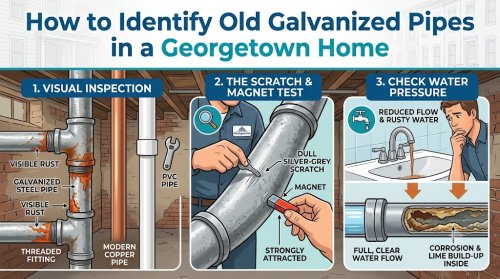
Aging Infrastructure Materials: Many older DC properties still feature aging supply lines, brittle galvanized steel, or vintage copper that loses structural integrity under persistent high stress.
-
Thermal Expansion: Closed-loop plumbing systems equipped with backflow preventers or thermal expansion tanks trap heated water with nowhere to expand, artificially inflating system pressure during heating cycles.
-
Hard Water and Mineral Scaling: Local mineral content causes calcium deposits to build up inside valves and regulators, preventing them from sealing or adjusting correctly.
Professional Diagnostic & Repair Workflow
When you call in a licensed professional to tackle chronic pressure issues, they follow a rigorous, step-by-step methodology to ensure safety and precision:
-
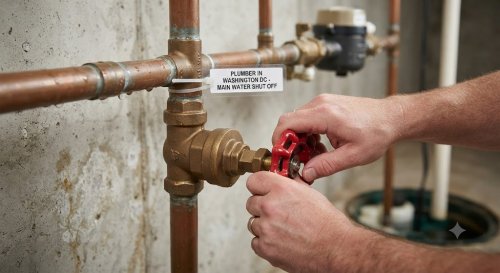
Non-Invasive Triage & Safety Isolation: The technician immediately shuts off the main supply if active flooding is detected and isolates vulnerable zones to prevent further stress on fragile fixtures.
-
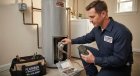
Precision Diagnostic & Digital Video Inspection: Using calibrated pressure gauges attached to exterior hose bibs or laundry connections, the plumber measures exact psi readings across different zones of the home.
-
Transparent, Upfront Options & Written Estimating: You receive a clear, flat-rate pricing breakdown detailing whether the solution requires a simple PRV cartridge replacement, a total valve overhaul, or thermal expansion tank installation.
-
Code-Compliant Remediation & Part Replacement: The plumber safely removes the failed hardware, installs commercial-grade pressure regulators meeting local DC plumbing codes, and integrates proper unions for future serviceability.
-
Pressure Testing, Flow Verification, & Clean-Up: The system undergoes rigorous pressure testing to ensure steady output between 50-70 psi, followed by a thorough workspace cleanup.
Financial Breakdown: Cost Factors & Investment Realities
Understanding the financial investment involved in pressure correction helps homeowners plan effectively. Professional flat-rate pricing is determined by several specific variables:
-
Diagnostic and Dispatch Fees: Standard service call charges cover travel and the initial gauge testing required to map out your home's pressure profile.
-
Valve Accessibility: Replacing an easily accessible PRV in an open basement utility room is straightforward, whereas cutting through tight drywall enclosures or cramped crawlspaces requires extra labor time.
-
Hardware Quality & Add-ons: Commercial-grade brass PRVs, integrated thermal expansion tanks, and upgraded shut-off valves represent an investment in long-term reliability.
-
Code Compliance Upgrades: Modern DC building codes may require retrofitting older supply configurations with updated backflow protection or thermal expansion compliance during major repairs.
Investing in a proper pressure fix costs a fraction of what you would spend repairing a major ceiling collapse from a blown-out pipe fitting.
Advanced Diagnostics: The Professional Tool Arsenal
Licensed technicians rely on advanced equipment to take the guesswork out of plumbing diagnostics:
-
Digital Manometers and Pressure Gauges: Provide exact, real-time psi readouts across multiple household fixtures to pinpoint pressure drops and surges accurately.
-
Electronic Acoustic Leak Detectors: High-sensitivity listening devices that detect the faint hiss of pressurized water escaping behind finished walls or concrete slabs.
-
Push-Rod High-Definition Inspection Cameras: Allow plumbers to look inside main water supply lines and drain systems to check for internal scale buildup or joint degradation.
-
Thermal Imaging Infrared Cameras: Reveal hidden temperature differentials behind walls, exposing slow leaks caused by compromised, high-pressure fittings before they cause visible surface damage.
DIY Reality Check: What You Can Safely Fix vs. When to Step Back
It is empowering to know what you can handle and when it is time to call an expert:
-
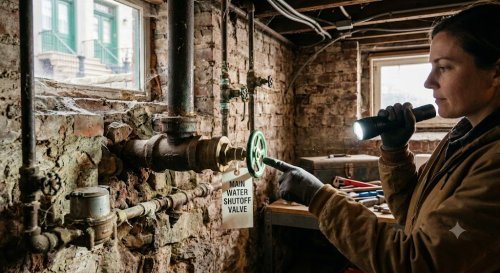
Safe Homeowner Actions: Monitoring your hose bibs with a screw-on pressure gauge from a hardware store, checking your water heater temperature settings, or shutting off the main water valve in an absolute emergency.
-
The Danger Zone: Attempting to adjust or replace a main Pressure Reducing Valve without specialized pipe wrenches, torch kits, or knowledge of local shut-offs can snap aged copper lines, resulting in indoor flooding or electrical shock hazards near water heaters.
-
When to Call a Pro: If your pressure gauge reads above 80 psi, if your PRV is leaking or completely seized, or if you hear persistent water hammering, drop the wrench and bring in a licensed specialist.
Comprehensive Home Plumbing Maintenance Framework
Keep your plumbing system running smoothly year-round by adopting a structured maintenance routine:
-
Spring & Summer Checks: Inspect outdoor hose bibs for winter cracking, test your sump pump operation during heavy seasonal storms, and clear debris away from main foundation grading.
-
Fall & Winter Preparation: Insulate exposed supply lines in unheated areas, disconnect garden hoses before freezing temperatures arrive, and flush your water heater tank to clear sediment buildup.
-
Year-Round Habits: Install mesh hair and food strainers on all sink and shower drains, test your PRV gauge reading every six months, and completely avoid harsh chemical drain cleaners that eat away at pipe walls.
Unique Expert Insights: Hard Truths Homeowners Learn Too Late
Over 15 years in the field, licensed master plumbers see recurring mistakes that cost homeowners dearly:
-
Temporary rubber patch kits and tape only mask deeper system failures and will often void standard home insurance clauses if a major flood occurs.
-
Harsh chemical drain openers generate extreme heat and corrosive reactions that degrade pipe joints from the inside out, worsening pressure vulnerabilities.
-
Unlicensed handymen often bypass municipal permit requirements, creating hidden code violations that fail during real estate home inspections when you try to sell.
-
Proactive maintenance plans and annual pressure checks cost a fraction of a single emergency midnight water extraction and drywall repair.
Emergency Protocol: When Immediate Dispatch is Non-Negotiable
Certain plumbing scenarios demand immediate, 24/7 professional intervention to safeguard your property:
-
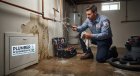
Catastrophic Pipe Bursts: Uncontrolled high pressure causing a main supply line rupture that floods living areas or basements rapidly.
-
Complete Main Line Blockages: Total sewer backups forcing raw sewage up through floor drains and ground-floor fixtures.
-
Total Loss of Potable Water: Complete supply failure leaving a home or commercial facility entirely without safe drinking and sanitation water.
-
Overflowing Fixtures Near Electrical Panels: Major leaks or pipe failures threatening active electrical outlets, breaker boxes, or water heater wiring.
Frequently Asked Questions (FAQs)
What is a safe water pressure level for a Washington, DC home?
Safe residential water pressure typically falls between 50 and 70 psi. Anything exceeding 80 psi puts severe stress on your plumbing fixtures, valves, and supply hoses.
How do I know if my Pressure Reducing Valve (PRV) is broken?
If you notice a sudden spike in fixture force, rattling pipes, or if a gauge attached to your outdoor spigot reads well above 80 psi, your PRV has likely failed and needs replacement.
Can high water pressure cause my water heater to leak?
Yes. Excessive pressure combined with thermal expansion puts intense strain on the water heater tank walls and temperature-relief valves, often causing premature tank failure.
Are DC municipal water supplies known for high pressure?
Due to elevation changes and municipal boosting stations across the District, certain neighborhoods naturally receive high baseline water pressure directly from the street mains.
Can I adjust a Pressure Reducing Valve myself?
Most PRVs feature an adjustment bolt with a locknut, but adjusting them blindly without a pressure gauge attached can damage internal diaphragms. It is always safest to have a licensed plumber calibrate it.
Why do my pipes make a loud banging sound when I turn off the faucet?
This is known as water hammer. It occurs when fast-moving water is abruptly stopped, sending a shockwave through the pipes, which is frequently worsened by high water pressure.
Does homeowners insurance cover damage from high water pressure leaks?
Insurance policies often cover sudden accidental water damage, but claims can be denied if investigations reveal the damage stemmed from long-term, neglected high water pressure.
How often should a home pressure reducing valve be replaced?
Most quality brass PRVs last between 7 to 12 years depending on local water chemistry, mineral content, and daily municipal flow stress.
Why Washington, DC Homeowners Trust Plumber in Washington DC
Navigating complex plumbing challenges in the District requires local expertise, technical precision, and absolute transparency. Property owners across the city rely on our team for several foundational reasons:
-
Fully Licensed & Insured Experts: Background-checked, highly trained technicians equipped to handle DC's unique historic and modern plumbing infrastructures.
-
Upfront, Flat-Rate Pricing: Honest, straightforward quotes with zero hidden overtime surprises or confusing billing structures.
-
State-of-the-Art Diagnostic Gear: Utilizing digital manometers, thermal imaging, and acoustic leak detectors to diagnose issues accurately the first time.
-
Deep Local Experience: Specialized knowledge serving neighborhoods throughout Washington, DC, ensuring complete adherence to local municipal codes.
-
Customer-First Commitment: Backed by robust warranty protections and satisfaction guarantees designed to give you total peace of mind.