How to Identify Galvanized Pipes in Georgetown Homes
Identify old galvanized steel plumbing in Georgetown DC homes. Learn simple tests, risks, water pressure issues, and replacement options
How to Identify Old Galvanized Pipes in a Georgetown Home
Living in Georgetown means surrounded by rich history, cobblestone streets, and Federal or Victorian-era architecture. However, behind those charming brick facades and historic plaster walls lies a plumbing infrastructure that may be well past its prime. If your Georgetown property was built or last majorly plumbed between the 1880s and 1960s, there is a strong possibility that original or mid-century galvanized steel pipes are still lurking inside your utility basement or wall cavities.
Galvanized steel was once considered the pinnacle of residential plumbing innovation. These iron pipes were dipped in a protective zinc coating to resist rust and extend service life. Decades later, however, that zinc barrier wears away. What remains is an internal build-up of rust, heavy scale, and restricted water flow.
Because Georgetown falls within historic preservation districts, addressing aging plumbing requires a careful balance between preserving structural integrity and upgrading utility systems safely. Identifying galvanized plumbing early gives you the knowledge needed to plan upgrades before a sudden pipe rupture damages historic woodwork, plaster, or flooring.
What Is Galvanized Pipe Identification in Georgetown?
Identifying old galvanized pipes means determining whether your home’s main water supply, interior distribution lines, or branch plumbing are made of galvanized zinc-coated steel rather than modern copper, PEX, or brass materials.
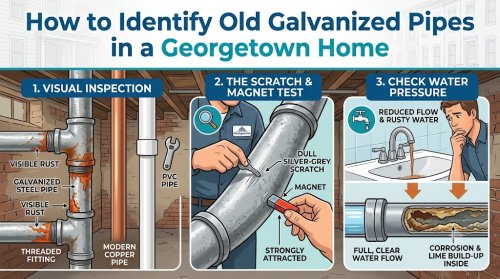
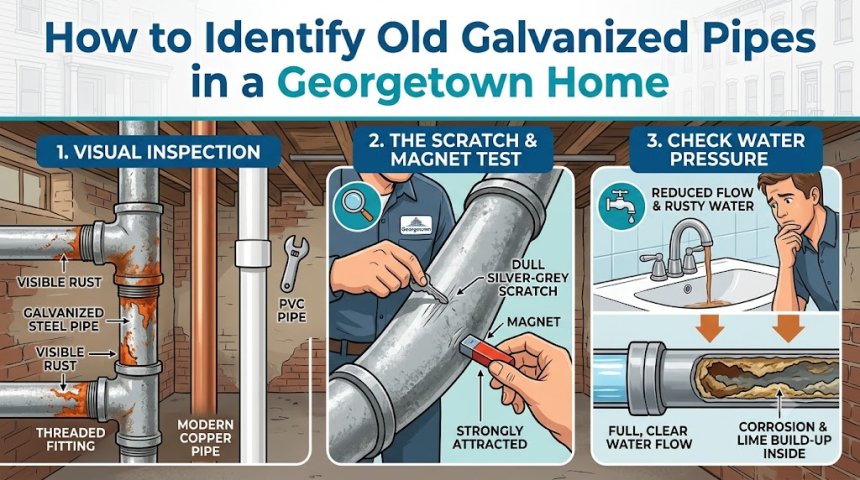
Galvanized steel pipes are heavy, thick-walled iron tubes connected by threaded joint fittings. Unlike copper pipes that turn a dull green/bronze color over time or flexible plastic PEX tubing (blue, red, or white), galvanized pipe exteriors feature a dull, silver-gray or dark charcoal appearance. They often sport a rough, pitted surface texture caused by decades of ambient basement humidity and oxidation.
Common Situations
-
The Historic Renovation Purchase: You recently bought a 1920s rowhouse on O Street and want to verify if original piping remains before opening up drywall.
-
The Sudden Pressure Drop: Turning on the upstairs master bath faucet while the washing machine runs reduces shower pressure down to a trickle.
-
The Morning "Rusty Tea" Tap: Turning on a bath faucet first thing in the morning yields a brief surge of reddish-brown, metallic-tasting water.
Why Does This Plumbing Problem Happen in Georgetown?
Georgetown homes feature unique historic factors that contribute to accelerated galvanized pipe deterioration:
1. Age and Lifecycle Exhaustion
Galvanized steel pipes have a natural design lifespan of 40 to 50 years. Given that most Georgetown residences were constructed long before 1960, virtually every original galvanized system in the area is operating decades beyond its intended operational limit.
2. Internal Tuberculation (Rust Scale)
As municipal water passes through galvanized lines, the interior zinc coating dissolves. Oxygen in the water reacts with the raw iron underneath, creating rust mounds called "tubercles." Over time, these rust deposits swell inward, reducing a 3/4-inch pipe interior to the diameter of a drinking straw.
3. Galvanic Corrosion at Dissimilar Metal Connections
In many renovated Georgetown rowhouses, previous owners patched broken galvanized lines with newer copper pipes. Connecting copper directly to galvanized steel without a specialized dielectric union triggers rapid electrochemical corrosion. The steel pipe corrodes at an accelerated rate right at the joint, leading to sudden leaks.
4. Mineral Scale from Municipal Hardness
Dissolved minerals like calcium and magnesium cling to the jagged, rusted interior walls of galvanized steel, creating hard scale deposits that permanently restrict water volume and trap sediment.
Signs You Should Never Ignore
Failing or deteriorated galvanized pipes usually signal their condition through clear physical signs around your home:
-
Persistent Low Water Pressure: Unusually low water volume across multiple fixtures, especially when two faucets are used simultaneously.
-
Discolored or Brownish Tap Water: Red, yellow, or rusty brown tinting in hot or cold water, caused by loose iron oxide flaking off pipe interiors.
-
Metallic Taste and Odor: Water tasting sharply like iron or smelling like stale rust.
-
Uneven Water Flow across Floors: Strong pressure on the basement level but weak flow on the upper second and third floors.
-
Visible White or Brown "Crust" at Joints: Powdery mineral build-up or rust "stalactites" forming around threaded pipe connections in the basement or utility closet.
Common Plumbing Problems Related to This Issue
Over-aged galvanized pipes in historic properties often trigger secondary plumbing concerns:
-
Concealed In-Wall Pipe Leaks: Pinholes forming beneath rust scale that leak slowly into plaster walls, ceiling joists, and lath.
-
Clogged Faucet Aerators and Valves: Rust flakes traveling downstream to clog shower cartridges, washing machine valves, and sink aerators.
-
Lead Accumulation Risks: Older galvanized lines frequently caught and stored lead particles released by original municipal lead service lines or lead solder joints.
Step-by-Step Professional Repair and Identification Process
When evaluating a Georgetown home for galvanized piping, a licensed plumber follows a systematic approach:
Step 1: Visual Inspection & Magnet Test
The plumber inspects exposed piping in basements, crawlspaces, and water meter connections. A strong magnet is applied to the pipe exterior—magnets stick firmly to galvanized iron but will not adhere to copper, brass, or plastic.
Step 2: Scratch Test Evaluation
Using a flathead screwdriver, the plumber lightly scratches the pipe exterior. Galvanized steel displays a dull, silver-gray metal beneath surface rust, whereas copper shines like a penny, and lead appears soft and bright silver.
Step 3: Static & Dynamic Pressure Testing
Pressure gauges are attached to outdoor hose bibbs and indoor fixtures to compare static water pressure against dynamic flow under load, pinpointing internal flow restrictions.
Step 4: Camera & Line Tracing
If pipes pass through finished walls or under concrete basement slabs, compact camera lines and locators trace the path and material changes throughout the building.
Step 5: Comprehensive Replacement Estimate
If galvanized lines are confirmed, the plumber outlines a phased or complete repiping plan tailored to preserve historic architectural details.
Step 6: Replacement & Pipe Isolation
Technicians carefully replace aging galvanized runs with modern materials (such as L-grade copper or flexible PEX tubing), installing dielectric unions where dissimilar metals meet.
Step 7: Final Pressure Flushing & Water Quality Check
All lines are flushed thoroughly to remove dislodged rust scale, aerators are cleaned, and flow rate tests verify balanced pressure throughout the house.
Can You Fix It Yourself?
Homeowners can easily perform simple diagnostic tests to identify pipe materials, but physical pipe replacement requires professional expertise.
Safe DIY Identification Checks:
-
The Scratch & Magnet Test: Locate exposed pipes near your water meter or hot water heater. Touch a refrigerator magnet to the pipe. If it sticks tightly and scratches silver-gray, it is galvanized steel.
-
Check the Color of Stagnant Water: Leave your home for a weekend. Upon returning, fill a clear glass with cold water from your bathtub faucet. A temporary rusty tint indicates internal iron corrosion inside your branch lines.
-
Clean Faucet Aerators: Unscrew the small mesh screens at the tip of your bathroom and kitchen faucets. If you find orange or black metal flakes, your galvanized pipes are flaking internally.
When DIY Becomes Dangerous:
-
Never Attempt to Patch Threaded Galvanized Joints Yourself: Trying to tighten or unscrew rusted galvanized pipe joints with pipe wrenches can cause the brittle, corroded threads to snap off inside the wall, causing an uncontainable water main leak.
-
Avoid Wrapping Heavy Leaks with Duct Tape or Epoxy Clamps: Rubber sleeves and hose clamps are brief emergency measures—they cannot support structural pipe walls that have thinned from internal rust.
Tools Professionals Use
Evaluating and replacing historic plumbing systems requires specialized diagnostic tools:
-
Rare-Earth Neodymium Magnets: Ultra-strong magnets used to quickly distinguish iron-based pipes from non-ferrous metals behind narrow access panels.
-
In-Line Ultrasonic Flow Meters: Devices that measure exact water volume passing through pipes without cutting into wall structures.
-
Thermal Imaging Cameras: Infrared cameras that detect temperature changes on plaster walls, pinpointing hidden hot water leaks originating from rusted galvanized joints.
-
Pipe Inspection Cameras: Flexible video cables designed to inspect main line conditions and material transitions inside hidden chases.
How Long Does the Repair or Repiping Take?
Timelines vary depending on access and house size:
-
Diagnostic Material Inspection & Testing: 1 to 2 hours.
-
Partial Section Replacement (Single Branch Line): 4 to 8 hours.
-
Full Home Repiping (Historic Rowhouse): 3 to 5 business days.
Factors like plaster wall preservation, tight historic basement access, and specialized historic district permitting can influence repair duration.
Cost Factors
Repiping or replacing galvanized lines involves several variable costs:
-
Diagnostic & Testing Fees: Structural flow tests and thermal leak scanning setups.
-
Accessibility & Wall Materials: Working behind historic plaster and lath takes more time and care than working behind modern drywall.
-
Material Selection: Upgrading to rigid copper versus flexible PEX plumbing systems.
-
Permit & Historic Compliance Costs: Local municipal permits and preservation guidelines in Washington, DC.
Plumbing repair costs vary depending on the severity of the problem, accessibility, materials required, emergency service, property type, and local labor rates.
Hidden Truths Homeowners Should Know
-
Low Pressure Isn't Always a City Utility Issue: Homeowners often blame municipal water suppliers for low flow when internal rust scale inside galvanized lines is restricting water volume.
-
Insurance Companies May Deny Claims for Old Pipes: Insurers may restrict coverage or refuse water damage claims if leaks stem from unmaintained, out-of-date galvanized plumbing.
-
Corroded Galvanized Lines Collect Lead: Rough rust layers inside old steel pipes can trap lead particles from old municipal main lines, releasing them into drinking water long after main service lines are updated.
-
Replacing Only Visible Pipes Leaves In-Wall Risks: Replacing basement piping while leaving galvanized lines inside second-floor walls results in ongoing pressure issues and hidden leak hazards.
-
A Patchwork System Accelerates Decay: Connecting new copper directly to old steel without proper dielectric insulation accelerates galvanic corrosion.
15 Common Mistakes Homeowners Make
-
Assuming Silver Pipes Are Modern Stainless Steel: Mistaking dull, gray galvanized iron for modern rust-free materials.
-
Connecting Copper Directly to Galvanized Iron: Skipping dielectric unions and causing rapid joint corrosion.
-
Ignoring Reddish Morning Water: Treating discolored tap water as a minor inconvenience rather than an active corrosion indicator.
-
Increasing Main Water Pressure to Fix Flow: Raising pressure settings on regulators puts extra stress on thin, rusted pipe walls.
-
Using Caustic Chemical Cleaners to Clear Low Flow: Chemical drain openers cannot clear hard internal rust scale and degrade metal joints further.
-
Leaving Galvanized Lines In Place During Remodels: Tiling over old galvanized lines during bathroom renovations instead of replacing them first.
-
Skipping Magnet Tests During Home Purchases: Buying historic Georgetown properties without verifying pipe material types.
-
Over-Tightening Threaded Galvanized Joints: Snapping brittle, rusted threads when trying to fix minor fitting drips.
-
Ignoring Small White Crust Accumulations: Disregarding mineral deposits that signal active slow leaks at pipe threads.
-
Replacing Only Basement Water Lines: Neglecting upper-floor vertical risers hidden behind plaster.
-
Assuming All Water Leaks Are Visible: Failing to recognize that slow leaks inside plaster walls dry out while causing structural wood rot.
-
Hiring Contractors Unfamiliar with Historic DC Plumbing: Working with technicians who lack experience handling historic Georgetown building codes.
-
Forgetting to Flush Lines After Repair Work: Allowing loosened rust scale to clog new faucet cartridges and valves.
-
Delaying System Inspections Until Pipe Failure: Waiting for major ruptures before checking system health.
-
Relying Exclusively on Surface Appearance: Assuming clean-looking painted basement pipes are in good condition inside.
15 Practical Maintenance Tips for Georgetown Homeowners
-
Perform an Annual Scratch and Magnet Test: Check all exposed pipes in basements and utility rooms yearly.
-
Clean Faucet Aerators Every Three Months: Remove and rinse mesh screens to clear loose rust flakes.
-
Check Water Filter Cartridges Regularly: Inspect home filter cartridges for dark orange or brown sediment build-up.
-
Monitor Water Pressure Annually: Use a thread-on water pressure gauge on hose bibbs to monitor system pressure.
-
Inspect Exposed Pipe Threads for White Powder: Check joints for crusty mineral deposits that point to slow leaks.
-
Flush Water Heaters Annually: Drain water heater tanks to remove rust scale settling at the bottom.
-
Ensure Dielectric Unions Are Installed: Verify that dielectric isolators separate all copper-to-galvanized transitions.
-
Test Main Shut-Off Valves Bi-Annually: Ensure your home’s main water shut-off valve turns smoothly in case of an emergency.
-
Insulate Exposed Pipes in Unheated Basements: Protect aging pipes from freezing temperatures during winter months.
-
Address Drop in Appliance Water Flow Immediately: Investigate sudden pressure drops in washing machines or dishwashers promptly.
-
Schedule Pre-Purchase Plumbing Inspections: Have a licensed plumber evaluate water lines before purchasing historic homes.
-
Document Pipe Materials for Insurance Records: Keep records of verified pipe materials for home insurance coverage.
-
Avoid Storing Chemicals Near Exposed Steel Lines: Keep corrosive cleaning agents away from metal pipes to prevent exterior rust.
-
Install Water Leak Detection Sensors: Place wireless water alarms near exposed galvanized joints in basements.
-
Plan Plumbing Upgrades Phased with Renovations: Replace old galvanized risers whenever opening walls for kitchen or bath remodels.
When Should You Call an Emergency Plumber?
Call an emergency plumber immediately if:
-
A Galvanized Joint Snaps or Ruptures: Active, pressurized water flooding into living areas demands immediate main valve shut-off and emergency assistance.
-
Water Is Dripping Through Historic Plaster Ceilings: Continuous water pooling on ceiling plaster threatens structural collapses.
-
Tap Water Turns Dark Brown or Black Suddenly: Heavy surges of rust scale indicate major internal pipe collapse or main line disruptions.
-
Complete Loss of Water Pressure Across the House: Total pressure drops point to major line breaks or fully blocked supply lines.
Frequently Asked Questions
People Also Ask & Voice Search Questions
How can I tell if my Georgetown home has galvanized pipes?
Find exposed plumbing near your water meter or basement. Touch a magnet to the pipe—if it sticks firmly and a light screwdriver scratch reveals a dull silver-gray metal beneath surface rust, it is galvanized steel.
Are galvanized pipes dangerous to drink from?
While galvanized steel pipes themselves are iron and zinc, older systems often accumulated lead particles from original municipal lead lines and lead solder. They also harbor rust scale that affects water clarity and taste.
How long do galvanized steel pipes last in Washington, DC?
Galvanized steel pipes typically last between 40 and 50 years. Because most Georgetown homes were built before 1960, existing galvanized plumbing is generally past its intended service life.
Why does my tap water look brown when I first turn it on?
Brown or rusty water coming from taps after periods of disuse indicates that iron oxide is flaking off the interior walls of your galvanized pipes into standing water.
Can you connect copper pipe directly to galvanized pipe?
No. Connecting copper directly to galvanized steel creates galvanic corrosion, which rapidly destroys the steel pipe threads. A dielectric union or brass fitting must isolate the two metals.
Will replacing galvanized pipes improve my home's water pressure?
Yes. Replacing corroded galvanized pipes with modern copper or PEX tubing removes internal rust restrictions, restoring full water volume and pressure throughout your home.
How much does it cost to replace galvanized pipes in a historic DC home?
Costs depend on home size, number of bathrooms, accessibility, and whether plaster walls need opening. Contact a licensed local plumber for an upfront, on-site evaluation.
Can hydro jetting clean galvanized pipes?
High-pressure hydro jetting is generally not recommended for older, rusted galvanized pipes, as the force can puncture thinned metal pipe walls.
Do galvanized pipes affect home insurance coverage?
Yes. Some insurance carriers require replacement of aging galvanized plumbing before issuing or renewing policies due to the elevated risk of concealed water damage leaks.
What is the best replacement material for old galvanized plumbing?
Type L copper or flexible PEX tubing are the industry standards for repiping homes, delivering long service life, smooth internal water flow, and corrosion resistance.
Why Choose Our Plumbing Company?
Navigating pipe replacements in historic Georgetown properties requires deep expertise in both traditional building methods and modern plumbing standards. At plumber in Washington DC, we provide trustworthy, professional plumbing services tailored to historic homes across Northwest Washington.
-
Experienced Licensed Plumbers: Our team understands the architectural nuances, historic preservation considerations, and structural layouts of Georgetown rowhouses.
-
Honest Material Assessments: We perform thorough visual and diagnostic checks to give you accurate information about your pipe materials without unnecessary upsells.
-
Upfront Estimates: We offer clear, itemized quotes so you know project costs before any work begins.
-
Careful Workmanship: We treat historic homes with care, using protective drop cloths and minimizing wall cuts during pipe inspections and replacements.
-
Local Expertise: We serve Georgetown, Burleith, Dupont Circle, Kalorama, and surrounding Washington, DC neighborhoods.