How to Tell If Tree Roots Block Sewer Line in Takoma
Wondering if tree roots are clogging your Takoma sewer line? Learn key warning signs, safe temporary fixes, professional repair costs, and tips.
What Is Sewer Line Root Intrusion?
Tree root intrusion is one of the most common and destructive plumbing issues faced by property owners in Takoma. This problem occurs when underground tree roots grow into the sewer lateral pipe that connects your home's drains to the main municipal sewer system beneath the street.
In historic and tree-dense neighborhoods like Takoma (both in Washington, DC and Takoma Park, MD), mature oak, maple, and willow trees enhance streetscapes—but their expansive root systems constantly hunt for subterranean moisture and nutrients. Because sewer pipes carry a steady stream of water, oxygen, and organic material, tiny hairline cracks or loose pipe joints act as magnets for thirsty roots. Once inside, roots act like a net, catching toilet paper, grease, and debris until the main drain comes to a complete standstill.
Common Signs of Root Intrusion in Your Sewer Pipe
-
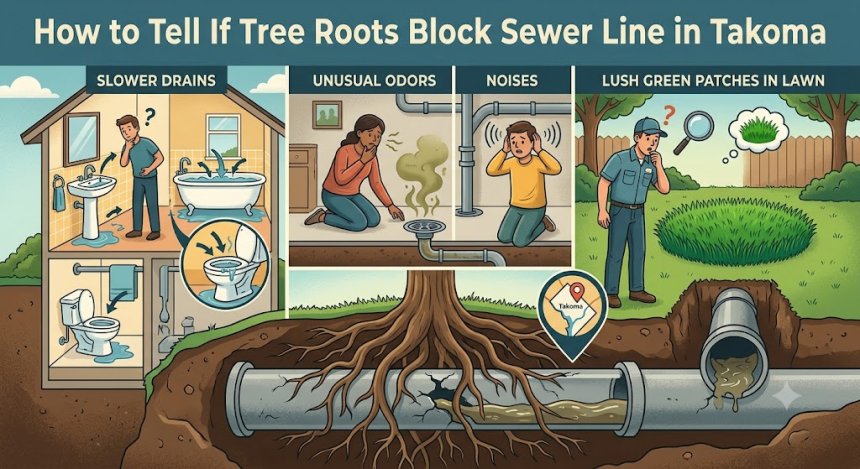
Multiple slow drains: Sinks, tubs, and showers throughout the home drain slowly at the same time.
-
Gurgling toilet sounds: Toilets make distinct bubbling or glug-glug noises when washing machines drain or showers run.
-
Sewer backups in low fixtures: Wastewater backs up into basement shower stalls, floor drains, or ground-floor tubs.
-
Soggy spots or unusually green lawn patches: Extra green, lush grass or sunken, wet soil right above where your underground sewer line runs.
-
Foul sewage odors: Strong odors of sewer gas near basement floor drains or outside in the yard.
Why Does This Plumbing Problem Happen in Takoma?
Sewer pipes located on older residential properties face unique age and environmental stresses that make them vulnerable to root invasion.
[ Tree Roots Seeking Water & Nutrients ]
                  │
                  ▼
   ┌─────────────────────────────┐
   │ Clay / Cast Iron Pipe Joint │  ◄── [Micro Cracks & Gaps Form over Time]
   └─────────────────────────────┘
                  │
                  ▼
┌─────────────────────────────────────────────────┐
│              UNDERGROUND SEWER PIPE             │
│   ┌─────────────────────────────────────────┐   │
│   │ Hairline root enters joint/crack        │   │
│   └─────────────────────────────────────────┘   │
│   ░░░░░░░░░░░░░░░░░░░░░░░░░░░░░░░░░░░░░░░░  │   ◄── [Roots expand into thick mass inside pipe]
│   ████████████████████████████████████████  │   ◄── [Traps toilet paper, grease, and solids]
└─────────────────────────────────────────────────┘
                  │
                  ▼
    [ Full Sewer Line Blockage & Sewage Backup ]
1. Aging Underground Pipe Materials
Many historic homes in Takoma still rely on original terra cotta (clay) or cast iron main sewer lines installed decades ago. Clay pipes are manufactured in short sections joined together with mortar or rubber gaskets. As decades pass, ground settling creates minor gaps at these joints, giving roots an easy path inside. Cast iron pipes, while sturdy, gradually rust and form rough scale interiors that catch root ends.
2. High Density of Mature Trees
Takoma is famous for its canopy of magnificent, established shade trees. A mature tree’s root system can spread two to three times wider than its branch canopy. During dry summer spells or seasonal droughts, roots naturally push deep into the soil to find water sources, instinctively following the moisture vapor leaking from worn sewer lines.
3. Soil Movement and Freeze-Thaw Cycles
Mid-Atlantic seasonal weather brings shifting frost lines in winter and expansive clay soils in summer. This continuous ground movement shifts older sewer pipes, causing micro-fractures or misaligned joints that invite root entry.
4. Lack of Routine Sewer Maintenance
Sewer main lines operate out of sight beneath yards and driveways. Without routine video camera inspections or preventive maintenance, a single hairline root mass can quietly expand over several years into a solid, pipe-blocking blockage.
Warning Signs You Should Never Ignore
Ignoring early indicators of tree root intrusion almost always leads to raw sewage backing up inside your home.
| Warning Sign | What It Usually Means | Why It Demands Immediate Attention |
| Simultaneous Slow Drains | The main sewer line is partially blocked; water has nowhere to flow easily. | Indicates a growing obstruction in the primary pipe rather than a simple sink clog. |
| Gurgling Toilets & Floor Drains | Air is trapped in the drain system due to restricted flow through the sewer line. | Early warning sign that a full sewage backup is imminent within days or hours. |
| Sewage Odors in Basement | Sewer gas is escaping through dry traps or cracked drain lines caused by pressure backup. | Poses health risks from airborne sewer gas and indicates blocked main drainage. |
| Lush Green Grass Patch in Yard | Sewer water rich in nutrients is leaking through root-damaged pipes into the soil. | Confirms pipe rupture or broken joints allowing sewage into surrounding ground. |
| Unexplained Sinkholes or Soft Soil | Leaking wastewater is eroding soil underneath your lawn, walkway, or driveway. | Risk of structural damage, collapsing walkways, or total sewer pipe collapse. |
Common Plumbing Problems Related to Tree Root Invasion
Tree root intrusion rarely remains a standalone issue. When left unaddressed, it creates secondary plumbing problems across your home:
-
Complete Sewer Backups: Raw sewage pushes upward through basement floor drains, showers, and toilets, causing hazardous property contamination.
-
Cracked or Collapsed Sewer Lines: As roots grow inside a clay or cast iron pipe, they exert immense pressure, eventually splitting or completely crushing the pipe wall.
-
Foundation Drain Clogs: Sewer backups can leak into surrounding foundation drain tiles, leading to wet basement walls and mold.
-
Corrosion & Pipe Scale Build-up: Sewage holding back in cast iron pipes accelerates internal rust scaling, making future clearings far more difficult.
Step-by-Step Professional Repair Process
Handling tree roots in a main sewer line requires specialized heavy equipment and diagnostic tools operated by a licensed plumber.
[ Step 1: Camera Inspection ] ──► [ Step 2: Diagnosis & Mapping ] ──► [ Step 3: Upfront Estimate ]
                                                                                   │
[ Step 6: Post-Repair Testing ] ◄── [ Step 5: Repair or Relining ] ◄── [ Step 4: Mechanical Root Cutting ] ◄┘
Step 1: Sewer Camera Inspection
The plumber inserts a waterproof high-definition video camera attached to a flexible push-cable down your sewer cleanout access pipe. This visual inspection pinpoints the exact depth, location, and severity of root growth inside the pipe.
Step 2: Accurate Diagnosis & Pipe Mapping
Using a radio transmitter built into the camera head, the plumber uses an above-ground locator to mark the exact spot on your lawn or driveway where roots have damaged the pipe, determining if the pipe is still structural or collapsed.
Step 3: Upfront Estimate & Options
The technician reviews the camera footage with you, explaining whether the line can be cleared with mechanical cutting and hydro jetting or if structural repairs (like trenchless epoxy relining or pipe bursting) are required.
Step 4: Mechanical Root Cutting & Hydro Jetting
-
Mechanical Snaking / Mechanical Cutters: A heavy-duty drain machine with flexible steel cables and rotating C-cutter blades is fed through the pipe to saw through thick root masses.
-
Hydro Jetting: High-pressure water stream (up to 4,000 PSI) blasts away remaining root tendrils, grease buildup, and organic scale, scouring the pipe clean.
Step 5: Pipe Repair or Trenchless Relining
If the roots have severely damaged the pipe:
-
Trenchless Epoxy CIPP Lining: A flexible liner saturated with epoxy resin is inserted inside the existing pipe, inflated, and cured in place, creating a seamless "pipe within a pipe" that roots cannot penetrate.
-
Pipe Bursting / Excavation: If the pipe is collapsed, a new HDPE pipe is pulled through the old line, or traditional excavation is performed to replace broken pipe sections.
Step 6: Final Testing & Cleanout Advice
A second camera inspection verifies that the pipe is fully clear and flowing smoothly. The plumber provides long-term preventive recommendations to keep roots from returning.
Can You Fix It Yourself?
Clearing tree roots from a main sewer line is not a DIY project. Main sewer lines are buried deep underground and require commercial equipment to restore.
Safe DIY Actions Homeowners Can Try:
-
Copper Sulfate / Chemical Root Foaming Treatments: Pouring EPA-approved copper sulfate or root-foaming chemical treatments down the lowest toilet can temporarily slow root growth in minor cases. However, these will not clear a severe block or repair broken pipes.
-
Stop Water Usage: If your fixtures are gurgling or backing up, immediately stop using washing machines, dishwashers, and showers to prevent flooding your basement.
-
Locate Your Sewer Cleanout: Find your main sewer cleanout cap (usually a threaded white PVC or black iron cap in the basement floor or front yard) so the plumber can access the line quickly.
+--------------------------------------------------------------------------+
|                     WHEN TO DIY vs. WHEN TO CALL A PLUMBER               |
+----------------------------------+---------------------------------------+
| SAFE DIY TASKS                   | CALL A LICENSED PLUMBER               |
+----------------------------------+---------------------------------------+
| • Stop household water usage     | • Mechanical root cutting & snaking   |
| • Pouring chemical root foaming  | • High-pressure hydro jetting         |
| • Locating sewer cleanout access | • Sewer camera inspection & mapping   |
| • Monitoring slow drain signs    | • Trenchless epoxy pipe lining        |
+----------------------------------+---------------------------------------+
When DIY Attempts Become Dangerous
-
Renting Heavy Sewer Augers: Commercial sewer snakes have powerful, high-torque electric motors. Improper handling can cause rigid steel cables to snap or whip backward, causing severe physical injury or punching holes through fragile older clay pipes.
-
Overusing Chemical Drain Cleaners: Pouring harsh liquid acid drain cleaners into a blocked sewer line will not cut through thick tree roots. Instead, caustic chemicals sit in your pipes, eating away at metal lines and creating a chemical burn hazard for plumbers working on the line.
Tools Professionals Use
Professional plumbers use advanced diagnostic and clearing machinery to resolve root blockages safely:
-
Sewer Inspection Cameras: High-definition waterproof cameras with self-leveling heads that stream live color video of internal pipe conditions.
-
Above-Ground Pipe Locators: Electromagnetic tracking tools that pinpoint camera depth and position underground within inches.
-
Commercial Root Cutting Drain Augers: Heavy-duty motorized augers equipped with expandable steel carbide cutting head blades.
-
High-Pressure Hydro Jetters: Industrial pump units that deliver targeted water streams at up to 4,000 PSI to strip grease, scale, and root fibers from pipe walls.
-
Trenchless Relining Rigs: Specialized inversion drums and LED curing lights used to install smooth epoxy liners inside damaged pipes without digging up yards.
How Long Does the Repair Usually Take?
Repair timelines depend on pipe accessibility, severity of root invasion, and chosen repair methods:
-
Diagnostic Inspection & Snaking (1–2 Hours): Camera inspection and mechanical root cutting to establish immediate drainage flow.
-
High-Pressure Hydro Jetting (2–3 Hours): Thorough descaling and deep root cutting to restore full pipe capacity.
-
Trenchless Pipe Relining (4–8 Hours): Preparing the pipe, inserting the epoxy liner, curing, and running final camera confirmation tests.
-
Open-Trench Excavation & Pipe Replacement (1–2 Days): Utility marking, heavy excavation, pipe replacement, backfilling, and site cleanup.
Cost Factors
Sewer line root removal and repair expenses vary based on pipe depth, location, and structural integrity.
Key factors that affect total service costs include:
-
Diagnostic & Camera Inspection Fees: Running specialized sewer cameras to pinpoint the issue location.
-
Method of Clearing Required: Standard mechanical cutting vs. high-pressure hydro jetting.
-
Location & Depth of Underground Pipe: Sewer lines buried 8 feet deep under concrete driveways cost more to access than shallow pipes under grass lawns.
-
Extent of Pipe Damage: Simple root cutting vs. structural epoxy relining or full open-trench pipe replacement.
-
Emergency Service Requests: After-hours, weekend, or holiday response for active sewage backups in home basements.
-
Permit & City Utility Requirements: Local municipal permits or sidewalk restoration if work extends near public rights-of-way.
Note: Plumbing repair costs vary depending on the severity of the problem, accessibility, materials required, emergency service, property type, and local labor rates.
Hidden Truths Homeowners Should Know
Understanding underground sewer line dynamics helps you protect your home and avoid costly structural damage:
-
Roots will return unless the pipe is sealed: Cutting roots with a mechanical snake offers temporary relief. As long as moisture leaks from pipe cracks, roots will grow back inside within 6 to 12 months.
-
Cheap temporary fixes often fail: Chemical pour-in root treatments cannot penetrate heavy root masses that fill an entire pipe cross-section.
-
Homeowners insurance usually excludes root damage: Standard home insurance policies often consider root intrusion "gradual maintenance neglect" rather than sudden damage, unless you have specific sewer line backup endorsement riders.
-
Small leaks lead to foundation damage: Leaking sewer lines wash away subterranean soil beneath driveways and home foundations, leading to cracked concrete and structural settling.
-
DIY mistakes increase repair costs: Snapping a rented cable inside a damaged main line turns a simple drain clearing into an expensive emergency excavation job.
-
Hidden leaks increase utility bills: Continuous sewer leaks erode surrounding soil and waste thousands of gallons of water over time.
-
Mold develops quickly: Raw sewage backing up into basements creates toxic mold and bacterial growth inside drywall and subfloors within 24 to 48 hours.
-
Annual preventive maintenance saves thousands: Scheduled annual sewer camera inspections and preventive hydro jetting catch minor roots before they cause a total backup.
15 Common Mistakes Homeowners Make
-
Ignoring Slow Drains across Multiple Fixtures: Assuming a slow basement drain is just a minor localized clog rather than a main line issue.
-
Pouring Caustic Chemical Drain Cleaners Down the Drain: Dumping harsh acids that sit in standing sewage without dissolving dense wood roots.
-
Flushing Flushable Wipes and Paper Towels: Flushing wipes that catch on tiny root tendrils, turning a minor root presence into a solid blockage within days.
-
Planting Water-Loving Trees Over Sewer Lines: Planting weeping willows, poplars, or birch trees directly above underground sewer corridors.
-
Renting Equipment Without Experience: Attempting to operate powerful commercial sewer snakes without proper protective gear or training.
-
Hiring Unlicensed Handymen for Main Line Work: Entrusting complex underground sewer diagnostics to uncertified contractors who lack video camera equipment.
-
Skipping Post-Clearing Camera Inspections: Failing to inspect the pipe after clearing to verify if structural cracks or collapses remain.
-
Waiting Until Raw Sewage Backs Up into the House: Delaying service until sewage overflows basement fixtures during a family gathering or storm.
-
Ignoring Unusual Green Patches in the Lawn: Disregarding extra-green, wet soil patches along the path of the main sewer lateral.
-
Assuming Municipalities Cover Private Sewer Lines: Forgetting that property owners are financially responsible for the sewer lateral line from their home all the way to the main street connection.
-
Neglecting Cleanout Access Caps: Allowing sewer cleanout caps to remain buried under dirt, deck framing, or concrete.
-
Using the Wrong Pipe Repair Materials: Patching damaged lines with mismatched fittings that create immediate new root entry gaps.
-
Failing to Install a Backwater Valve: Operating home plumbing in low-lying areas without a sewer backwater check valve to prevent main line surcharges.
-
Over-Tightening Cleanout Plugs: Cracking plastic or cast iron cleanouts by forcing rusted fittings with excessive lever force.
-
Delaying Trenchless Relining Upgrades: Postponing epoxy lining until the old clay pipe completely collapses, forcing expensive full excavation.
Proactive Maintenance Tips
Keep your main sewer line flowing freely with these preventive habits:
Monthly & Seasonal Maintenance
-
Practice Careful Flushing Habits: Flush only toilet paper and human waste. Keep grease, dental floss, wipes, and feminine hygiene products out of drains.
-
Use Foaming Root Inhibitors Periodically: Apply EPA-approved foaming root control products (such as dichlobenil) down toilets annually to suppress root growth at pipe joints.
-
Locate & Protect Sewer Access: Ensure your main sewer cleanout is accessible and fitted with a tight, undamaged threaded cap.
Annual & Long-Term Care
-
Schedule Annual Sewer Camera Inspections: Have a licensed plumber run a video camera through your main line once a year to catch root growth early.
-
Perform Preventive Hydro Jetting: If you have mature oak or maple trees nearby, hydro-jet your lines every 18 to 24 months to strip away thin root fibers.
-
Know Your Sewer Line Location: Before planting large trees or building decks/patios, locate your underground utility lines to maintain safe planting clearances.
When Should You Call an Emergency Plumber?
Certain sewer backup situations pose severe health risks and property damage that require immediate emergency plumbing response:
-
Raw Sewage Backing Up into Showers or Floor Drains: Wastewater flowing upward from basement drains whenever water is used upstairs.
-
Multiple Fixtures Overflowing Simultaneously: Flushing a toilet causes water to erupt out of nearby shower or tub drains.
-
Foul Sewage Smells Filling Living Areas: Strong sewer gas odors spreading into main floor rooms, indicating broken or fully blocked main lines.
-
Standing Sewage Near Basement Living Spaces: Water accumulation that risks electrical panels, water heaters, or finished basement walls.
People Also Ask (PAA)
How do I know if tree roots are in my sewer line?
Common signs include multiple slow drains throughout your house, toilets making bubbling or gurgling sounds, raw sewage backing up into basement drains, and soggy, extra-green patches on your lawn over the sewer pipe path.
Can chemical root killers clear a blocked sewer line?
Chemical root killers can slow down or kill small root tendrils, but they cannot cut through thick, solid root masses that have already completely blocked a sewer pipe. Heavy root blockages require mechanical cutting or high-pressure hydro jetting.
Who is responsible for tree roots in the sewer line?
In Takoma and most surrounding jurisdictions, homeowners are legally and financially responsible for maintaining and repairing the entire sewer lateral pipe running from their house up to the main street connection.
Is hydro jetting safe for older clay pipes?
When performed by an experienced licensed plumber after a camera inspection, hydro jetting is safe for older clay pipes. Plumbers adjust water pressure levels to match pipe conditions to ensure deep cleaning without damaging the line.
Voice Search Questions
-
"How can I tell if tree roots are blocking my sewer line in Takoma?"
Look for multiple slow drains, gurgling toilets, raw sewage backing up into basement floor drains, or unusually lush, wet spots in your yard.
-
"How much does it cost to clear roots from a main sewer line near me?"
Costs depend on pipe depth, severity of root growth, equipment needed (snaking vs. hydro jetting), and local labor rates. Contact a local licensed plumber for an estimate.
-
"Can tree roots break underground sewer pipes?"
Yes. As tree roots enter small cracks seeking water, they expand inside the pipe, putting immense pressure on pipe walls until clay or cast iron pipes split or collapse.
-
"Who clears tree roots from sewer lines in Takoma DC?"
Licensed professional plumbers equipped with commercial drain augers, hydro jetters, and sewer camera inspection tools clear and repair root-damaged sewer lines.
Frequently Asked Questions (FAQs)
1. How quickly can tree roots grow back inside a sewer pipe?
After mechanical root cutting, roots usually begin growing back into unsealed pipe joints within 6 to 12 months, which is why permanent epoxy lining or pipe sealing is recommended.
2. How does a camera inspection find tree roots?
A plumber inserts a flexible HD video camera down the sewer line. The camera streams real-time color footage to a monitor, revealing root clusters, pipe cracks, pipe sagging, and joint displacement.
3. What is trenchless sewer repair?
Trenchless sewer repair allows plumbers to reline or replace underground sewer pipes without digging a long trench through your lawn or driveway. Methods include CIPP (Cured-In-Place-Pipe) epoxy lining and pipe bursting.
4. Will killing the tree solve the root problem in my sewer pipe?
Not immediately. Tree roots can remain alive and continue growing underground for months after a tree is cut down. Furthermore, existing dead roots inside the pipe won't disappear on their own and still require physical removal.
5. Why are clay pipes so susceptible to tree roots?
Terra cotta clay pipes were installed in short 2- to 3-foot sections. Over decades, ground shifting breaks down the mortar or rubber seals between these sections, leaving open joints for thirsty roots.
6. Can flushing wipes worsen a root blockage?
Yes. Wipes (even those labeled "flushable") do not disintegrate quickly. They catch on thin root tendrils inside the pipe like a net, turning minor root growth into a complete backup.
7. What happens during hydro jetting?
A flexible hose with a multi-directional nozzle is inserted into the sewer line. It sprays high-pressure water streams (up to 4,000 PSI) that slice through roots, wash away grease, and scour pipe walls clean.
8. Can tree roots cause sewer gas smells in my house?
Yes. When tree roots block the main sewer line, trapped sewage and gas build up pressure, forcing foul sewer gas back through dry floor drain traps into your home.
9. What is a sewer backwater valve?
A backwater valve is a one-way check valve installed on your main drain line that allows wastewater to exit your home but automatically closes if public sewers back up into your property.
10. How often should I inspect my main sewer line?
If your home is over 40 years old or surrounded by mature trees, you should schedule a professional video camera inspection every 1 to 2 years as preventive maintenance.
Why Choose Plumber in Washington DC?
When tree roots compromise your main sewer line, turn to experienced plumbing professionals who understand local home construction and underground utility infrastructure.
-
Experienced Licensed Plumbers: Our team brings years of field expertise diagnosing complex underground sewer and drain challenges across Takoma and Washington, DC neighborhoods.
-
Modern Diagnostic Technology: We utilize high-definition video camera inspection and precise underground locators to diagnose root blockages without unnecessary guesswork.
-
Upfront Estimates & Honest Advice: We explain repair options clearly—from hydro jetting to trenchless epoxy relining—and provide transparent upfront estimates before work starts.
-
Comprehensive Sewer Solutions: We handle everything from emergency root cutting and hydro jetting to full trenchless sewer pipe restorations.
-
Fast Response & Emergency Availability: Sewer backups require prompt attention. We offer fast service to protect your home from sewage contamination.
-
Local Expertise: Proudly serving residential and commercial properties throughout Takoma, Brightwood, Shepherd Park, Silver Spring, and surrounding DC Metro communities.