Critical Warning Signs: When Your Water Heater is Sounding the Alarm
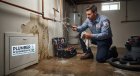
A failing water heater rarely breaks down completely without offering clues first. Recognizing these red flags early can save you from a catastrophic basement flood and expensive property damage.
Property owners should watch out for immediate sensory indicators:
-
Subtle structural shifts: Pooling water, damp drywall near the base, or unexplained spikes in your water utility bill.
-
Auditory clues: Rumbling, popping, or banging noises echoing from the tank caused by heavy sediment buildup boiling against the bottom.
-
Olfactory indicators: A musty, damp earth smell around the utility closet or a distinct metallic odor in your hot water supply.
Ignoring these warnings accelerates structural risks such as subfloor wood rot, framing degradation, and black mold proliferation behind drywall.
Financial Breakdown: Cost Factors & Investment Realities
Budgeting for plumbing repairs can feel stressful, but understanding how pricing works helps demystify the process. Flat-rate pricing for water heater services varies based on the severity of the leak, accessibility, and replacement part requirements.
Key variables affecting your repair investment include:
-
Diagnostic and dispatch fees: Initial travel and expert problem identification.
-
Source of the leak: Replacing a loose temperature and pressure (T&P) relief valve or inlet nipple is far more cost-effective than replacing a cracked inner glass-lined tank.
-
Code compliance updates: Modern DC building codes may require updating thermal expansion tanks or drain pans during a major fix.
-
Repair vs. total replacement economics: If your unit is over 10 to 12 years old, investing in continuous repairs often costs more than a modern, high-efficiency upgrade.
Root Causes: Why Water Heaters Fail in Washington, DC Homes
Water heaters endure immense thermal and mechanical stress daily. In the historic neighborhoods and modern developments of Washington, DC, specific environmental and structural factors accelerate wear and tear:
-
Aggressive water chemistry: Local municipal water supplies can carry mineral content that causes rapid scaling and calcification inside the tank, hardening heating elements.
-
Water pressure fluctuations: High municipal supply pressure puts constant mechanical strain on glass-lined tanks and welded seams.
-
Aging residential infrastructure: Older row houses and converted properties often feature outdated electrical or gas supply connections that stress modern appliances.
-
Thermal expansion stress: Frequent heating cycles cause metal expansion and contraction, eventually fatiguing gaskets, valves, and tank walls.
Professional Diagnostic & Repair Workflow
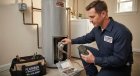
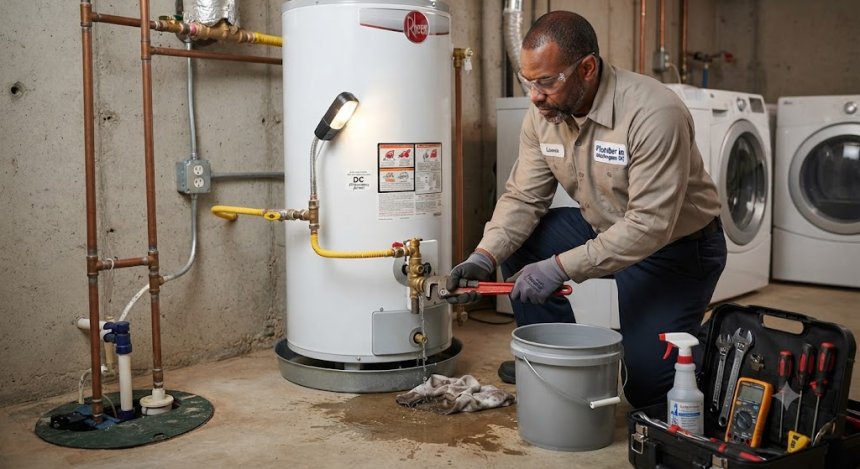
When you call a licensed professional to handle a leaking system, they follow a systematic, safety-first workflow to ensure absolute precision:
-
Step 1: Non-Invasive Triage & Safety Isolation: Shutting off the electricity (or gas supply) and cold water inlet to stop active flooding safely.
-
Step 2: Precision Diagnostic & Component Testing: Inspecting the T&P valve, anode rod, drain valve, and tank body using pressure testing and thermal scanning.
-
Step 3: Transparent, Upfront Options & Estimating: Providing clear, flat-rate pricing alternatives outlining whether a targeted component repair or full replacement makes sense.
-
Step 4: Code-Compliant Remediation & Part Replacement: Installing OEM-certified parts or upgrading the unit while adhering strictly to local plumbing codes.
-
Step 5: Pressure Testing, Flow Verification, & Clean-up: Pressurizing the system, checking for micro-leaks, testing hot water delivery, and leaving the workspace spotless.
What Is Water Heater Leak Repair? Decoding the Mechanism
At its core, a water heater is a pressurized reservoir designed to heat and store water continuously. Water enters through a dip tube, gets heated by gas burners or electric elements, and exits through the hot water outlet pipe.
When a leak occurs, it usually signals that a protective component has failed. For example, a failing T&P valve releases water when pressure exceeds safe limits, while a rusted tank wall indicates structural compromise from the inside out.
Consider a typical row house scenario in Capitol Hill: a neglected 12-year-old tank develops a slow pinhole leak behind the insulation jacket, quietly soaking the subfloor before the homeowner notices a drop in water temperature. Catching this early prevents a ruined basement ceiling.
Unique Expert Insights: Hard Truths Homeowners Learn Too Late
With decades of hands-on field experience, licensed plumbers frequently see homeowners fall into common traps. Keep these five hard truths in mind:
-
Temporary epoxy patch kits or rubber tape on a leaking tank shell only mask deeper failures and can void homeowner insurance policies during a blowout.
-
Ignoring a minor drip around the base of the tank invites aggressive rust that quickly destroys surrounding structural framing.
-
Unlicensed handymen often bypass safety codes, such as omitting expansion tanks, which can lead to dangerous pressure spikes.
-
Annual flushing and anode rod inspections cost a fraction of an emergency midnight extraction and flood remediation service.
-
Water heaters don't heal themselves; minor leaks almost always evolve into major floods if left unaddressed.
Advanced Diagnostics: The Professional Tool Arsenal
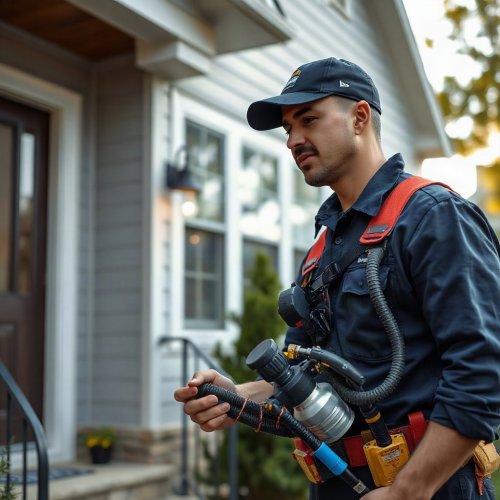
Guesswork has no place in professional plumbing. Licensed technicians rely on heavy-duty diagnostic gear to pinpoint issues with surgical accuracy:
-
Thermal imaging cameras: To detect hidden moisture pockets behind drywall and trace underground or subfloor leaks.
-
Digital manometers: To evaluate gas line and water supply pressure levels accurately.
-
Electronic leak detectors: To isolate acoustic vibrations and pinpoint pressurized water loss.
-
High-definition inspection scopes: To check internal tank conditions and sediment buildup without destructive tearing.
DIY Reality Check: What You Can Safely Fix vs. When to Step Back
Homeownership involves plenty of handy tasks, but water heaters involve high voltage, natural gas, scalding water, and heavy pressure vessels.
-
Safe homeowner actions: Adjusting the external thermostat dial, wrapping exterior pipe insulation, or visually monitoring pressure gauges.
-
The danger zone: Attempting to weld a leaking tank wall, tampering with gas supply lines, or opening electrical access panels while standing in water.
-
When to call a pro: The moment water originates from the tank shell itself, or if you smell gas or notice electrical sparking, drop the wrench and call a licensed specialist immediately.
Comprehensive Home Plumbing Maintenance Framework
Protecting your home investment requires consistent, seasonal attention. Keep your plumbing system running smoothly with this structured maintenance schedule:
-
Spring & Summer Checks:
-
Test your sump pump and check basement perimeter drainage.
-
Inspect outdoor hose bibs for winter cracking or leaking.
-
Check household water pressure against your main regulator.
-
-
Fall & Winter Preparation:
-
Insulate exposed pipes in unheated crawlspaces and garages.
-
Flush your water heater tank to clear out destructive mineral sediment.
-
Test your water heater's emergency T&P relief valve manually.
-
-
Year-Round Habits:
-
Clean sink aerators and showerhead sediment screens regularly.
-
Avoid pouring harsh chemical drain cleaners down household lines.
-
Know the exact location of your main emergency water shut-off valve.
-
Emergency Protocol: When Immediate Dispatch is Non-Negotiable
Some plumbing issues can wait until business hours, but true emergencies require an immediate 24/7 dispatch. Call an emergency plumber right away if you experience:
-
Catastrophic tank ruptures or active, unchecked structural flooding.
-
Total loss of potable water supply combined with strange pipe noises.
-
Water leaks actively pooling around live electrical outlets or breaker panels.
-
Severe gas odors or pilot light failures near the water heater unit.
Frequently Asked Questions (FAQs)
How do I know if my water heater can be repaired or needs replacement?
If the leak originates from a replaceable component like a valve, heating element, or loose fitting, a repair is usually sufficient. However, if the water is leaking directly from a crack in the inner steel tank wall—or if the unit is over 10 to 12 years old—total replacement is the safest and most cost-effective option.
Why is my water heater leaking from the top?
Top leaks are frequently caused by loose water supply inlet/outlet connections, a faulty temperature and pressure relief valve, or condensation. These are often straightforward and affordable to fix without needing a whole new unit.
Can I use my water heater if it has a small leak?
It is strongly discouraged. Even a slow drip can quickly escalate into a major structural flood, cause extensive water damage to your flooring, and invite mold growth. Shut off the water supply to the unit and call a professional.
How often should I flush my water heater to prevent leaks?
You should flush your water heater tank at least once a year. Regular flushing removes mineral sediment that settles at the bottom, which prevents premature tank corrosion and improves overall heating efficiency.
What is the average lifespan of a residential water heater?
Standard tank-style water heaters typically last between 8 and 12 years, depending on water quality and maintenance frequency. Tankless models can last upwards of 15 to 20 years with proper descaling maintenance.
Is a water heater leak covered by homeowners insurance?
Insurance coverage depends on your specific policy and the cause of the leak. Sudden and accidental damage (like a sudden tank rupture) is often covered, whereas damage caused by long-term neglect and lack of maintenance is usually excluded.
What should I do immediately if my water heater starts leaking heavily?
First, locate and turn off the cold water shut-off valve located directly above or near the water heater. Next, turn off the power source (flip the dedicated circuit breaker for electric units or turn the gas valve to the "off" position). Finally, call an emergency plumber.
How much does water heater leak repair cost in Washington, DC?
Repair costs vary depending on the faulty part and labor involved. Minor valve or fitting replacements are quite affordable, while major tank replacements reflect equipment and installation labor. Always request a transparent, upfront flat-rate estimate before any work begins.
Why Washington, DC Homeowners Trust Plumber in Washington DC
When plumbing emergencies strike, you need a local team you can rely on. Homeowners across the District trust our expertise for several key reasons:
-
Fully licensed, insured, and background-checked technicians who treat your home with absolute respect.
-
Upfront, flat-rate pricing with zero hidden fees or surprise overtime charges.
-
State-of-the-art diagnostic equipment to solve complex plumbing challenges efficiently.
-
Deep local expertise navigating DC's unique historic architecture, building codes, and municipal water conditions.
-
Customer-first workmanship warranties that deliver genuine peace of mind.