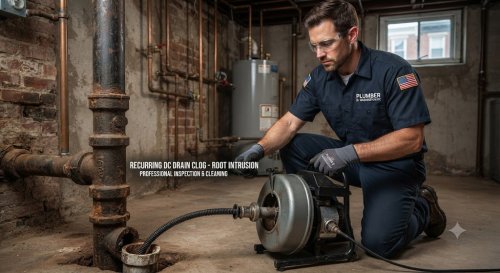
Introduction
Nothing halts the excitement of upgrading your cooking space quite like finding a sudden leak under the sink or realizing your historic home's drain pipes can't handle a modern garbage disposal. When you are planning a kitchen remodel plumbing project in the District, you aren't just swapping out fixtures—you are integrating modern utility into architecture that might be a century old. Local homeowners frequently run into challenges like outdated galvanized steel supply lines, strict DC building codes, and tight spatial constraints in row houses.
Ignoring these infrastructure realities during layout design can lead to devastating water damage, failed inspections, and costly tearing out of brand-new cabinets. A strategic approach to your kitchen's wet walls ensures your layout functions smoothly for decades to come, protecting your investment from day one.
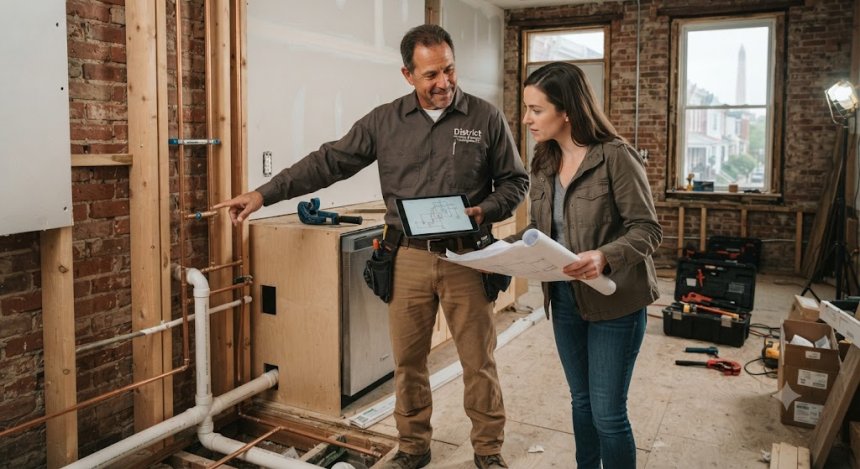
What Is Kitchen Remodel Plumbing? Decoding the Mechanism
At its core, kitchen remodeling plumbing involves rearranging, upgrading, or installing the water supply, drainage, and gas lines that service your kitchen sink, dishwasher, refrigerator ice maker, and cooking range. Think of your kitchen as a closed-loop system: clean pressurized water enters through supply lines, gets routed to your fixtures, and then gravity pulls wastewater down through drain, waste, and vent (DWV) stacks.
When you shift a sink just three feet to the left for a better view, you aren't just moving a basin; you must recalculate the drain's slope, vent proximity, and trap arm distance to prevent siphoning. In a typical suburban build, this is straightforward. But in a multi-story DC row house, running a new 2-inch vertical vent stack through finished walls requires careful structural navigation and hydraulic planning.
Root Causes: Why This Problem Occurs in DC Homes
Remodeling older properties in the nation's capital introduces unique hurdles driven by local architectural history and municipal utility environments:
-
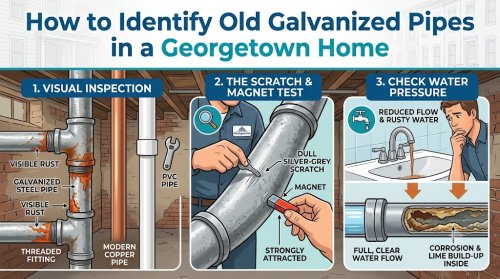
Historic Piping Materials: Many homes in neighborhoods like Capitol Hill or Dupont Circle still contain aging galvanized steel or brittle cast iron lines that clog easily or corrode from the inside out.
-
Rigid Municipal Water Pressure: DC Water systems can deliver high or fluctuating pressure, which stresses old valves, joints, and flexible supply connectors during fixture upgrades.
-
Strict District Building Codes: The Washington, DC construction codes dictate exact pipe sizing, cleanout placements, and venting configurations that differ significantly from surrounding Maryland or Virginia suburbs.
-
Old Framing & Structural Quirks: Historic balloon framing and uneven joists make core-drilling and running new supply lines through floor cavities a delicate engineering puzzle.
-
Grease and Mineral Buildup: Decades of cumulative buildup in legacy branch drains mean tying new high-flow fixtures into old lines can trigger immediate downstream backups.
Critical Warning Signs: When Your Remodel Is Sounding the Alarm
Even before you break ground, your existing kitchen ecosystem might be sending subtle distress signals that dictate how extensive your remodel needs to be:
-
Auditory Clues: Water hammer bangs when shutting off the dishwasher, or a sluggish gurgle from the sink drain indicating venting starvation.
-
Olfactory & Visual Signs: A musty smell under the sink, localized damp patches on basement ceilings directly beneath the kitchen, or warped cabinet floorboards.
-
Performance Fluctuations: Sudden pressure drops when running the dishwasher and kitchen faucet simultaneously, signaling narrowed pipe interiors.
Ignoring these pre-existing conditions and simply building new cabinets over compromised infrastructure sets the stage for catastrophic leaks and ruined custom millwork down the line.
Professional Diagnostic & Repair Workflow
A master plumber approaches a major kitchen overhaul through a meticulous, multi-phase technical workflow:
-
Non-Invasive Triage & Safety Isolation: Shutting down branch water and gas lines safely while capping utilities to allow demolition without workspace hazards.
-
Precision Diagnostic & Digital Video Inspection: Running high-definition cameras down existing drain lines to verify structural integrity before connecting new fixtures.
-
Transparent, Upfront Options & Estimating: Providing detailed written choices for layout routing, material selection (such as switching to cross-linked polyethylene), and code compliance upgrades.
-
Code-Compliant Remediation & Rough-In: Installing proper supply risers, sanitary tees, DWV slopes, and dedicated gas lines according to District regulations.
-
Pressure Testing & Flow Verification: Subjecting the new system to rigorous hydrostatic pressure tests and running flow checks to guarantee zero leaks before drywall goes up.
Unique Expert Insights: Hard Truths Homeowners Learn Too Late
Remodeling projects reveal hidden plumbing realities that contractors love to gloss over. Here are four essential truths to keep your project on track:
-
Patching Into Old Galvanized Lines: Tying brand-new, high-flow copper or PEX lines directly into rusted galvanized pipe creates galvanic corrosion zones that will fail prematurely.
-
The Venting Trap: Moving a sink island without adding an approved island vent loop is an automatic code violation that will fail your DC final building inspection.
-
Ignoring the Shut-Off Valves: Reusing old multi-turn stop valves under the sink is a major gamble; always upgrade to quarter-turn ball valves during a remodel.
-
Appliance Manufacturer Specs: High-end dishwashers and steam ovens have strict drainage height and water pressure requirements that must be roughed in precisely.
DIY Reality Check: What You Can Safely Fix vs. When to Step Back
While swapping out a decorative faucet or connecting a P-trap can be a satisfying weekend project, a full kitchen remodel is firmly in the professional domain.
-
Safe Homeowner Actions: Removing old surface-level fixtures, clearing visible cabinet contents, and shutting off local angle stops prior to contractor arrival.
-
The Danger Zone: Modifying gas lines for a new range, cutting into main vertical waste stacks, or core-drilling through structural floor joists without engineering oversight.
-
When to Call a Pro: The moment you encounter corroded supply stub-outs, unyielding threaded iron pipe, or complex gas manifold extensions, step back to prevent property damage and insurance liabilities.
Financial Breakdown: Cost Factors & Investment Realities
Budgeting for kitchen plumbing requires looking beyond the cost of a shiny new faucet. Flat-rate pricing for remodel rough-ins and finishes depends heavily on specific labor and material inputs:
-
Layout Changes: Moving a sink or gas range across the room requires extensive wall opening and floor tunneling, driving up labor costs compared to a direct "like-for-like" swap.
-
Pipe Material Upgrades: Upgrading entire branch lines from old galvanized steel to modern copper or PEX adds material value but prevents future disasters.
-
Permitting & Inspections: DC building permits and mandatory rough-in inspections add official compliance overhead that protects your home's resale value.
-
Access & Architecture: Historic plaster walls, tight crawlspaces, and concrete slab floors require specialized cutting tools that influence total project timelines.
Advanced Diagnostics: The Professional Tool Arsenal
Professional plumbers utilize specialized diagnostic technology to ensure precision layout planning:
-
Push-Rod HD Drain Cameras: To map exact pipe routes and locate hidden bellies or breaks in old sub-slab lines.
-
Electronic Pipe and Utility Locators: To trace buried water and gas lines safely before any concrete cutting begins.
-
Digital Manometers: To execute precise gas pressure drop tests, ensuring zero leaks in new gas range supply runs.
-
Thermal Imaging Cameras: To instantly detect hidden moisture pockets behind finished walls before demolition starts.
Comprehensive Home Plumbing Maintenance Framework
Once your dream kitchen is complete, protect your investment with a structured maintenance rhythm:
-
Spring & Summer Checks: Inspect exterior wall penetrations, test garbage disposal motor wellness, and check under-sink storage areas for seasonal humidity condensation.
-
Fall & Winter Preparation: Insulate any exterior-facing kitchen walls or crawlspace supply lines against sudden freezes.
-
Year-Round Habits: Use sink strainers religiously to catch food scraps, run cold water while operating the garbage disposal, and test your under-sink shut-off valves semi-annually to prevent seizing.
Emergency Protocol: When Immediate Dispatch is Non-Negotiable
If your remodel encounters an unexpected plumbing failure or if legacy lines rupture during construction, take these immediate steps:
-
Locate and shut off the main water supply valve immediately to stop active flooding.
-
If a gas line is clipped or smells of gas, evacuate the home instantly and call emergency services from a safe distance.
-
Call a licensed 24/7 emergency plumbing team to secure the workspace, pump out standing water, and perform emergency pipe repairs before structural rot sets in.
Frequently Asked Questions (FAQs)
Do I need a permit for a kitchen remodel plumbing in Washington, DC?
Yes. The District of Columbia Department of Buildings (DOB) requires plumbing permits for moving, adding, or replacing water supply, drain, or gas lines during a renovation.
Can I keep my old galvanized pipes when installing a new kitchen sink?
It is strongly recommended to replace old galvanized supply and drain pipes within the remodel zone. Mixing new plumbing with heavily corroded legacy pipe restricts water flow and invites leaks.
How far can a kitchen sink drain be moved from the main stack?
According to standard plumbing codes, a sink drain trap arm cannot exceed specific distance limits (typically 6 feet for a 1.5-inch pipe) from its vertical vent without requiring a secondary venting solution.
What is the best pipe material to use during a kitchen remodel?
PEX (cross-linked polyethylene) and rigid copper are the industry standards for water supply lines due to their flexibility, freeze-resistance, and long-term durability.
Why does my new dishwasher drain hose need a high loop?
A high loop (or an air gap) prevents dirty wastewater from the kitchen sink drain from backing up into your dishwasher tub, protecting your dishes and appliance motor.
How much does kitchen remodel plumbing typically cost in DC?
Costs vary based on the scale of layout changes and whether gas lines are involved, but proper rough-in and finish plumbing generally represent a substantial portion of overall kitchen renovation budgets.
Can I install a garbage disposal on an old cast iron drain line?
Yes, provided a camera inspection confirms the interior walls of the cast iron pipe are structurally sound and free of heavy scaling that could catch ground-up food waste.
What causes water hammer in a newly remodeled kitchen?
Water hammer is caused by fast-closing valves sending shockwaves through unsecured pipes. Installing water hammer arrestors during the rough-in phase resolves this issue permanently.
Why Washington, DC Homeowners Trust Plumber in Washington DC
Navigating a major kitchen renovation requires a partner who understands both high-end design and historic DC architecture. Our team brings unmatched expertise to every project:
-
Fully Licensed, Insured, & Background-Checked: Certified master plumbers who adhere strictly to District building codes and safety regulations.
-
Upfront, Transparent Pricing: Clear, flat-rate estimates with zero hidden fees or surprise overtime charges.
-
Advanced Technology: State-of-the-art camera inspection and pressure-testing equipment for flawless installations.
-
Local Expertise: Extensive experience working in historic row houses, modern condos, and suburban-style homes across the Washington, DC area.
-
Uncompromising Warranties: Robust satisfaction guarantees and workmanship warranties that protect your kitchen investment for years to come.