Introduction
Dealing with municipal water regulations can feel like navigating a maze, especially when you manage a commercial property in the District. Imagine arriving at your office building or retail space only to find a compliance notice from DC Water regarding your cross-connection control requirements. Commercial backflow testing Washington DC property managers face isn't just a bureaucratic hurdle; it is the vital line of defense protecting your building's occupants and the municipal water supply from dangerous contamination.
Commercial properties—ranging from restaurants and medical clinics to multi-tenant office complexes—frequently utilize complex water systems tied directly to public mains. Because commercial environments handle diverse chemicals, fertilizers, or high-pressure setups, the risk of a reverse flow catastrophe rises exponentially. For local business owners, understanding DC Water mandates, annual certification deadlines, and how backflow preventer assemblies operate is essential to avoiding costly service shut-offs, hefty regulatory fines, and severe public health liabilities.
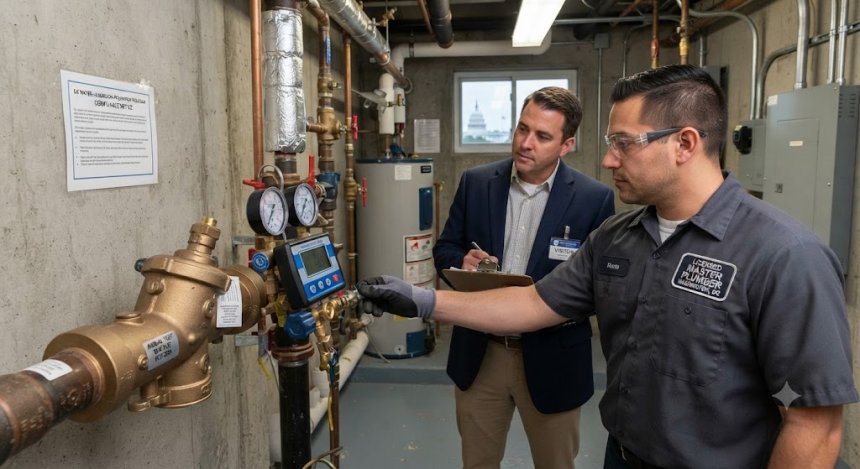
What Is Commercial Backflow Testing? Decoding the Mechanism
At its core, a backflow prevention assembly is a specialized mechanical valve installed on your water service line designed to stop contaminated water from flowing backward into the clean municipal water supply.
How It Works vs. Failure Modes
-
Normal Operation: Under normal pressure, clean municipal water pushes forward through the check valves into your commercial facility's internal plumbing network.
-
The Backflow Threat: When a sudden pressure drop occurs in the city main—often called "backsiphonage," which is caused by water main breaks, heavy firefighting demand, or high system usage—water can reverse direction. Without a working preventer, non-potable water, boiler chemicals, or gray water can pull straight back into the drinking supply.
-
Mechanical Failure: Backflow assemblies rely on internal springs, rubber seals, and dual check valves. Over time, mineral scaling from DC water or constant pressure stress can cause these seals to warp or fail, rendering the assembly vulnerable.
Critical Warning Signs: When Your Commercial System is Sounding the Alarm
While certified annual testing is mandatory, your commercial system may exhibit subtle red flags indicating an issue with your cross-connection control setup well before your inspection date.
-
Auditory & Flow Clues: Noticeable water hammer sounds when large equipment shuts down, or uncharacteristic pressure fluctuations across different floors of your commercial building.
-
Visual & Olfactory Indicators: Discolored water coming from taps immediately after municipal repairs, or strange chemical tastes and odors near utility sinks or irrigation system feeds.
-
Cascading Risks: Ignoring a failing backflow assembly or skipping required containment certifications can lead to major water contamination events, immediate regulatory red-tagging of your facility, and expensive legal liability.
Root Causes: Why Backflow Failures Occur in District Properties
Commercial properties in Washington, DC face unique environmental, structural, and municipal challenges that accelerate wear and tear on backflow prevention assemblies:
-
Aging Municipal Infrastructure: DC features historic water mains dating back decades. Pressure fluctuations and sudden surges from aging city infrastructure place immense mechanical stress on backflow check valves.
-
Mineral Scaling & Water Chemistry: Hard water mineral buildup causes calcification on internal brass and rubber components, preventing tight seals from closing completely during a backflow event.
-
Thermal Expansion: Closed-loop commercial systems experience pressure spikes from water heaters and boilers, causing constant cycling that wears down internal springs.
-
Environmental & Weather Stress: Exterior or sub-surface backflow assemblies exposed to freezing winter temperatures risk cracked bodies or damaged internal check modules if winterization protocols are missed.
Professional Diagnostic & Repair Workflow
When a licensed, insured commercial plumber arrives to test or service your backflow assembly, they follow a rigorous, systematic methodology:
Step 1: Non-Invasive Triage & System Notification
The technician coordinates with facility management to schedule brief water shut-offs, minimizing disruption to tenants, restaurants, or business operations.
Step 2: Precision Differential Pressure Testing
Using a calibrated, certified differential gauge kit, the plumber measures the pressure drops across check valves and relief valves to verify they meet strict DC Water performance thresholds.
Step 3: Transparent, Upfront Options & Reporting
If the assembly passes, the technician immediately issues official DC Water certification paperwork. If it fails, they provide a clear, upfront estimate for rebuilding or replacing the unit.
Step 4: Code-Compliant Remediation & Part Replacement
Using OEM (Original Equipment Manufacturer) repair kits, technicians replace worn check modules, springs, or relief valve rubber before re-testing.
Step 5: Final Certification & Work Area Clean-Up
The repaired assembly is re-tested to ensure 100% compliance, and all documentation is submitted directly to the local regulatory agency.
Advanced Diagnostics: The Professional Tool Arsenal
Plumbers rely on specialized, heavy-duty diagnostic equipment to service commercial backflow assemblies with absolute precision:
-
Certified Differential Pressure Gauge Kits: Calibrated analog or digital gauges used to measure exact pressure differentials across check valves.
-
Inline Pressure Test Kits & Manometers: Used to monitor static and dynamic water pressure fluctuations throughout complex commercial plumbing networks.
-
Specialized Retaining Ring Tools & Socket Sets: Precision tools designed to safely remove internal check modules from large-diameter (2-inch to 10-inch) assemblies without damaging brass bodies.
DIY Reality Check: What You Can Safely Manage vs. When to Call a Pro
Facility managers often wonder if internal staff can handle maintenance tasks. Here is where the line is drawn:
-
Safe Facility Management Actions: Keeping the backflow enclosure clear of debris, visually inspecting outdoor enclosures for freeze damage, and maintaining a log of annual service due dates.
-
The Danger Zone: Attempting to test, adjust, or rebuild a backflow preventer without a valid cross-connection certification is illegal in Washington, DC. Improper tampering can contaminate a building's water supply, void commercial insurance policies, and trigger severe code violations.
-
When to Call a Pro: Always rely on a licensed plumbing contractor certified in backflow prevention for annual testing, internal repairs, or new installations.
Financial Breakdown: Cost Factors & Investment Realities
Commercial backflow testing and repair pricing varies depending on the size, location, and condition of your facility's assemblies. Key cost factors include:
-
Service Call & Testing Fees: Standard flat-rate pricing for testing a single standard reduced pressure zone (RPZ) or double check valve (DCV) assembly.
-
Assembly Size & Accessibility: Large-diameter commercial lines (3 inches or greater) or assemblies housed in tight, difficult-to-access mechanical rooms require specialized rigging and labor.
-
Repair vs. Replacement: Rebuilding a failed check valve using a standard kit is significantly more cost-effective than replacing an entire fractured brass body.
-
Filing & Administrative Costs: Managing municipal paperwork submissions to DC Water to ensure compliance tracking.
Unique Expert Insights: Hard Truths Property Managers Learn Too Late
-
Missed Deadlines Mean Fines: DC Water aggressively enforces annual testing deadlines; letting your certification lapse can result in automatic utility shut-off notices.
-
Generic Handymen Cannot Sign Off: Only certified backflow technicians registered with the local authority having jurisdiction (AHJ) can legally validate and submit test reports.
-
Enclosure Heating Prevents Disasters: Exterior backflow preventers unprotected from winter freezes will crack, resulting in catastrophic water loss and expensive emergency replacements.
-
Preventive Rebuilds Save Money: Replacing internal rubber seals every 5 years prevents unexpected catastrophic failures during peak business hours.
Comprehensive Commercial Plumbing Maintenance Framework
Maintain compliance and protect your property with this seasonal maintenance framework:
-
Spring/Summer Checks: Inspect outdoor backflow enclosures for weed overgrowth, verify proper drainage around vaults, and test irrigation backflow ties.
-
Fall/Winter Preparation: Insulate above-ground enclosures, verify heat tape functionality, and check indoor mechanical room temperatures to prevent freezing.
-
Year-Around Habits: Monitor water utility bills for unexplained usage spikes, schedule annual backflow testing 30 days prior to your expiration date, and keep mechanical rooms locked and clear of storage.
Emergency Protocol: When Immediate Dispatch is Non-Negotiable
Certain backflow and main line issues require immediate, 24/7 professional intervention:
-
Active structural flooding resulting from a ruptured backflow valve body or cracked bypass line.
-
Sudden total loss of potable water pressure throughout the commercial facility.
-
Chemical back-siphonage events contaminating building fixtures or food-service equipment.
-
Main water supply line failures threatening electrical panels or boiler systems.
Frequently Asked Questions (FAQs)
How often is commercial backflow testing required in Washington, DC?
Commercial properties in Washington, DC are mandated by DC Water to have their backflow prevention assemblies tested by a certified technician at least once every 12 months.
What is the difference between an RPZ valve and a Double Check valve?
A Reduced Pressure Zone (RPZ) valve offers a higher degree of hazard protection by including an atmospheric vent drain, while Double Check (DC) valves are used for low-hazard non-health-related commercial applications.
Can my regular maintenance staff perform the annual backflow test?
No. Legally, backflow testing must be performed and certified by a licensed technician who holds an active cross-connection control certification recognized by the local jurisdiction.
What happens if my backflow preventer fails the annual test?
If an assembly fails, the certified technician will provide an estimate to repair or rebuild the unit using approved replacement parts, followed immediately by a re-test to secure compliance.
Do fire sprinkler backflow assemblies need testing?
Yes. Commercial fire suppression systems contain stagnant water and chemical additives, making annual backflow testing mandatory to protect the public water supply.
Are indoor backflow assemblies subject to freezing?
While indoor units are safer, poorly insulated mechanical rooms near exterior loading docks or vents can still experience freezing temperatures during extreme winter weather.
How do I submit my backflow test report to DC Water?
Licensed backflow technicians handle the administrative paperwork, submitting the official test results directly to DC Water or their designated compliance tracking portal on your behalf.
What are the financial penalties for missing a backflow deadline?
Failing to submit timely annual test reports can lead to municipal fines, compliance warnings, and ultimately the termination of water service to your commercial property.
Why Washington, DC Property Owners Trust Our Expertise
Navigating commercial plumbing regulations requires specialized knowledge, precision equipment, and absolute reliability. Our team combines decades of field experience across the District to deliver seamless regulatory compliance, transparent flat-rate pricing, and rapid response times. We ensure your commercial property remains safe, operational, and fully compliant with all local codes.