How to Find the Main Water Shutoff in an Older DC Home
Can’t locate your water shutoff? Learn how to find and operate the main water valve in older Washington DC rowhouses and historic properties.

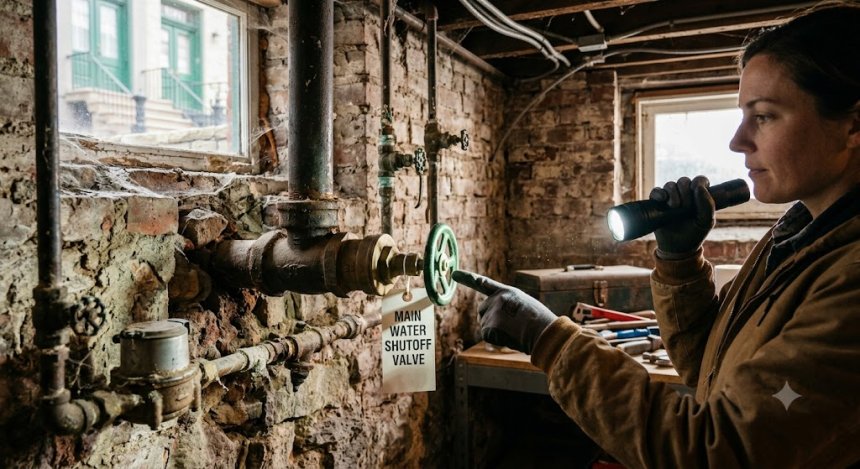
How to Find the Main Water Shutoff Valve in an Older DC Home
Understanding Your Older DC Home's Water Shutoff Valve
Living in an older Washington DC property—whether a Victorian rowhouse in Capitol Hill, a Federal-style home in Georgetown, or a 1920s craftsman in Petworth—comes with architectural charm and unique plumbing quirks. One of the most critical mechanical fixtures in your home is the main water shutoff valve.
This valve controls the pressurized flow of municipal water from the DC Water street main into your private plumbing network. When an emergency strikes, such as a burst pipe during a January freeze or an overflowing second-floor fixture, closing this single valve halts all incoming water instantly.
Unfortunately, in older District properties, locating this valve is rarely straightforward. Decades of structural renovations, finished basements, converted English basements, and historic construction practices mean these valves are frequently hidden behind drywall, tucked beneath floorboards, or tucked away inside dark utility recesses.
+--------------------------------------------------------------------+
|               TYPICAL OLDER DC WATER ENTRY LAYOUT                  |
|                                                                    |
|   Street / Sidewalk               Front Foundation Wall            |
|   [DC Water Meter Pit] ---------> [Main Water Pipe Enters]         |
|   (Curbside Valve)                        |                        |
|                                           v                        |
|                                    [Gate / Ball Valve] <--- YOU    |
|                                           |                 ARE    |
|                                           v                 HERE   |
|                                    [Water Meter / PRV]             |
|                                           |                        |
|                                           v                        |
|                                   To Fixtures & Water Heater       |
+--------------------------------------------------------------------+
Why Is the Main Water Valve Hard to Find in Historic DC Properties?
Historic homes in the District of Columbia were plumbed differently than modern suburban builds. Over the last century, plumbing configurations evolved, leaving behind layers of retrofitted pipework.
-
Finished and Converted Basements: Many historic rowhouses have had their cellars converted into finished living spaces or rental units. Contractors often drywall over utility access points, leaving only a tiny access panel—or sometimes nothing at all.
-
Aging Infrastructure and Corrosion: Older valves made of cast iron or brass often corrode, turning the same dark, chalky color as the surrounding masonry, making them blend directly into unfinished brick foundations.
-
Multiple Additions: If your property expanded outward or upward over the decades, the point of entry for the primary water line might now sit in the middle of a subfloor rather than along an exterior wall.
-
Historical Water Meter Placement: In some neighborhoods across Northwest and Southeast DC, water meters were historically installed inside basements, while in others they sit out by the sidewalk in a ground pit. The interior shutoff usually mirrors this historical installation path.
Step-by-Step: How to Locate the Interior Main Shutoff Valve
Finding your valve requires systematic tracking. Follow these steps to locate your interior shutoff:
1. Check the Street-Facing Basement Wall
In 90% of Washington DC rowhouses and single-family homes, the water line enters through the front foundation wall facing the street.
-
Head to the lowest level of your home (unfinished basement, crawl space, or utility room).
-
Inspect the wall facing the street where the municipal line runs.
-
Look for a pipe entering through the concrete, stone, or brick, usually 1 to 3 feet above the floor.
2. Inspect Utility and Mechanical Closets
If your basement is finished, check inside:
-
The utility closet containing your water heater and furnace.
-
Underneath the front interior staircase.
-
Behind access doors or removable wooden panels set into the drywall.
3. Check Near the Interior Water Meter
If your water meter is located inside the house rather than at the curb, your shutoff valve will be installed directly on the incoming pipe—either immediately before or right after the meter body.
Identifying Your Valve Type: Gate Valve vs. Ball Valve
Once you locate the incoming line, you will encounter one of two primary valve designs:
| Feature | Gate Valve (Older Systems) | Ball Valve (Modern Systems) |
| Visual Appearance | Round, wheel-shaped handle (resembles an outdoor hose spigot) | Straight lever handle |
| Internal Mechanism | Lowers a brass gate inside the pipe to block water flow | Rotates a perforated metal sphere 90 degrees |
| Operation | Turn clockwise multiple full rotations until tight | Turn lever 90 degrees perpendicular to the pipe |
| Common Issues | Prone to seizing, mineral buildup, snapping stems, and partial seals | Rarely seizes, provides an immediate full seal |
| Reliability | Low in older systems; handle gently to avoid breaks | High; industry standard for modern plumbing |
    GATE VALVE (Old Style)                  BALL VALVE (Quarter-Turn)
      [ Round Wheel ]                             [ Lever Handle ]
            |                                            |
      +-----+-----+                                +-----+-----+
      |   | | |   |                                |   \     / |
   ===[   | | |   ]===                          ===[    \ O /  ]===
      +-----+-----+                                +-----+-----+
    (Turn Clockwise Multiple                     (Turn Lever 90°
         Full Rotations)                           Perpendicular)
Warning: If you have an old, seized gate valve, never force it with a wrench or excessive leverage. Forcing a corroded gate valve can snap the internal stem or break the brass casting, instantly causing a high-pressure flood inside your basement. If it does not turn smoothly by hand, contact a licensed professional to replace it with a full-port ball valve.
What to Do If You Cannot Find an Interior Shutoff: The Street Curb Valve
If your interior valve is completely inaccessible or frozen open during an emergency, your secondary option is the curb stop valve located outside your property.
-
Location: Look along the sidewalk, tree box, or front walkway near the property line for a small round iron cover labeled "WATER" or "DC WATER."
-
Access: Removing this cover reveals a deep pipe housing the municipal shutoff valve.
-
Operation: Operating this valve requires a specialized long-handled tool called a water meter key (or curb key).
-
Jurisdiction Note: In Washington DC, the curb stop valve connects private plumbing to the public main. While accessible in major emergencies, operating curbside utility valves should ideally be handled by DC Water or a licensed master plumber to prevent damaging city-side fittings.
Warning Signs That Your Main Shutoff Valve Is Failing
A main shutoff valve rarely breaks without warning. Keep an eye out for these indicators:
-
Visible Mineral Deposits or Rust: White crust (efflorescence), green oxidation on copper, or reddish rust around the valve stem indicates slow packing leaks.
-
Stiffness or Inability to Turn: If the wheel or lever will not budge under normal hand pressure, internal corrosion has bound the mechanism.
-
Incomplete Shutoff: If you close the valve completely but faucets continue to run with steady water pressure, the internal gate has worn away or failed to seat properly.
-
Dripping from the Packing Nut: Water weeping along the valve stem when the handle is manipulated shows that internal seals have degraded.
Step-by-Step: How a Licensed Plumber Replaces an Aging Shutoff Valve
Replacing an outdated or defective main water shutoff valve requires precision, code compliance, and coordination with local utility infrastructure:
[Coordinate DC Water/Curb Shutoff]
               │
               ▼
   [Drain Plumbing System Lines]
               │
               ▼
   [Cut Out Failed Gate Valve]
               │
               ▼
[Inspect Incoming Lead/Copper Pipe]
               │
               ▼
[Install Lead-Free Ball Valve + PRV]
               │
               ▼
 [System Pressure & Leak Testing]
-
Supply Isolation: The plumber secures a complete water stop at the exterior curb key or coordinates with DC Water to temporarily isolate the service line.
-
System Depressurization: Lower-level fixtures are opened to drain residual water and relieve standing pressure.
-
Removal of Old Hardware: The failed gate valve and corroded transition fittings are safely cut away without damaging the incoming service line.
-
Pipe Inspection: The incoming supply line material (lead, galvanized iron, brass, or copper) is evaluated for structural integrity.
-
Installation of Modern Ball Valve: A heavy-duty, quarter-turn brass ball valve meeting local DC plumbing codes is soldered or pressed into place.
-
Pressure Testing and Inspection: Water is reintroduced slowly to clear air pockets, check joint seals, and verify complete shutoff control.
-
Drain Down and Tagging: The new valve is clearly tagged with high-visibility emergency markers for fast homeowner identification.
DIY vs. Professional Plumbing: Where to Draw the Line
While locating and testing your shutoff valve is a smart DIY homeowner task, repairing or replacing it is strictly a job for licensed professionals.
What Homeowners Can Safely Do:
-
Locate the valve and keep the path clear of stored items.
-
Check that access panels in drywall are unblocked and clearly marked.
-
Gently turn the valve once a year to verify it is not seized (only if the valve is in good structural condition).
-
Label the main shutoff valve with an emergency tag so family members can find it quickly.
When to Call a Licensed Plumber:
-
The valve is seized, stuck, or difficult to turn.
-
Water continues to flow to fixtures when the valve is fully closed.
-
The valve leaks water from the stem or body when touched.
-
Your home still relies on a multi-turn gate valve instead of a modern ball valve.
-
Your incoming service pipe is made of older lead or deteriorating galvanized iron.
Key Cost Factors for Water Valve Replacement
Plumbing repair and replacement costs vary depending on the severity of the problem, accessibility, materials required, emergency service, property type, and local labor rates. Key factors include:
-
Accessibility: Valves hidden behind finished basement drywall or fixed tile work require careful access cuts, which increases labor time.
-
Service Line Material: Connecting modern brass ball valves to older incoming lead or galvanized lines often requires specialized transition couplings or pipe section replacement.
-
Curb Stop Accessibility: If the city curb shutoff box is filled with debris or paved over, additional labor is required to uncover and operate the exterior valve.
-
Permit and Inspection Requirements: District plumbing codes govern changes to primary supply lines, which may require formal permits.
-
Additional Component Upgrades: Adding a whole-home pressure reducing valve (PRV) or backflow preventer during the shutoff replacement will influence total project costs.
10 Hidden Plumbing Truths Every DC Homeowner Should Know
-
Small valve drips ruin foundations: A slow weep behind finished drywall can rot framing and degrade historic brick mortar long before surface dampness shows.
-
Quick patches fail under pressure: Clamps and rubber wraps are temporary emergency stops; they cannot withstand full city main line water surges over time.
-
Neglected maintenance voids insurance: Homeowner policies frequently deny water damage claims caused by leaks that have been unaddressed for weeks or months.
-
Tree roots threaten exterior lines: Mature street trees common in older DC neighborhoods can shift or crack buried supply pipes over decades.
-
Hard water degrades internal seats: Dissolved minerals build up inside valve mechanisms, making older gate valves impossible to seal tightly.
-
DIY leverage breaks supply lines: Using cheater bars or large pipe wrenches on stubborn interior valves can shear the pipe right at the foundation wall.
-
Hidden leaks drive up municipal bills: A valve that fails to close completely during repairs can hide running water leaks, driving up utility charges.
-
Moisture invites mold fast: In unvented or semi-finished rowhouse basements, standing water from a valve leak can spawn toxic mold colonies in as little as 48 hours.
-
Lead service lines require delicate handling: Older DC homes with legacy lead services require specialized plumbing protocols to prevent lead particulates from dislodging into your drinking water during valve changes.
-
Regular testing prevents emergency panics: Testing your shutoff valve once a year ensures you never discover a seized valve in the middle of a midnight pipe burst.
15 Common Mistakes Homeowners Make with Main Water Valves
-
Waiting for an emergency to locate the valve: Searching for an unknown shutoff while gallons of water pour through your ceiling leads to preventable property loss.
-
Forcing a seized gate valve: Applying excessive force to an old round handle often breaks the valve stem in the open position.
-
Covering access points during remodels: Installing drywall, built-in cabinetry, or paneling over the main shutoff without installing an access door.
-
Ignoring a loose packing nut: Dismissing a small drip at the valve handle after turning it off allows moisture to ruin basement floorings.
-
Turning valves too quickly: Snapping a modern quarter-turn ball valve open instantly can cause damaging water hammer throughout older pipe networks.
-
Confusing the gas shutoff with the water shutoff: Turning off yellow-handled or non-potable lines instead of the primary domestic water line.
-
Leaving outdoor garden hose lines pressurized in winter: Failing to isolate indoor secondary valves before freezing temperatures arrive.
-
Neglecting to test secondary fixture shutoffs: Assuming sink and toilet angle stops work without testing them periodically.
-
Hiring unlicensed handymen for supply line work: Letting uncertified labor work on primary pressurized lines without code compliance or insurance protection.
-
Failing to label the main valve: Not showing tenants, family members, or housesitters where the valve is located before leaving town.
-
Using chemical drain openers near shutoff drains: Pouring corrosive chemicals into nearby utility traps that can eat through older copper or iron.
-
Over-tightening fittings: Cracking brass valve bodies by applying excessive torque during DIY connection attempts.
-
Ignoring low incoming water pressure: Failing to recognize that a partially collapsed old gate valve is choking whole-house water volume.
-
Leaving the house unattended during active leaks: Relying on buckets instead of isolating the supply at the main valve before leaving the property.
-
Skipping professional inspections during home purchases: Assuming an older home's main water infrastructure is sound without having a licensed plumber perform an evaluation.
15 Practical Plumbing Maintenance Tips
-
Tag your shutoff clearly: Hang a bright, waterproof emergency tag directly on your main water valve handle.
-
Exercise the valve annually: Turn your main ball valve off and back on once a year to keep the internal mechanism free of mineral buildup.
-
Insulate exposed foundation pipes: Wrap incoming water pipes near exterior basement walls with closed-cell foam insulation before December.
-
Keep a curb key accessible: Store a dedicated water meter key in your utility area for exterior emergencies.
-
Upgrade gate valves to ball valves: Replace any original multi-turn gate valves with full-port, quarter-turn brass ball valves.
-
Test fixture shutoffs: Check that the shutoff valves under your sinks, toilets, and water heaters close fully every six months.
-
Monitor baseline water pressure: Install a simple pressure gauge on a utility spigot; household pressure should remain stably between 45 and 70 PSI.
-
Know your service pipe material: Have a licensed professional identify whether your supply pipe is copper, galvanized steel, or lead.
-
Keep the valve pathway clear: Do not stack storage boxes, furniture, or laundry bins in front of your water shutoff location.
-
Install battery-backed water sensors: Place smart leak detection pucks on the floor directly beneath your main shutoff and water heater.
-
Disconnect garden hoses by November: Trapped water inside exterior hose bibs can freeze inward, rupturing the pipe behind the interior shutoff.
-
Check for efflorescence: Inspect exposed brickwork around the water line's point of entry for white mineral crusting that signals moisture intrusion.
-
Open taps when shutting down: Always open the lowest and highest faucets in your home after shutting off the main valve to drain line pressure completely.
-
Service pressure reducing valves: Replace failing PRVs every 7 to 10 years to prevent high-pressure spikes from stressing your shutoff valve.
-
Schedule an annual plumbing evaluation: Have a licensed master plumber inspect all primary control valves, drainage systems, and water heating units once a year.
When to Call an Emergency Plumber
Some plumbing scenarios cannot wait for standard business hours. Contact an emergency plumbing professional immediately if you experience:
-
A completely seized or broken shutoff valve during an active household leak.
-
A major burst pipe discharging high-pressure water inside walls, ceilings, or crawlspaces.
-
Water spraying directly from the incoming water service line upstream of your interior valve.
-
Flooding in your basement or utility room threatening electrical panels or mechanical systems.
-
A snapped valve handle or broken pipe stem resulting from an attempted shutoff.
Frequently Asked Questions
Which way do I turn my main water shutoff valve to close it?
Turn gate valves (round wheel handles) clockwise—remember "righty-tighty, lefty-loosey." Turn ball valves (lever handles) 90 degrees so the handle sits perpendicular across the pipe rather than parallel with it.
What should I do if my main water valve won't turn?
Do not force it with tools. If it is a gate valve, apply gentle back-and-forth pressure with your hands. If it remains stuck, locate your exterior curb shutoff box or call an emergency plumber to prevent breaking the valve stem.
Where is the water shutoff valve in a DC rowhouse with a finished basement?
In finished DC rowhouses, the valve is almost always along the front wall facing the street, typically hidden inside a front closet, behind an access panel near the floor, or within the mechanical room near the water heater.
How do I know if my shutoff valve has completely closed the water?
After closing the valve, open the cold water faucet on your highest floor and your lowest floor. The water should slow to a complete stop within 30 to 60 seconds once lines drain. If water keeps running steadily, your valve is not sealing.
Can I replace a main water shutoff valve myself?
Replacing a main shutoff is not recommended as a DIY project. It requires completely isolating water from the street curb, cutting pressurized incoming service pipes, and adhering strictly to District plumbing codes.
How long does it take for a plumber to replace a main shutoff valve?
Under normal conditions with accessible piping, a licensed plumber can replace a standard shutoff valve in 1 to 3 hours, including water isolation, drain down, and testing.
What is the difference between an interior shutoff and a curb stop?
The interior shutoff is located inside your home and is your primary control point. The curb stop is located outside near the sidewalk in a ground pit and is maintained as the utility isolation point between city piping and private property.
Why is my shutoff valve leaking from the handle?
On older gate valves, the packing nut beneath the handle can loosen or the internal packing washer can degrade. A plumber can often tighten the packing nut or replace the unit with a modern ball valve.
Will turning off the main water valve damage my water heater?
Turning off the water temporarily will not damage your water heater. However, if the main supply will be off for an extended period or if you plan to drain the system, switch off the power breaker (for electric units) or set the control knob to "Pilot" (for gas units) to prevent dry-firing.
How often should a main water shutoff valve be replaced?
High-quality quarter-turn ball valves can last 20 to 30 years or more. Older gate valves should be proactively replaced with ball valves whenever plumbing renovations or service line upgrades take place.
Why Choose Plumber Washington DC
When plumbing emergencies happen or aging fixtures need professional attention, local experience matters. Plumber Washington DC provides trusted, high-quality plumbing solutions tailored specifically to the unique infrastructure of historic and modern homes throughout the District.
-
Licensed & Experienced Technicians: Our team understands the specific plumbing configurations of DC rowhouses, historic properties, and modern residences.
-
Upfront, Transparent Estimates: We explain the scope of work clearly before any repairs begin, with no hidden surprises.
-
Fast Response & Emergency Service: When shutoff valves fail or pipes burst, our prompt dispatch team helps you protect your home from extensive water damage.
-
Modern Equipment & Lasting Solutions: We use industry-grade diagnostics, full-port brass ball valves, and reliable installation techniques built to last.
-
Dedicated Local Service Area: Proudly serving homeowners across Washington DC, including Capitol Hill, Georgetown, Dupont Circle, Adams Morgan, Petworth, Columbia Heights, Cleveland Park, Navy Yard, Foggy Bottom, and surrounding neighborhoods across the District.