Main Water Line Replacement Cost in Washington DC: What to Expect
Understand main water line replacement costs in Washington DC. Learn about influencing factors, pipe materials, excavation needs, and project scope.

Understanding Main Water Line Replacement in Washington DC
The main water line is the private-side underground pipe that brings pressurized municipal water from the public utility connection—typically located near the street or sidewalk—into a residential or commercial building. When this vital artery fails, property owners face a major infrastructure decision. Evaluating the financial and practical scope of a main water line replacement in Washington DC requires understanding how the physical environment, local property types, and specific repair parameters dictate total project expenses.
Unlike simple indoor fixture repairs, a main water line replacement involves heavy excavation, utility coordination, pipe sizing considerations, and property restoration. Because every property layout is unique, flat-rate pricing is rarely realistic for underground service lines. Knowing what drives these costs helps property owners prepare for the project, evaluate professional estimates, and make informed choices between spot repairs and complete line replacement.
Primary Factors Influencing Water Line Replacement Costs
Several distinct variables determine the total investment required to replace an aging or damaged water service line. Rather than a single uniform price, total project expenses reflect a combination of labor, material, and site-specific challenges.
- Length of the Service Line: The distance between the municipal connection point and the building's interior shutoff valve directly affects material quantities and excavation time. Properties set far back from the street require significantly more trenching and pipe material.
- Depth of Burial: Water lines must be buried deep enough to prevent freezing during winter conditions. In the mid-Atlantic region, lines typically run several feet underground, requiring deeper excavation that increases labor and equipment demands.
- Pipe Material Selection: Modern replacements generally utilize durable materials like high-density polyethylene (HDPE) or Type K copper. Material costs vary, with copper typically commanding higher material expenses due to its rigidity and longevity, while flexible HDPE resists shifting ground conditions well.
- Surface Obstructions and Hardscaping: The route of the water line matters immensely. If the pipe runs beneath concrete driveways, stone patios, mature landscaping, retaining walls, or brick walkways, the labor required to break through and subsequently restore those surfaces adds substantially to the project scope.
- Permits and Utility Locates: Underground construction in municipal areas requires official utility marking services and local permits. Administrative and regulatory compliance steps are a standard part of professional underground plumbing projects.
Trenchless vs. Open-Trench Excavation Methods
The chosen installation method is one of the most significant cost drivers for a main water line replacement. Contractors generally evaluate two primary approaches depending on site conditions:
Traditional Open-Trench Excavation: This method involves digging a continuous trench along the entire path of the water line from the street to the foundation wall. While it requires moving significant earth, it provides direct visual access to the entire pipe, making it straightforward to navigate unexpected obstacles, utility crossings, or severe root intrusion. However, surface restoration costs can be high if the trench cuts through established lawns, sidewalks, or paved parking areas.
Trenchless Pipe Bursting or Pulling: Trenchless technology minimizes surface disruption by utilizing small access pits at either end of the run. A specialized bursting head is pulled through the old damaged pipe, simultaneously fracturing it outward while dragging a seamless new HDPE pipe into its place. While trenchless methods often save considerable time and preserve expensive landscaping, driveways, or historic hardscaping, they require sufficient clearance for entry and exit pits and may not be feasible if severe alignment shifts or utility conflicts exist underground.
The Unique Impact of Washington DC Property Types
Washington DC features a diverse architectural landscape, ranging from historic rowhouses and older single-family homes to modern condominiums and commercial buildings. Each property type presents distinct logistical considerations that influence main water line replacement complexity.
Older Rowhomes and Narrow Lots: Many historic rowhouses in DC feature tight side yards, shared walkways, or interiors where the main water entry point is tucked deep inside a finished basement or utility room. Navigating tight physical access can preclude heavy machinery, requiring more manual hand-digging beneath paved alleyways or small front yards, which increases labor intensity.
Multi-Unit Buildings and Condos: In shared residential or commercial structures, the main water service line typically feeds a master manifold or primary meter room. Coordinating a shutdown for an entire multi-family building requires advance notice to residents, coordination with property management, and strict adherence to building rules, all of which influence project scheduling and logistics.
Diagnostic Clues Indicating Main Line Failure
Before committing to a costly replacement, accurate diagnosis is essential. Homeowners and property managers should look for specific clues that distinguish a main water line problem from internal plumbing issues:
- Unexplained Spikes in Water Bills: A continuous, hidden leak underground will drive up water consumption meters even when all indoor fixtures are completely shut off.
- Drop in Water Pressure Throughout the Building: Unlike a localized clog in a single faucet aerator, a failing or collapsed main line restricts overall volume and pressure across multiple stories and fixtures simultaneously.
- Soggy Spots or Unusually Lush Grass in the Yard: A saturated depression in the lawn—especially during dry weather—often indicates an underground leak leaking water upward toward the surface.
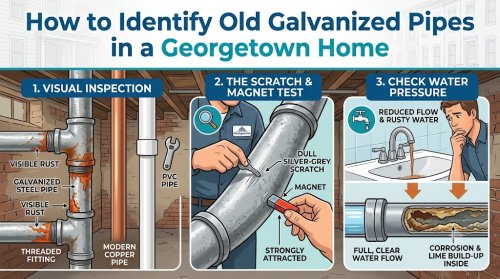
- Discolored or Murky Water: Heavy rust, sediment, or fine soil particles entering a deteriorating galvanized steel or iron service line can cause discolored water when taps are first opened.
Questions to Ask Before Approving Major Underground Plumbing Work
When reviewing estimates for a main water line replacement, property owners should ask informed questions to ensure the scope of work is comprehensive and transparent:
- Will the project be performed using open-trench excavation or a trenchless method, and what are the specific reasons for that choice?
- Does the quoted price include complete surface restoration (such as concrete patching, sod replacement, or asphalt repair), or is surface cleanup the property owner's responsibility?
- What specific grade and material of pipe will be installed (e.g., Type K copper vs. high-density polyethylene), and what is its expected pressure rating?
- How will the contractor handle unexpected underground utility crossings or buried obstacles discovered during excavation?
- Are all required municipal permits, utility notification tickets, and inspection fees included in the estimate?
Frequently Asked Questions
How do I know if my main water line needs repair or total replacement?
If a water line suffers a single localized puncture from a root or construction nick, a spot repair is often sufficient. However, if the pipe is an aging material like galvanized steel showing widespread internal corrosion, or if multiple leaks occur along the run, a total replacement is usually more cost-effective in the long run than repeatedly paying for patch repairs.
How long does a main water line replacement typically take?
Most residential main water line replacements can be completed within one to two working days, depending on the length of the run, soil conditions, excavation method, and whether hardscaping must be removed and restored.
Will my water service be turned off during the replacement project?
Yes. The municipal water supply must be temporarily shut off at the curb stop or meter while technicians disconnect the old line and connect the new pipe to the building's interior system. Crews typically complete the primary connection work within a single business day to minimize service interruption.
Does homeowners insurance cover main water line replacement?
Standard homeowners insurance policies typically do not cover wear and tear, aging deterioration, or ground settling that damages underground utility lines. However, some policies offer optional endorsement riders for underground service lines, and certain utility line protection programs provide separate coverage.
Can I perform a main water line replacement as a DIY project?
No. Replacing a main water line requires heavy excavation, precise municipal shutoff coordination, specialized pipe-joining tools, adherence to local plumbing codes, and mandatory inspections. Attempting this work without professional equipment and licensing presents severe safety hazards and legal risks.
What is the difference between the utility's responsibility and my responsibility?
Generally, the municipal water utility maintains the public water main running beneath the street and the connection up to the property's curb stop or water meter. The property owner is typically responsible for the private service line running from that transition point into the building.