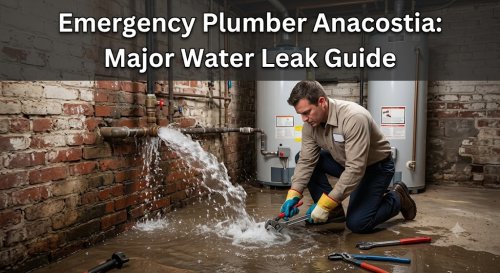
Emergency Plumber Washington DC: What to Do When a Pipe Bursts
Discover immediate steps to take when a pipe bursts in your Washington, DC property. Learn how to minimize water damage, shut off supply, and plan repairs.

Immediate Actions When a Pipe Bursts
A bursting pipe is one of the most stressful emergencies a property owner can face. Whether it happens during a deep winter freeze in an unheated basement or due to sudden structural stress in an older plumbing line, high-pressure water gushing behind walls or across floors requires immediate, decisive action. Knowing the precise steps to take within the first few minutes can mean the difference between a minor cleanup and thousands of dollars in structural restoration.
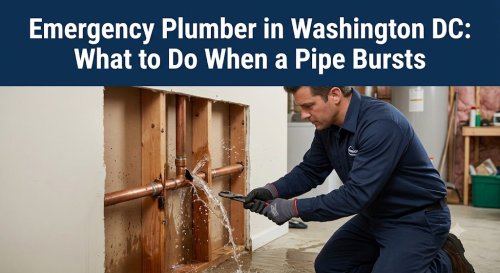
The single most important action when a pipe bursts is locating and shutting off the main water supply valve. Water under normal municipal pressure can discharge hundreds of gallons per hour, rapidly flooding living spaces, saturating subfloors, and damaging electrical systems. Every adult occupant in a home, apartment, or commercial building should know where the main water shutoff is located before an emergency occurs.
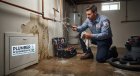
Once the water is off, immediate damage-control steps involve opening low-level faucets to drain remaining water from the lines, turning off electrical breakers if water is near outlets or service panels, and using buckets, towels, or wet-dry vacuums to contain standing water. Only after the water flow is safely halted should you begin assessing the damage and planning the next steps for repair.
Understanding Why Pipes Burst
Pipes rarely burst without an underlying physical cause. While freezing temperatures are the most common culprit during severe winter weather—particularly in historic Washington, DC rowhouses with exterior walls or unconditioned basements containing older supply lines—freezing is not the only mechanism of failure.
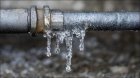
When water freezes inside a metal or plastic pipe, it expands. As ice forms and expands outward, it traps a volume of water between the ice blockage and a closed faucet. The extreme hydraulic pressure generated behind the blockage exceeds the tensile strength of the pipe material, causing copper, galvanized steel, or older polybutylene to split or rupture. Interestingly, the actual rupture often occurs not right where the ice is thickest, but slightly upstream where water pressure builds to a critical threshold.
Beyond freezing, pipes can also fail due to severe internal corrosion, age-related material fatigue, excessive municipal water pressure, or physical shifting caused by foundation settling. Properties with aging galvanized iron or early-generation copper piping may develop microscopic wall thinning over decades. When combined with sudden pressure surges, these weakened sections can suddenly give way, mimicking the catastrophic split of a frozen line even during mild weather.
Safe Homeowner Checks Versus Professional Repair
In a crisis, it is vital to understand what a homeowner can safely check and what requires a qualified plumbing professional. Safe actions include locating shutoff valves, observing which fixtures are losing water pressure, documenting damage for insurance purposes with photographs, and clearing movable items away from the flooded area.
Property owners should never attempt dangerous temporary fixes under active pressure, such as wrapping cloth or duct tape around a violently splitting pressurized pipe. Duct tape cannot withstand municipal water pressure and will instantly blow out. Furthermore, homeowners should avoid using open flames, torches, or high-wattage heat guns to thaw frozen pipes, as uncontrolled external heat can easily ignite nearby framing, warp plastic lines, or cause localized steam explosions within sealed pipe sections.
When dealing with a burst pipe, professional assistance is essential. A licensed plumber brings specialized diagnostic tools, pipe-cutting equipment, appropriate replacement materials (such as PEX or modern copper), and pressure-testing gear to ensure the entire repaired section remains secure under operational loads.
Diagnostic Clues and Hidden Leak Risks
A visibly gushing pipe in an open basement is easy to identify, but many burst pipe emergencies manifest more subtly. A sudden drop in whole-property water pressure accompanied by the sound of running water behind a wall or beneath a concrete slab indicates a hidden rupture. In multi-unit buildings, condominiums, or rowhouses with shared party walls, water from a burst pipe on an upper floor can travel along framing members, drywall joints, or ceiling joists, emerging rooms away from the actual break point.
Relying solely on surface moisture to locate a leak can lead to unnecessary exploratory demolition. Professional plumbers use acoustic listening devices, thermal imaging cameras, and non-destructive pressure testing to isolate the compromised pipe section precisely. Evaluating the surrounding pipe condition is also critical; if one section of an aging water line has burst due to advanced internal corrosion or mineral pitting, adjacent sections may be equally compromised and require preventative replacement.
When assessing a pipe failure, it is important to check whether the water heater or pressure-reducing valve (PRV) played a contributing role. A failing PRV can allow high street water pressure to surge through a building overnight, placing continuous strain on older joints and solder connections until a catastrophic separation occurs.
Repair and Replacement Options
When a professional arrives to address a burst pipe, the repair strategy depends heavily on the pipe material, accessibility, and overall system integrity.
- Spot Repair (Coupling Replacement): If a copper or PEX pipe has suffered a clean freeze split in an easily accessible crawlspace or utility area, the damaged section can be cleanly cut out and replaced using a matching pipe segment secured with solder, compression fittings, or crimped rings.
- Partial Repiping: If inspection reveals that adjacent pipe runs are severely corroded, thinned, or scaled, replacing only a single small segment may invite another failure nearby. In older properties, transitioning a compromised branch line to modern flexible PEX piping offers superior freeze resistance and long-term durability.
- Main Supply Line Replacement: If a burst occurs on an underground service line running from the street meter into the foundation, trenchless pulling or targeted excavation may be required to replace the compromised exterior pipe.
Deciding between a localized patch and a broader repiping project depends on the age of the installation, the frequency of previous leaks, and the vulnerability of the routing to environmental conditions.
Factors Influencing Repair Scope and Complexity
No two burst pipe emergencies are identical, and several logistical factors influence the overall scope, time required, and complexity of the repair:
- Accessibility: Pipes located in open basements or utility chases are straightforward to access. Pipes buried beneath finished hardwood flooring, tile, concrete slabs, or enclosed behind lath-and-plaster walls in older homes require careful opening and subsequent restoration.
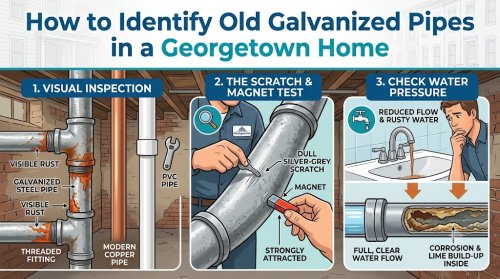
- Pipe Material: Working with older galvanized steel requires threading equipment and specialized sealants, whereas modern copper or PEX offers faster reconfiguration.
- Water Shutoff Complications: If an old main shutoff valve fails to close completely due to mineral buildup or corrosion, the plumber must first shut off water at the exterior street meter or curb stop before any repair work can begin.
- Environmental Conditions: Emergency repairs performed in sub-freezing unheated spaces require temporary heating or hoarding to allow solder to set properly or solvent glues to cure.
Understanding these variables helps property owners evaluate repair estimates and anticipate the necessary follow-up work, such as drywall patching or floor restoration.
Frequently Asked Questions
Where is the main water shutoff valve typically located in a Washington, DC property?
In most residential properties, the main shutoff valve is located where the water supply line enters the building, commonly in the basement, utility closet, or crawlspace near the front foundation wall. In some older homes or rowhouses, it may be positioned near the water meter. If you cannot locate it indoors, check the exterior meter box near the property line.
Can a burst pipe fix itself if it thaws out?
No. While ice temporarily plugs the split in a frozen pipe, keeping water contained while frozen, the pipe wall itself has already been structurally compromised. Once the ice thaws, water will immediately escape through the split or fracture under full pressure. A thawing pipe requires immediate attention and shutoff.
What temporary materials can I use to stop a high-pressure burst pipe?
Standard household tapes, rubber bands, or patches cannot hold against municipal water pressure. The only safe temporary damage-control measure for a pressurized pipe is to shut off the water supply immediately and drain the system. Rubber repair clamps tightened with a screwdriver can sometimes provide temporary relief on low-pressure lines, but should only be used while waiting for a permanent repair.
How can I prevent pipes from bursting during severe winter weather?
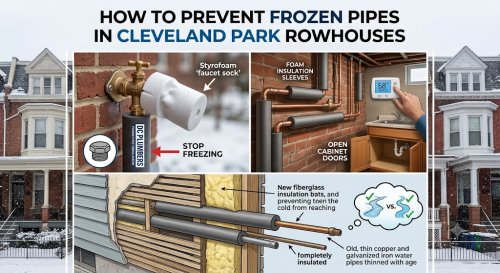
Insulate exposed pipes located in unheated areas such as crawlspaces, attics, and exterior walls using foam pipe sleeves. During prolonged sub-freezing spells, allow vulnerable indoor faucets to drip slightly to maintain continuous water movement, and keep cabinet doors open under kitchen and bathroom sinks to let warm interior air circulate around plumbing.
Does homeowners insurance cover damage caused by a burst pipe?
Most standard homeowners and commercial property insurance policies cover sudden and accidental water damage resulting from a burst pipe, as well as the cost of tearing out and replacing walls or flooring necessary to make the repair. However, damage resulting from long-term, neglected maintenance or unaddressed slow leaks is typically excluded. Always consult your insurance carrier and review your specific policy details.
Why did my pipe burst even though my thermostat was set high?
Pipes often run through unconditioned dead spaces, exterior wall cavities, or uninsulated ceiling soffits where indoor heat cannot circulate. Even if the main living areas are warm, localized freezing can occur inside exterior-facing partition walls during extreme wind chills or sub-zero temperatures.