Main Water Line Replacement Cost in Washington DC: What to Expect
Understand main water line replacement costs in Washington DC, key factors influencing pricing, installation methods, and what property owners should expect.

Understanding Main Water Line Replacement Costs in Washington DC
When a property's main water supply pipe fails, homeowners and property managers face a major infrastructure decision. The main water line is the pressurized pipe that brings municipal water from the public street connection or meter into the building. Because this line is typically buried underground and runs continuously under pressure, a failure cannot be ignored.
Evaluating the cost of a main water line replacement requires looking beyond a single flat fee. Pricing depends heavily on physical site conditions, material choices, local infrastructure requirements, and the scope of excavation needed to reach the pipe. In Washington DC, older urban layouts, historic property considerations, and varying soil compositions add unique complexities to underground plumbing projects.
Key Factors That Influence Water Line Replacement Costs
No two water line replacements are identical. Several variables determine the final labor and material investment required to replace an aging or damaged service line:
- Pipe Length and Depth: The distance between the municipal connection point and the building's interior shutoff valve directly affects material costs and excavation time. Deeper burial depths, often required to prevent freezing during DC winters, increase earth-moving effort.
- Excavation and Surface Restoration: Traditional trenching requires digging up soil, lawns, concrete walkways, driveways, or patios. The cost to break through and subsequently repave or restore hardscape surfaces often equals or exceeds the plumbing work itself.
- Pipe Material Selection: Modern main water lines typically utilize durable, flexible materials like High-Density Polyethylene (HDPE) or copper. Material pricing varies, though labor and access usually make up the largest portion of the budget.
- Permits and Municipal Coordination: Replacing a private water service line that ties into public infrastructure or crosses public right-of-way property typically requires municipal permits, street or sidewalk opening fees, and mandated inspections by District authorities.
- Accessibility and Obstructions: Underground utility lines (gas, electric, telecom), mature tree roots, retaining walls, and tight rowhouse alleyways can severely restrict access, requiring specialized equipment or careful hand-digging.
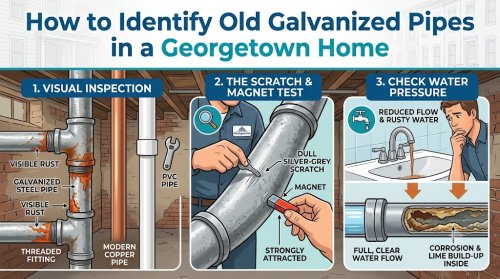
- Older Housing Stock and Aging Materials: Many older homes in the District originally relied on galvanized iron or early lead service lines. Over decades, internal mineral buildup restricts water flow, while exterior corrosion weakens the pipe walls until pinhole leaks or major ruptures occur.
- Rowhouse and Urban Constraints: Rowhouses often feature water service lines that run beneath finished interior basements, shared walkways, or tight utility corridors. Limited physical access can make equipment maneuvering difficult, increasing labor hours.
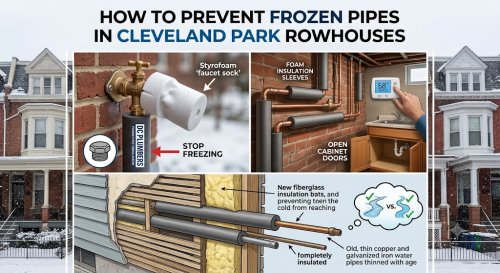
- Winter Freezing Depth: While DC winters are generally moderate compared to northern regions, sustained freezing temperatures can penetrate upper soil layers. Main water lines installed too close to the surface risk freezing and bursting, making proper burial depth essential during replacement.
- The pipe material is obsolete, severely corroded, or structurally compromised throughout its run.
- Multiple leaks occur in different sections of the same service line.
- Water pressure drops significantly due to internal scaling and narrowing of an aging pipe diameter.
- Tree root intrusion has heavily damaged older pipe joints or brittle material.
- Will the contractor use traditional trenching or a trenchless method, and what are the specific reasons for that choice?
- Does the project estimate include complete surface restoration (such as concrete pouring, sod replacement, or sidewalk repair), or will that be the owner's responsibility?
- Are municipal permits, traffic control plans, and utility locating services (such as Miss Utility) included in the quoted scope?
- What type of pipe material will be installed, and what manufacturer warranties apply to the new line?
- How long will the water service be shut off during the transition, and will a temporary bypass line be provided?
Trenchless Replacement vs. Traditional Open Trenching
The chosen installation method significantly shifts the financial and physical scope of a water line project. Understanding these methods helps property owners evaluate contractor estimates.
Traditional Open-Cut Trenching
The conventional method involves digging a continuous trench along the entire path of the water line. While this requires more extensive surface disruption—tearing up lawns, stone pathways, or concrete—it provides direct visual access to the entire pipe. Traditional trenching is often necessary if multiple utilities are clustered tightly together or if the exact path requires complex re-routing.
Trenchless Pipe Bursting
Trenchless technology allows contractors to replace an underground pipe without digging a long trench. Using entry and exit access pits, a specialized steel bursting head is pulled through the old pipe, simultaneously breaking it apart outward while dragging a new, seamless HDPE pipe into its place. This method dramatically reduces surface restoration costs, protecting established landscaping, historic front yards, or paved driveways. However, trenchless replacement requires sufficient clearance for entry pits and is not feasible if severe structural collapses or extreme pipe offsets block the path of the bursting head.
Washington DC Context: Why Local Conditions Matter
Properties in Washington DC span a wide architectural and infrastructural spectrum, from 19th-century rowhouses to mid-century multi-unit buildings and modern residential developments. These environments create specific plumbing challenges:
Note: Property owners should verify current District of Columbia utility regulations, right-of-way permit requirements, and private-versus-public service responsibilities with DC Water or local municipal authorities before initiating underground construction.
Diagnosing the Need for Replacement vs. Repair
Not every water line issue requires total replacement. A localized pinhole leak caused by a sharp stone or localized pipe damage can often be repaired with a simple pipe clamp or section splice. However, replacement becomes necessary when:
A professional diagnostic assessment typically involves shutting off interior fixtures, monitoring the water meter to confirm continuous unrecorded flow, and sometimes utilizing acoustic leak detection equipment to pinpoint underground failure points.
Questions to Ask Before Approving Main Water Line Work
Substantial plumbing projects require clear communication between the property owner and the plumbing contractor. Before approving a water line replacement contract, consider asking the following questions:
Frequently Asked Questions
How do I know if my main water line is failing?
Common warning signs include unexplained wet spots in the yard when it hasn't rained, a sudden drop in household water pressure, cloudy or discolored water filled with rust particles, or a spinning water meter when all indoor and outdoor faucets are completely turned off.
Who is responsible for repairing a main water line in Washington DC?
Property owners are generally responsible for maintaining and replacing the private water service line running from the public main connection or property line into the building. The municipal utility typically maintains the main distribution pipe in the public street. Property owners should confirm exact boundary responsibilities with DC Water.
Can I patch a leaking main water line instead of replacing it?
If the pipe is relatively new and suffers from a single isolated puncture, a professional repair clamp or section replacement may suffice. However, if the pipe is decades old and degraded by internal corrosion or widespread brittleness, patching one spot often leads to another failure nearby.
How long does a main water line replacement take?
Most residential main water line replacements can be completed within one to two days, depending on the length of the run, the installation method used, and whether extensive hardscape or concrete cutting is required.
Will my landscaping and driveway be completely destroyed during replacement?
Not necessarily. While traditional trenching requires digging up the path of the pipe, trenchless pipe bursting methods only require small entry and exit pits, preserving the majority of lawns, paved driveways, and landscaping features.
What causes main water lines to fail prematurely?
Premature failure is often caused by aggressive soil chemistry, shifting ground conditions, aggressive root intrusion from nearby trees, high internal water pressure, and substandard original pipe materials such as unprotected galvanized steel.