Low Water Pressure in Washington, DC Homes: Common Causes
Discover common causes of low water pressure in Washington, DC homes, warning signs, troubleshooting tips, repair options, costs, and when to call a plumber.

Low Water Pressure in Washington, DC Homes: Common Causes
Low water pressure can turn simple household tasks into frustrating chores. Showers take longer, faucets produce only a weak stream, washing machines fill slowly, and appliances may not receive enough water to operate normally.
For homeowners in Washington, DC, the cause can be something simple, such as a clogged faucet aerator, or something more significant, such as a leaking service line, deteriorated plumbing, a pressure-regulating problem, or an issue affecting the local water distribution system.
DC Water operates a distribution system serving properties across different elevations and pressure zones throughout the District. It notes that the District's water system uses multiple service zones because properties range from low elevations to approximately 410 feet.
The important question is not simply "Why is my water pressure low?" but "Where is the pressure being lost?"
What Is Low Water Pressure?
Water pressure is the force that pushes water through your home's plumbing.
When pressure is too low, you may notice:
- Weak shower flow
- Slow-filling toilets
- Faucets producing a small stream
- Washing machines taking longer to fill
- Poor water flow from multiple fixtures
- Reduced outdoor faucet flow
- Water pressure dropping when another fixture is used
The problem can affect one fixture or the entire property.
That distinction is important because a weak kitchen faucet may have a localized blockage, while low pressure throughout the house may indicate a problem farther upstream.
Why Is My Water Pressure Suddenly Low?
A sudden pressure drop deserves more attention than a gradual reduction that has existed for years.
Possible causes include:
- A water main problem
- A private service-line leak
- A partially closed shutoff valve
- A clogged faucet aerator
- Corroded plumbing
- Sediment buildup
- A failing pressure-regulating component
- Plumbing repairs or construction nearby
- A damaged pipe
- A problem affecting the building's internal plumbing
- Changes or interruptions in the local water distribution system
DC Water provides an online reporting system specifically for no water, low water pressure, and water-quality problems, so a sudden neighborhood-wide pressure issue may be a utility matter rather than a problem inside your house.
Common Causes of Low Water Pressure in Washington, DC Homes
1. Clogged Faucet Aerators
Before assuming you need major plumbing work, check the simplest possibility.
The small screen at the end of a faucet is called an aerator. Mineral deposits, rust particles, and sediment can restrict the opening.
If only one faucet has low pressure, remove and clean the aerator if it can be safely removed.
DC Water specifically advises homeowners to clean faucet aerators because debris can collect on the screen and make pressure appear lower than it actually is.
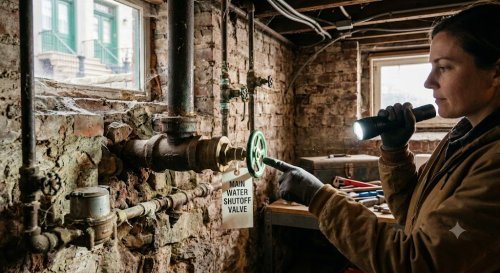
2. Partially Closed Shutoff Valve
A valve may have been partially closed during previous plumbing work.
Check the main shutoff valve and fixture shutoff valves if they are safely accessible.
A partially closed valve can restrict water flow throughout part or all of the property.
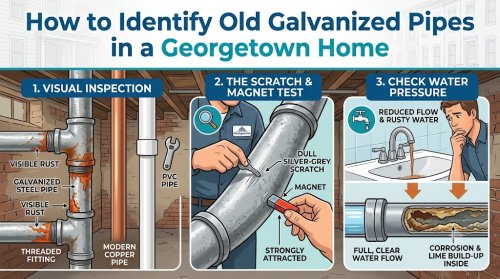
3. Corroded Pipes
Older plumbing can gradually narrow internally as corrosion and mineral deposits accumulate.
This is particularly relevant in older housing stock where plumbing materials have been in service for decades.
DC Water has noted that corrosion inside older iron piping can cause debris to break loose and contribute to discolored water or low pressure.
If cleaning individual fixtures does not improve pressure, deteriorated internal plumbing may need professional evaluation.
4. Leaking Water Service Line
A leak in the water service line between the street and the house can reduce the amount of water reaching the property.
Possible warning signs include:
- Sudden pressure reduction
- Unexplained water usage
- Wet areas in the yard
- Bubbling water
- Water around the meter pit
- Discolored water
DC Water identifies decreased water pressure, bubbling water, and an overflowing meter pit among signs associated with possible water service-line leaks.
5. Problems With the Local Water Main
Sometimes the problem isn't inside your home at all.
A broken water main, maintenance work, valve operation, pumping issue, or other distribution-system event can temporarily reduce pressure.
DC Water has documented previous pressure-loss events caused by water-main problems and other system issues.
If your neighbors are experiencing the same problem, contact DC Water before assuming your home's plumbing is at fault.
6. Building Elevation
Elevation can affect available water pressure.
Washington, DC has properties at significantly different elevations, which is one reason DC Water operates multiple pressure zones.
Homes at higher elevations may experience different pressure conditions than properties at lower elevations.
7. Pressure Regulator Problems
Some properties use pressure-regulating equipment to control incoming water pressure.
A malfunctioning regulator can produce unusual pressure behavior.
If pressure is consistently too low, fluctuates significantly, or changes after other plumbing work, a plumber can test the system and determine whether a pressure-regulating component is involved.
8. Sediment or Mineral Buildup
Sediment can restrict flow through pipes, valves, showerheads, and faucet aerators.
This is more likely to affect older plumbing or fixtures that have not been cleaned or replaced for a long period.
9. Plumbing Renovation or Construction
Nearby utility work, hydrant flushing, water-main repairs, or construction can sometimes temporarily affect water pressure.
DC Water notes that construction activity can cause temporary low pressure in affected areas.
If pressure returns to normal after the work is completed, no internal plumbing repair may be necessary.
10. Multiple Plumbing Problems
Sometimes there is more than one cause.
For example, an older home could have:
- A partially restricted main valve
- Corroded pipes
- Dirty faucet aerators
- An aging service line
Cleaning one faucet may improve flow there without solving the larger pressure problem.
How Can You Tell Where the Problem Is?
A useful first step is to compare different fixtures.
Only One Faucet Has Low Pressure
The problem is more likely to be:
- Clogged aerator
- Faucet cartridge
- Fixture valve
- Local supply-line restriction
One Bathroom Has Low Pressure
The issue may be limited to that branch of the plumbing system or the fixtures in that bathroom.
Hot Water Has Low Pressure but Cold Water Is Normal
Possible causes include:
- Water-heater-related restriction
- Hot-water valve problem
- Sediment buildup
- Restricted hot-water piping
The Entire House Has Low Pressure
Possible causes include:
- Main shutoff valve
- Service-line problem
- Pressure regulator
- Major leak
- Corroded plumbing
- Water-main issue
You and Your Neighbors Have Low Pressure
This makes a utility or neighborhood-level problem more likely.
Can You Fix Low Water Pressure Yourself?
Some basic troubleshooting is safe for homeowners.
You can:
- Check whether faucet aerators are clogged.
- Check that accessible fixture valves are fully open.
- Confirm that the main shutoff valve has not been partially closed.
- Compare pressure at multiple fixtures.
- Ask nearby neighbors whether they have the same issue.
- Check DC Water for reported service problems.
Avoid dismantling pressure regulators, cutting into pipes, or changing major plumbing components unless you are qualified to do the work.
If you discover a leak, stop using water where possible and address the leak promptly.
How Do Plumbers Diagnose Low Water Pressure?
A professional plumber does more than simply look at the faucet.
Step 1: Ask About the Symptoms
The plumber will determine whether pressure is low everywhere or only at specific fixtures.
Step 2: Check Multiple Fixtures
Comparing fixtures helps determine whether the problem is localized or systemic.
Step 3: Measure Water Pressure
A pressure gauge can provide an objective measurement rather than relying on how the water feels.
Step 4: Inspect Valves and Connections
The plumber checks accessible shutoff valves, regulators, supply lines, and other components.
Step 5: Look for Leaks
A hidden water leak can affect pressure and increase water usage.
Step 6: Evaluate the Service Line
If the problem appears to originate between the home and the public water system, additional investigation may be necessary.
Step 7: Recommend the Appropriate Repair
The solution could be as simple as cleaning a fixture or as extensive as repairing or replacing deteriorated plumbing.
What Tools Do Plumbers Use?
Professionals may use:
- Water pressure gauges
- Leak-detection equipment
- Moisture meters
- Plumbing inspection cameras
- Flow-testing equipment
- Pressure-regulating equipment
- Pipe-location equipment
The appropriate tool depends on the suspected cause.
For example, a pressure gauge is useful for determining whether the system actually has low pressure, while leak-detection equipment may help investigate unexplained water loss.
What Water Pressure Is Normal?
There is no single pressure number that is ideal for every property, because plumbing design, elevation, fixtures, and local conditions matter.
However, high pressure is also a plumbing concern.
DC Water states that building water pressure above 80 psi is considered high and that the District's Plumbing Code requires a pressure-reducing valve when pressure exceeds that level.
This matters because homeowners should not assume that increasing pressure is always the solution.
Excessive pressure can contribute to:
- Dripping faucets
- Noisy pipes
- Water hammer
- Leaking connections
- Plumbing fixture damage
The goal is appropriate, stable pressure—not simply maximum pressure.
How Long Does Low Water Pressure Repair Take?
The repair time depends entirely on the cause.
Simple Repair
Cleaning an aerator or correcting a partially closed valve may take only a short time.
Moderate Repair
Replacing a faulty fixture component, valve, or regulator may take longer depending on accessibility and parts.
Major Repair
Corroded piping, a damaged service line, or extensive plumbing deterioration can require substantially more work.
Utility Problem
If the issue originates in the public water system, the timeline depends on the utility's investigation and repair process.
How Much Does Low Water Pressure Repair Cost?
There is no responsible fixed price for every low-pressure problem.
Costs may depend on:
- Diagnostic time
- Pressure testing
- Leak detection
- Replacement parts
- Pipe material
- Accessibility
- Labor
- Service-line repairs
- Emergency service
- Excavation
- Permit requirements, if applicable
- Repair versus replacement
A clogged aerator and a damaged underground service line are completely different projects.
Ask the plumber whether the diagnostic fee is separate from the repair cost and request an explanation of recommended work before authorizing major repairs.
Hidden Truths Homeowners Should Know
Low Pressure Is Not Always a Plumbing Failure
If the entire neighborhood is experiencing the problem, the cause may be outside your property.
High Pressure Can Cause Plumbing Problems Too
Increasing pressure without determining the cause can create additional stress on plumbing.
A Weak Shower Does Not Automatically Mean Low House Pressure
A clogged showerhead or fixture restriction can create poor flow even when the home's incoming pressure is normal.
Old Pipes Can Restrict Flow
Corrosion and internal buildup can reduce the effective opening inside older pipes.
A Sudden Pressure Drop Deserves Attention
A sudden change can indicate a leak, valve issue, main break, or utility-system event.
Water Pressure Problems Can Be Location-Specific
A home at a higher elevation may experience different pressure conditions from a nearby property at a lower elevation.
15 Common Mistakes Homeowners Make
1. Replacing the Faucet Immediately
First determine whether the faucet itself is causing the problem.
2. Ignoring a Sudden Pressure Drop
A sudden change can indicate a larger plumbing issue.
3. Assuming the Problem Is the Water Utility
Check your own fixtures and ask neighbors whether they are affected.
4. Increasing Pressure Without Testing
More pressure is not automatically better.
5. Ignoring a Water Leak
A leak can reduce available pressure and cause property damage.
6. Forgetting the Aerator
A clogged aerator is an easy problem to overlook.
7. Ignoring Corroded Plumbing
Older pipes may gradually restrict water flow.
8. Replacing Fixtures Without Diagnosing the System
New fixtures will not solve a restricted main supply.
9. Overlooking the Main Shutoff Valve
A partially closed valve can restrict the entire home.
10. Ignoring Neighboring Properties
Your neighbors can provide an important clue about whether the issue is local or widespread.
11. Cutting Into Walls Without Diagnosis
Unnecessary demolition can increase costs.
12. Assuming Every Low-Pressure Problem Requires New Pipes
Sometimes the cause is a simple fixture restriction.
13. Ignoring Water Discoloration
Discolored water together with pressure changes deserves investigation.
14. Waiting Through a Major Leak
A significant water leak should be addressed promptly.
15. Hiring Based Only on the Lowest Price
Proper diagnosis is often more valuable than the cheapest initial service call.
Maintenance Tips for Better Water Pressure
Regular plumbing checks can help identify restrictions before they become major problems.
- Clean faucet aerators periodically.
- Clean showerhead screens when necessary.
- Check fixture shutoff valves.
- Inspect exposed pipes for corrosion.
- Check under sinks for leaks.
- Inspect water heater connections.
- Monitor your water bill.
- Watch for unexplained changes in water usage.
- Check for damp areas around the property.
- Learn where the main shutoff valve is located.
- Monitor water pressure with an appropriate gauge if you know how to use one safely.
- Address leaking fixtures promptly.
- Inspect older supply lines.
- Replace deteriorated appliance hoses.
- Protect vulnerable pipes during freezing weather.
- Ask a plumber to investigate recurring pressure fluctuations.
- Check DC Water notices when neighborhood pressure changes occur.
- Avoid unnecessary pressure adjustments.
- Have older plumbing evaluated before a major failure.
- Keep records of previous plumbing repairs.
When Is Low Water Pressure an Emergency?
Low water pressure by itself is not always an emergency.
However, contact a plumber promptly when low pressure is accompanied by:
- A burst pipe
- Visible water leakage
- Rapidly increasing water usage
- Flooding
- A major drop in pressure
- No water throughout the property
- Water appearing where it should not
- Significant pipe noise
- A suspected underground leak
If the entire neighborhood suddenly loses pressure, contact DC Water rather than assuming your home's plumbing is responsible.
DC Water's reporting system allows residents to report no water, low water pressure, and water-quality issues.
If a pressure loss is associated with a utility emergency, follow any official DC Water instructions regarding water use. Past DC Water pressure-loss events have resulted in precautionary boil-water advisories because loss of system pressure can create a potential pathway for contamination.
People Also Ask About Low Water Pressure
Why is my water pressure suddenly low?
A sudden drop may be caused by a partially closed valve, plumbing leak, service-line problem, water-main issue, maintenance, or another distribution-system problem.
Why is my shower pressure low but my sink is normal?
The showerhead, shower valve, cartridge, or local supply restriction may be responsible. Check the showerhead for mineral or sediment buildup first.
Why is water pressure low throughout my house?
Possible causes include a service-line leak, main valve restriction, pressure-regulating problem, corroded plumbing, or a utility-side pressure issue.
Can a water leak cause low water pressure?
Yes. A significant leak can reduce the amount of water available to fixtures while also increasing water usage.
How do I know if the problem is with DC Water?
Ask neighbors whether they have the same problem and check DC Water's service information. DC Water provides a reporting system for low water pressure and no-water problems.
Can old pipes cause low water pressure?
Yes. Internal corrosion and buildup can reduce the effective passage through older pipes.
Can a clogged faucet aerator cause low pressure?
Yes. A clogged aerator can make a single faucet appear to have low pressure even when the home's overall water pressure is normal.
Is 80 psi too high for a home?
DC Water identifies pressure above 80 psi as high and states that a pressure-reducing valve is required at that level under the District's Plumbing Code.
Should I install a pressure booster?
Not automatically. First determine why the pressure is low. A booster may be inappropriate if the underlying problem is a leak, restriction, or utility-side issue.
Can low water pressure damage plumbing?
Low pressure itself is generally more of a performance problem, but the underlying cause—such as a leak, deteriorated pipe, or damaged service line—may require prompt attention.
How to Choose a Low Water Pressure Plumber in Washington, DC
Look for a plumber who is willing to diagnose the cause before recommending major replacement work.
Ask:
- Will you measure the actual water pressure?
- Can you determine whether the problem is inside or outside the property?
- Will you check for leaks?
- Can you inspect the main shutoff valve?
- Will you check the service line if necessary?
- What repair options are available?
- Is the diagnostic fee separate?
- Are parts and labor explained in the estimate?
- Are permits required for the proposed work?
- Is the plumber appropriately licensed for the work?
For older Washington, DC homes, experience with aging plumbing materials and different pressure zones can be especially valuable.
Why Choose plumberinwashingtondc?
For homeowners and businesses seeking plumbing assistance in Washington, DC, plumberinwashingtondc can be contacted to discuss low water pressure, leak concerns, and other plumbing problems.
Before authorizing significant work, ask for a clear diagnosis, recommended repair, estimated timeline, and explanation of applicable charges. For substantial plumbing work, verify that the professional performing the work is appropriately licensed.
You can contact plumberinwashingtondc at 844-833-2093 or visit plumberinwashingtondc.
Final Takeaway
Low water pressure can have a surprisingly wide range of causes.
A clogged aerator or partially closed valve may be easy to correct. Older corroded pipes, a leaking service line, pressure-regulating equipment, or a water-main problem require a more careful diagnosis.
Start by determining whether the problem affects one fixture, one part of the house, the entire property, or the surrounding neighborhood. That simple observation can significantly narrow down the possible causes.
If the pressure has suddenly dropped, you notice water leakage, or several properties are affected, don't assume the problem is inside your home. DC Water provides a dedicated system for reporting low-pressure and no-water problems.
And if the issue is inside your property, a qualified plumber can measure the pressure, inspect the plumbing, identify restrictions or leaks, and recommend a repair based on the actual cause rather than guesswork.