How to Tell If Your Sewer Line Is Clogged or Broken
Learn how to tell if your sewer line is clogged or broken. Discover warning signs, repair methods, cost factors, and when to call a DC plumber.
How to Tell If Your Sewer Line Is Clogged or Broken
Few plumbing problems cause as much stress for property owners as a malfunctioning main sewer line. Because your main sewer lateral is buried underground—running from your foundation out to the municipal connection in the street—it is entirely out of sight. When wastewater stops flowing freely away from your home, the consequences are immediate, messy, and potentially hazardous to your health and property.
Whether you own a historic row house in Capitol Hill, a mid-century home in Silver Spring, or a commercial space in Downtown Washington DC, understanding whether you are dealing with a routine main drain blockage or a structural pipe collapse is the first step toward getting the right fix.
This guide breaks down the clear differences between a clogged sewer line and a broken sewer pipe, why these problems happen, what steps licensed professionals take to resolve them, and how to protect your property from catastrophic water damage.
What Is the Difference Between a Clogged and Broken Sewer Line?
Your home's drain-waste-vent (DWV) system relies on gravity. Every fixture in your home—toilets, sinks, showers, laundry machines—drains into secondary branch lines. These branch lines converge into one primary horizontal pipe known as the main sewer lateral.
To determine the right solution, it helps to understand what is physically happening inside the pipe:
[FIXTURES: Sinks / Toilets / Showers]
                  │
                  ▼
         [Branch Drain Lines]
                  │
                  ▼
         [MAIN SEWER LATERAL] ════════════════════════════════► [MUNICIPAL SEWER]
                  │
         ┌────────┴────────┐
         ▼                 ▼
   [SEWER CLOG]      [BROKEN PIPE]
   • Grease/Scale    • Root Intrusion
   • Foreign Objects • Pipe Collapse
   • Fix: Clearing   • Fix: Structural Repair
A Clogged Sewer Line
A clog occurs when an accumulation of physical debris obstructs the interior channel of an otherwise structurally sound pipe. Wastewater cannot pass through the restriction, causing it to back up into the lowest plumbing fixtures in your property.
-
Primary culprits: Buildup of cooking fats, oils, and grease (FOG), wet wipes, feminine hygiene products, excessive toilet paper, and heavy mineral or scale deposits.
-
Structural condition: The pipe walls, joints, and integrity remain intact.
-
Resolution: Mechanical snaking, rooting, or high-pressure hydro jetting.
A Broken Sewer Line
A broken sewer line occurs when the physical integrity of the pipe itself is compromised. Wastewater and solid waste escape into the surrounding soil, or external elements (soil, rocks, invasive roots) enter the pipe and block flow entirely.
-
Primary culprits: Severe tree root penetration, ground shifting, physical cracking, offset pipe joints, bellied (sagging) pipes, or full structural collapse from material deterioration.
-
Structural condition: The pipe wall is fractured, misaligned, corroded through, or crushed.
-
Resolution: Spot repairs, trenchless pipe lining (CIPP), pipe bursting, or traditional open-trench excavation.
Why Does This Plumbing Problem Happen?
Sewer lateral failures rarely happen overnight; they are typically the result of gradual underground deterioration or ongoing misuse.
1. Invasive Tree Root Intrusion
Tree roots are the single leading cause of sewer line structural damage. Roots naturally seek out the moisture, warmth, and nutrients vaporizing from microscopic cracks or loose joints in underground pipes. Once inside, the roots expand, acting as a net that catches toilet paper and solid waste, eventually cracking or crushing the pipe as they grow.
2. Aging Pipe Materials
The age of your plumbing system dictates its vulnerability:
-
Clay Tile (pre-1970s): Highly brittle and susceptible to cracking and root penetration at every joint (often placed every 2 to 4 feet).
-
Cast Iron (pre-1980s): Prone to interior scale buildup, channel rot along the bottom of the pipe, and eventual rust-through.
-
Orangeburg (1940s–1970s): Wood pulp and pitch pipes that flatten, deform, and collapse under soil pressure.
-
PVC / ABS (Modern): Highly durable, but can still suffer joint failure, punctures from construction, or sagging if backfilled incorrectly.
3. Soil Shifting and Ground Settling
Natural freeze-thaw cycles, heavy seasonal rains, nearby construction vibrations, and soil erosion can cause the ground surrounding your sewer lateral to shift. This movement puts immense shear pressure on rigid pipes, causing them to crack, shear off, or develop low spots known as "bellies" where standing water and solids settle.
4. Severe Grease and Foreign Object Accumulation
Pouring liquid grease down the sink is a direct route to line failure. As grease cools, it solidifies into thick, waxy layers along the pipe walls. When combined with unflushable items like "flushable" wipes, paper towels, and dental floss, it creates rock-hard blockages that standard drain snakes cannot easily puncture.
Signs You Should Never Ignore: Clog vs. Break
Recognizing the symptoms early allows you to address the issue before raw sewage floods your basement or crawl space.
| Warning Sign | Likely a Clog | Likely a Broken Pipe | Why This Sign Matters |
| Multiple Slow Drains | Yes | Yes | Indicates the restriction is in the main trunk line, not an isolated branch pipe. |
| Gurgling Fixtures | Yes | Yes | Air is trapped by a blockage or water pool and forced backward through fixture traps. |
| Sewage in Lower Fixtures | Yes | Yes | Wastewater takes the path of least resistance, overflowing into basement drains or low tubs. |
| Persistent Sewer Gas Odor | No | Yes | Cracked lines allow noxious sewer gas ($H_2S$) to escape the pipe and penetrate the foundation. |
| Soggy, Lush Lawn Patches | No | Yes | Sewage leaking underground acts as an unnatural fertilizer, saturating the soil directly above the break. |
| Lawn Depressions / Sinkholes | No | Yes | Escaping wastewater erodes the surrounding soil, causing the ground above to sink or collapse. |
| Foundation or Wall Cracks | No | Yes | Continuous underground leaks wash away foundation support soil, leading to structural settlement. |
| Recurring Backups After Snaking | No | Yes | If a cleared line backs up again within weeks, the pipe is likely fractured, collapsed, or infiltrated by roots. |
Step-by-Step Professional Repair Process
Handling a main sewer line issue requires specialized diagnostic equipment and licensed expertise. Here is how professional plumbers accurately identify and resolve sewer lateral failures:
[1. Access & Clear] ──► [2. HD Video Inspection] ──► [3. Precision Diagnosis]
                                                              │
[6. Final Flow Test] ◄── [5. Targeted Repair/Lining] ◄── [4. Clear Estimate]
Step 1: Access and Primary Relief
The technician locates the main sewer cleanout—usually found in the basement, utility room, or front yard. If the system is actively backed up, the cleanout cap is carefully removed using controlled drainage methods to relieve hydrostatic pressure without flooding the property.
Step 2: High-Definition Video Camera Inspection
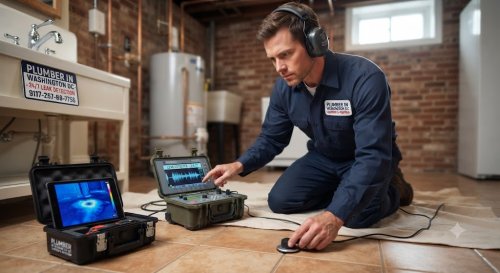
A waterproof, self-leveling HD camera attached to a rigid fiber-optic reel is inserted through the cleanout into the main sewer line. As the camera travels toward the street connection, the technician views real-time, high-resolution footage on an external monitor.
Step 3: Precision Diagnosis and Sonde Locating
The camera head contains an integrated radio transmitter (sonde). If the camera encounters a break, belly, or heavy root mass, the plumber uses an above-ground electromagnetic receiver wand to pinpoint the exact depth and physical location of the problem in your yard, driveway, or floor slab.
Step 4: Transparent Estimate and Repair Strategy
Based on the footage, the technician determines whether the line requires mechanical cleaning, trenchless rehabilitation, or traditional excavation. You receive an itemized proposal detailing the necessary scope of work.
Step 5: Targeted Execution
-
For standard clogs: High-pressure hydro jetting (3,000–4,000 PSI) scours the pipe walls clean of grease, sludge, and minor root intrusion.
-
For damaged pipes: The crew performs either a trenchless repair (such as Cured-In-Place Pipe lining or pipe bursting) or traditional excavation to replace the broken section.
Step 6: Final Quality Verification and Testing
After clearing or repairing the line, the technician runs the camera through a second time to ensure the pipe is clear and water flows without resistance. The system is load-tested with running fixtures.
Tools Professionals Use for Sewer Diagnosis and Repair
Modern plumbing relies on specialized technology to eliminate guesswork, avoid unnecessary excavation, and minimize property damage.
-
Fiber-Optic Sewer Cameras: High-definition, self-leveling cameras equipped with LED arrays that travel up to 200 feet inside pipes, revealing scale, root webs, hairline fractures, and structural collapses.
-
Hydro Jetting Systems: Heavy-duty machines that pump water through specialized reverse-thrust nozzles at 3,000 to 4,000 PSI, slicing through roots and emulsifying thick grease without damaging sound pipes.
-
Electromagnetic Pipe Locators: Receiver wands that detect frequencies emitted by camera sondes, revealing the exact path, orientation, and subterranean depth (down to the inch) of the damaged pipe.
-
Pneumatic Pipe Cutters and Expanders: Specialized mechanical tools used in trenchless pipe bursting to shatter the old, deteriorated pipe while simultaneously pulling through a new, seamless High-Density Polyethylene (HDPE) line.
-
CIPP Lining Inversion Drums: Equipment that uses air or water pressure to invert an epoxy-saturated felt tube into the damaged host pipe, curing it in place to form a jointless "pipe-within-a-pipe."
How Long Does Sewer Line Repair Usually Take?
The duration of a sewer project depends on accessibility, pipe depth, weather, and the repair method required.
-
Standard Hydro Jetting or Cabling: 1 to 3 hours. Restores flow quickly for solid or soft blockages.
-
Trenchless Pipe Relining (CIPP): 4 to 8 hours. The epoxy felt liner must cure, which can be accelerated using hot water or UV light systems.
-
Trenchless Pipe Bursting: 1 to 2 days. Requires digging small insertion and receiving pits, but avoids full-trench excavation.
-
Traditional Open-Trench Excavation: 2 to 4 days. Involves backhoes, trench shoring, removing damaged pipe, installing new PVC/cast iron, backfilling, and soil compaction.
-
Municipal Permitting and Inspections: May add 1 to 3 days to the total project timeline if work extends into the public right-of-way.
Sewer Repair Cost Factors
Because underground site conditions vary, honest plumbing companies avoid giving flat, blind estimates over the phone without conducting a camera inspection first.
Key factors influencing the overall cost include:
-
Diagnostic Camera Inspection: The initial investment required to locate the issue and determine pipe condition.
-
Depth and Accessibility: A pipe buried 3 feet under an open lawn requires far less labor and equipment to reach than a pipe buried 10 feet deep under a concrete basement floor or paved driveway.
-
Method of Repair (Trenchless vs. Excavation): Trenchless lining often has a higher upfront equipment/material cost but saves thousands of dollars in post-repair landscape, concrete, and interior restoration.
-
Permitting and Municipal Requirements: Working near public utility easements or beneath public roadways requires city permits, traffic control, and municipal sign-offs.
-
Emergency Dispatch vs. Standard Hours: Repairs required during holidays, weekends, or late-night hours carry different labor rates than scheduled daytime repairs.
Note: Plumbing repair costs vary depending on the severity of the problem, accessibility, materials required, emergency service, property type, and local labor rates.
10 Hidden Truths Homeowners Should Know About Sewer Lines
Understanding how underground plumbing works can save you from costly mistakes and unexpected property damage:
-
Chemical drain cleaners do not work on main lines. Liquid chemical cleaners sink into standing water, dilute, and produce heat that can soften PVC or accelerate cast iron corrosion without clearing the blockage.
-
"Flushable" wipes are not flushable. Wipes do not break down like standard toilet paper. They remain intact, snag on minor pipe imperfections, and create dense blockages.
-
Homeowners insurance usually excludes exterior lines. Standard policies typically do not cover wear-and-tear sewer lateral repairs unless you have an optional "Water and Sewer Line Protection Rider."
-
Tree roots return until the pipe is sealed. Snaking simply cuts an opening through the center of a root bundle. Roots will grow back thicker within months unless the pipe is structurally sealed or replaced.
-
A running toilet can trigger a sewer backup. If your sewer line is partially restricted, a constantly running toilet adds continuous volume that can push the system over capacity, causing a basement flood.
-
Small ground depressions signal active washouts. If a patch of your lawn or driveway begins to sink, escaping sewage is likely washing away supporting subsoil.
-
Hydro jetting requires an intact pipe. Hydro jetting is highly effective for cleaning, but using it on a severely collapsed or broken clay pipe can cause further structural damage. A camera inspection is essential first.
-
Basement backwater valves protect low-lying fixtures. Installing a backwater prevention valve stops public sewer surges from backing up into your basement drains during extreme rain events.
-
Old cast iron scales from the inside out. Cast iron pipes develop heavy rust deposits (tubercles) on their interior walls, catching debris and reducing flow long before the pipe structurally collapses.
-
Annual maintenance inspections save thousands. Catching hair-thin roots or minor scale buildup early prevents emergency backups, property contamination, and costly structural repairs.
15 Common Mistakes Homeowners Make
Avoiding these common mistakes helps protect your sewer system and keep your plumbing operating smoothly:
-
1. Ignoring early gurgling sounds: Treating a gurgling toilet or sink as a harmless quirk instead of an early warning of a restricted main line.
-
2. Flushing paper towels and feminine products: Disposing of non-dispersible paper products down the toilet.
-
3. Washing cooking grease down the kitchen sink: Believing hot water and dish soap will keep liquid grease from solidifying downstream.
-
4. Using mechanical snakes without proper training: Renting heavy-duty drain augers that can crack old pipes or cause severe hand and wrist injuries.
-
5. Planting large trees near the sewer alignment: Placing moisture-seeking trees (like willows, maples, and oaks) directly over the sewer lateral path.
-
6. Overusing standard plunging: Forcing air and water down a clogged fixture when multiple fixtures are backing up, which can push sewage into adjoining drains.
-
7. Delaying repair of slow drains: Waiting until drains stop working completely before calling a professional.
-
8. Hiring unlicensed handymen for underground work: Using uncertified labor that lacks proper diagnostic cameras, trench shoring knowledge, and local code compliance.
-
9. Skipping the post-clearing camera inspection: Assuming the line is structurally sound just because water started draining again.
-
10. Discarding food scraps down garbage disposals: Overloading the drainage system with fibrous vegetables, rice, pasta, and coffee grounds.
-
11. Pouring paint, mortar, or chemicals into utility sinks: Allowing heavy construction compounds to settle and cure inside the main lateral.
-
12. Covering up cleanout caps: Burying exterior cleanouts under concrete, decks, or deep garden mulch, preventing emergency access.
-
13. Over-tightening plumbing cleanout plugs: Stripping plastic or brass threads on cleanouts, making them difficult to remove during emergencies.
-
14. Assuming municipal utilities cover the entire line: Forgetting that property owners are responsible for the entire lateral pipe up to the city main or property line connection.
-
15. Failing to disconnect downspouts from old sanitary lines: Allowing heavy roof runoff during severe storms to overwhelm residential sewer laterals.
15 Essential Sewer and Drain Maintenance Tips
Regular maintenance helps extend the life of your sewer lateral and prevent unexpected backups:
-
Flush only human waste and toilet paper: Treat your toilets as waste disposal systems, not trash cans.
-
Dispose of cooking grease in the trash: Let grease cool in a container, then throw it in the trash instead of pouring it down the drain.
-
Use fine-mesh drain strainers: Place strainers in every tub, shower, and sink to catch hair, soap debris, and food particles.
-
Schedule a professional camera inspection every 2–3 years: Regularly monitor the condition of older clay or cast iron lines.
-
Run hot water after washing greasy dishes: Run hot tap water for 30 seconds after dishwashing to help move fats through branch lines.
-
Know where your main sewer cleanout is located: Keep the cleanout accessible so technicians can reach it quickly during an emergency.
-
Schedule routine hydro jetting for older pipes: Clean heavy scale and minor root growth every two years to prevent full blockages.
-
Keep an updated site utility map: Know the exact path of your underground utilities before starting landscaping or patio construction.
-
Upgrade old fixtures with backwater valves: Install a backwater valve if your property has basement plumbing fixtures below street level.
-
Avoid chemical drain cleaners entirely: Use enzymatic or bacterial drain cleaners that digest organic waste safely without damaging pipes.
-
Clear winter exterior drains: Keep outdoor yard drains and basement stairwell drains free of leaves and winter debris to prevent overflow into the sanitary system.
-
Check basement cleanouts for moisture or odor: Regularly inspect your basement floor cleanout for sewer odors or moisture seepage.
-
Trim back deep-rooting landscape plants: Remove invasive bushes and trees growing close to your sewer lateral.
-
Inspect laundry discharge lint traps: Use a mesh lint trap on your washing machine discharge hose to keep synthetic fibers out of the main line.
-
Address seasonal shifts: Inspect your lower drains after the spring thaw and heavy rainfall seasons when ground shifting and soil saturation peak.
When Should You Call an Emergency Plumber?
Some plumbing issues require immediate, 24/7 intervention to prevent severe structural damage and biohazard contamination:
-
Raw sewage backing up into tubs, showers, or floor drains: Direct health hazard requiring rapid containment and professional extraction.
-
Simultaneous multi-fixture failure: Toilets, sinks, and showers overflowing across the entire property at the same time.
-
Strong sewer gas odor spreading inside the living space: Inhaling concentrated sewer gas containing hydrogen sulfide can cause headaches, nausea, and respiratory distress.
-
Active wastewater bubbling up in the yard: Contaminated water rising to the surface, creating pooling and structural erosion around your foundation.
Frequently Asked Questions
Why is my toilet bubbling when the shower runs?
This happens when air is trapped in the drainage system. A clog or broken section in the main lateral restricts wastewater flow, forcing displaced air backward through the toilet trap.
How do I know if my sewer line is broken or just clogged?
A clog causes drains to back up without creating external lawn symptoms or persistent gas odors. A broken pipe often causes recurring backups after snaking, foul odors indoors, soggy or unusually green patches on your lawn, or ground depressions above the line.
Can hydro jetting damage old pipes?
When performed by a licensed professional using proper pressure settings, hydro jetting is safe for sound pipes. Plumbers always perform a video camera inspection first to verify that the pipe is structurally sound enough for the procedure.
How does a plumber locate an underground sewer break?
Plumbers use a sewer camera equipped with an internal radio transmitter (sonde). As the camera reaches the break, a technician uses an above-ground locator wand to track the signal and pinpoint the exact position and depth of the damaged pipe.
Can tree roots completely destroy a sewer line?
Yes. Tree roots enter through microscopic seams and joint gaps. As they absorb water and nutrients, they expand, cracking the pipe, catching waste, and eventually causing the pipe walls to collapse.
What is trenchless sewer line repair?
Trenchless repair fixes broken pipes without digging a long trench across your yard. Techniques like CIPP (Cured-In-Place Pipe) create a smooth, durable new pipe liner inside the existing damaged host line.
Is a broken sewer line covered by homeowners insurance?
Standard homeowners insurance policies typically exclude gradual wear, root intrusion, and general deterioration of exterior utility lines. Coverage usually requires a specific utility line or service line endorsement.
How long do sewer lines typically last?
Clay pipes generally last 50 to 60 years, cast iron lasts 40 to 60 years, and modern PVC or seamless HDPE lines can last 75 to 100+ years under normal conditions.
Can a clogged sewer line clear itself?
No. Main sewer line clogs caused by grease, foreign debris, or tree roots will not dissolve on their own. They worsen over time as more water and waste back up behind the restriction.
Why do my drains back up only when it rains?
Heavy rain can overload municipal sewer systems, pushing wastewater back toward residential laterals. It can also point to cracked exterior pipes that allow groundwater to enter (inflow and infiltration), overwhelming the system.
Why Choose Plumber Washington DC
When you are facing a severe sewer line issue, you need a dependable, licensed team with the proper diagnostic tools to resolve the problem efficiently.
-
Licensed and Insured Technicians: Our experienced plumbing professionals handle everything from routine main line cleanings to complex sewer excavations.
-
Advanced Diagnostic Video Equipment: We show you the live camera footage of your pipe so you can see the issue clearly before any work begins.
-
Upfront, Transparent Estimates: We provide clear, detailed pricing before starting any repair—with no hidden surprises.
-
Trenchless and Traditional Repair Options: We offer both minimally invasive trenchless repairs and traditional excavation methods tailored to your property's needs.
-
Prompt Local Response: Centrally located to provide reliable residential and commercial plumbing services across Washington DC, Bethesda, Silver Spring, Arlington, and Alexandria.