Why Multiple Drains Back Up in Anacostia | DC Plumbers
Multiple drains backing up in your Anacostia home? Learn the common causes, warning signs, professional fixes, and when to call a local DC plumber.
Multiple Drains Backed Up in Anacostia? Why and What to Do
Picture this: You’re in your Anacostia rowhome on a busy Tuesday evening. You flush the toilet, and instead of a satisfying whoosh, you hear an ominous gurgle. Then you notice water rising in your bathtub. Suddenly, the kitchen sink starts acting sluggish, too. Before long, you have water and sewage backing up in multiple drains across your home or business. It's a plumbing nightmare that can induce immediate panic, and it’s a problem that requires urgent attention in the District.
This kind of widespread plumbing issue is different from a simple sink clog. It indicates a significant problem that is likely located in your home's main sewer line or the city's connection. Homeowners in older neighborhoods like Anacostia, DC, frequently experience this because of the area's mature trees, aging infrastructure, and sometimes combined sewer systems that struggle during heavy rains. You are searching for this because you are stressed, looking for answers, and need to know what you can safely do before calling a plumber in Washington DC.
This practical guide is written by an experienced DC plumber to explain exactly why multiple drains back up, the warning signs, what you can safely try as a temporary fix, the professional repair process, and how to avoid costly emergency calls.
What Is Multiple Drain Backups in Anacostia?
When multiple plumbing fixtures (toilets, showers, sinks, bathtubs) across your Anacostia property cannot drain simultaneously, it indicates a main line blockage or mainline failure. Unlike a single clogged sink, where the problem is limited to that specific pipe, this situation means the primary large-diameter pipe that collects waste from all your drains and carries it out to the Anacostia River or city sewage main is blocked.
Common examples include:
-
Flushing a downstairs toilet causing water to bubble up in the nearby shower or laundry sink.
-
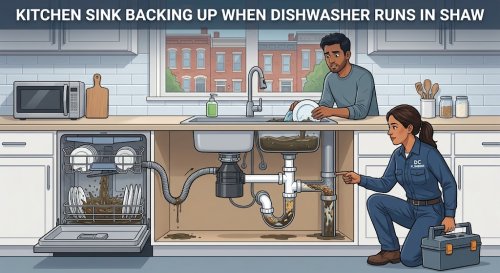
The kitchen sink backing up when you run the dishwasher.
-
Musty or sewage smells from all bathroom drains.
-
Sluggish drainage throughout the entire house.
Why Does This Plumbing Problem Happen in Anacostia?
Anacostia’s unique landscape and older homes contribute to some very specific causes for main line failure.
Aging and Outdated Pipes
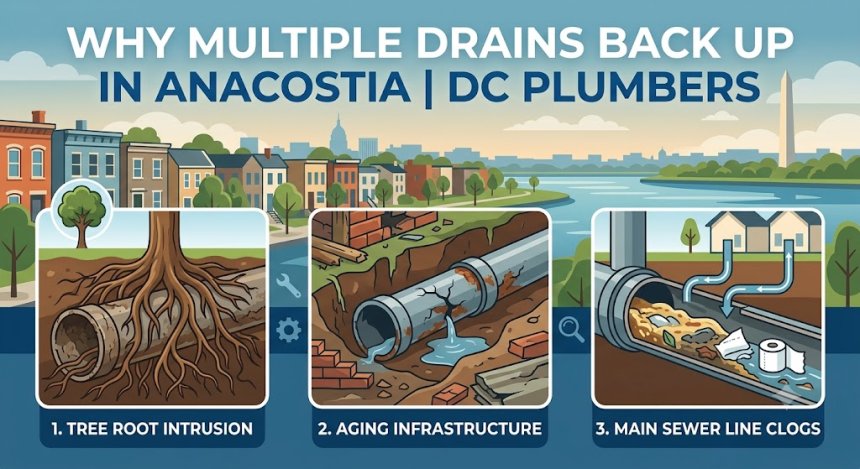
Many homes in Anacostia were built decades or even a century ago. These properties often rely on original plumbing materials like cast iron and vitrified clay pipes. Cast iron pipes are strong but suffer from internal corrosion and tuberculation (a bumpy buildup) that narrows the pipe diameter and snags debris. Vitrified clay is highly brittle and easily cracks under ground movement or external pressure. Heavy usage or severe weather can cause these weakened lines to collapse or collapse inward, restricting flow entirely.
Tree Root Intrusion
Anacostia is known for its beautiful, mature tree canopy, especially around Anacostia Park and the hills of Ward 8. These large root systems are constantly searching for moisture and nutrients underground. Micro-cracks or loose joints in aging clay sewer lines are perfect entry points. Roots enter, expand rapidly, and act like a net, catching toilet paper, grease, and waste until they create a solid, impassable blockage.
Cooking Grease (FOG) Accumulation
In residential kitchens and commercial businesses alike, a major cause of mainline backups is the improper disposal of fats, oils, and grease (FOG). When poured down the sink, warm grease cools and solidifies inside the mainline, particularly on cold Washington DC nights. This forms a hardened sludge (channeling) that effectively closes off the pipe. Standard plumbing snakes simply poke a small hole through this grease, providing only a very temporary fix.
Sagging or "Bellied" Main Lines
Ground conditions in the District can shift due to soil moisture, historical building settling, and ground vibrations (especially near major roads like Martin Luther King Jr. Ave or Good Hope Road). This can cause a section of the main sewer line to sag or "belly" downwards. Standing water and solid waste collect in this low point rather than flushing out to the city main, causing chronic, repeat clogs.
Signs You Should Never Ignore
Plumbing systems usually provide several subtle warning signs before a full-scale mainline backup occurs. Recognizing these signals can save you thousands in emergency cleanup and repair.
-
Toilet Gurgling or Bubbling: The classic "glug-glug" sound when you run water elsewhere is air being trapped in the main line as water attempts to bypass a partial clog. Voice Search Question: why does my sink gurgle when I flush?
-
Widespread Slow Drains: If all sinks and toilets seem sluggish, the problem isn’t with a single pipe; it’s further down the main line.
-
Water Backing Up in Bathrooms: Sewage and water from upper floors will always seek the lowest possible point, which is often a basement shower or bathroom in Anacostia rowhomes.
-
Foul Seweage Smell: Persistent sewer gas odors (hydrogen sulfide) indoors mean there’s likely a trap that has dried out, but often indicates a cracked sewer main.
-
Water Stains or Damp Foundation: Chronic slow backups can saturate the soil around your foundation, leading to damp walls or unexpected puddles near cleanout ports.
Common Plumbing Problems Related to This Issue
When your mainline is compromised, it can trigger other significant plumbing and structural issues:
-
Burst or Broken Pipes: High pressure behind an impassable blockage can cause weakened joints or brittle sections of your DC sewer line to fracture.
-
Sewer Line Backups into Finished Basements: Raw sewage flooding a furnished basement apartment is a DC homeowner's worst case.
-
Structural Damage to Foundations: Escaping water from a compromised mainline can erode soil under your foundation, leading to structural settling.
-
Mold and Water Restoration Needs: Chronic moisture, even from slow backups, can breed mold behind baseboards and flooring in Anacostia homes.
Step-by-Step Professional Repair Process
When you call plumber in Washington DC for multiple drain backups in Anacostia, our licensed DC plumbers follow a systematic diagnostic and repair process:
[Step 1: Emergency Inspection & Water Isolation]
                         │
                         ▼
[Step 2: Diagnosis (Stopping the Guesswork)]
                         │
                         ▼
[Step 3: Honest Estimate & Safety Review]
                         │
                         ▼
[Step 4: Repair (Addressing the Root Cause)]
                         │
                         ▼
[Step 5: Testing & Flow Verification]
                         │
                         ▼
[Step 6: Cleanup & Sanitization Check]
                         │
                         ▼
[Step 7: Maintenance Guidance for Future Prevention]
Step 1: Preliminary Inspection
We arrive, assess the severity of the backup, and immediately advise on isolating the water usage across the property.
Step 2: High-Definition Sewer Camera Inspection
A crucial first step. We feed a high-definition, self-leveling fiber-optic camera into your main cleanout. This lets us see exactly why the mainline is blocked—whether it's root intrusion, a grease clog, a collapsed section, or a pipe belly. Guessing can lead to costly misdiagnoses.
Step 3: Upfront Honest Estimate
Based on the camera findings, we provide a clear, transparent cost proposal outlining the necessary repairs—whether targeted cleaning, trenchless lining, or excavation.
Step 4: Professional Cleansing or Repair
We utilize advanced techniques tailored to Anacostia’s historic infrastructure:
-
Hydro-Jetting: High-pressure water scouring strips away grease, scale, and heavy root masses clean, restoring the pipe's interior without damaging old clay or cast iron.
-
Mechanical Augering: Motorized cutting heads slice through stubborn solid obstructions.
-
Trenchless Sewer Repair (or Lining): Creating a seamless "pipe within a pipe" without destroying historical landscaping or sidewalks.
-
Spot Repairs/Replacement: Precision excavation when pipes are severely collapsed.
Step 5: Post-Repair Verification and Flow Testing
We rerun the sewer camera after cleaning or repair to verify the blockage is 100% gone and the line is sound, then perform widespread fixture flow tests.
Can You Fix It Yourself?
Dealing with multiple drain backups is rarely a safe or effective DIY project. This is a major structural plumbing issue affecting your mainline.
Safe DIY Actions (Damage Control)
-
Stop Water Usage: Immediately cease flushing toilets, running dishwashers, washing machines, or taking showers across the entire property.
-
Use a Plunger (Carefully): Gently plunging a single fixture like a bathroom toilet can sometimes provide temporary relief for a partial mainline clog, but avoid forceful plunging that can fracture weakened joints.
-
Chemical Drain Cleaners: DO NOT USE THESE. Caustic chemical drain openers will not clear heavy main line grease or root blockages. In old Anacostia cast iron or clay pipes, these chemicals generate immense heat, eat away at pipe walls, damage fittings, and can cause hazardous chemical splashes or gas in lower fixtures.
When Professional Plumbing Is Necessary
Mainline clogs or failures involve toxic wastewater, high pressure, and underground infrastructure. DIY attempts, especially using rented high-capacity snakes or caustic chemicals, carry extreme risks of:
-
Catastrophic pipe failure/collapse.
-
Sewage blowback into your face.
-
Gas line breaches.
-
Structural soil instability.
Tools Professionals Use
A professional plumbing company uses industrial-grade equipment to diagnose and repair mainline issues accurately:
-
Sewer Inspection Cameras: Allow us to visually inspect your DC mainline without digging.
-
High-Pressure Hydro-Jetting Systems: Industrial units that scour lines clean, restoring them to original diameter. Explain: Hydro-jetting uses only pressurized water, not abrasive cleaners.
-
Motorized Sewer Augers: Motorized units with steel cables and hardened cutting heads to slice through roots and solid grease.
-
Electronic Pipe Locators & Pressure Testing Equipment: Pinpoints precise pipe locations and tests for hidden mainline splits.
How Long Does the Repair Usually Take?
A complex mainline issue is rarely fixed in an hour. Timelines depend heavily on the severity of the problem and the accessibility of your line:
-
Standard Camera Diagnostic & Snake Cleaning: 1 to 3 hours.
-
Full Mainline Hydro-Jetting: 2 to 4 hours.
-
Trenchless Sewer Repair (Lining): Typically a 1–2 day project, as it involves minimal excavation and creates a lasting solution.
-
Excavation and Full Pipe Replacement: Could be a 2–5 day project, depending on the length and depth of the run and Ward 8 permit requirements.
Cost Factors in Anacostia Plumbing
Voice Search Question: why is my water pressure suddenly low? Low house-wide pressure can sometimes be a precursor to a main supply line issue or severe drain backup attempt. We believe in transparency. Plumbing repair costs in Washington, DC vary depending on several practical factors:
-
Diagnostic and Inspection Fees: The cost to perform necessary sewer camera diagnostics.
-
Parts and Materials Needed: New pipe sections, lining materials, cleanout caps.
-
Labor Hours and Emergency Charges: Our master plumbers are licensed DC professionals; emergency after-hours dispatch may carry a surcharge.
-
Replacement vs. Repair: Installing a permanent trenchless solution is different from a targeted cleaning.
-
Ward 8/DC Water Permit Costs: If repairs extend into the public space (like the street or sidewalk) near Martin Luther King Jr Ave or the Anacostia River, specific DC permits and traffic control are required.
Plumbing repair costs vary depending on the severity of the problem, accessibility, materials required, emergency service, property type, and local labor rates. We provide clear estimates before beginning any work.
Hidden Truths Homeowners Should Know
Chronic plumbing neglect can lead to astronomical emergency bills in Washington, DC:
-
Neglected mainlines are not covered by insurance: Standard homeowners insurance generally excludes damage from sewer backups caused by wear-and-tear or long-term neglect, such as ignoring tree roots.
-
Roots are not a one-time issue: Rented snakes trim roots; only professional hydro-jetting or lining provides long-term protection.
-
Small leaks become expensive repairs: A subtly dripping mainline cleanout can undermine foundation soil, costing tens of thousands to stabilize.
-
Annual maintenance saves money: A yearly sewer camera check catches minor root or grease buildup before it causes an emergency.
-
Hard water shortens fixture lifespan: Dissolved minerals scale internal faucet components, leading to stiff handles and early joint failure.
15 Common Mistakes Anacostia Homeowners Make
When facing widespread plumbing issues in older properties, these mistakes can significantly compound your problem:
-
Ignoring Warning Signs: Thinking a gurgling toilet is just low water pressure.
-
Using Caustic Chemical Drain Cleaners: Eating away at aging metal pipes and failing to remove roots or grease.
-
Flushing Wipes: Even "flushable" wipes do not disintegrate and are DCs #1 main line clog source.
-
Pouring Cooking Grease Down Drains: Grease solidifies in cold DC pipes, creating impassable sludge.
-
Waiting Until Emergencies: Postponing minor mainline cleanings until you have sewage in your basement rowhome.
-
Ignoring Water Pressure Problems: High city water pressure strains aging fixtures continuously.
-
Hiring Unlicensed Plumbers: DC permits and older Ward 8 infrastructure require licensed DC Master Plumber expertise.
-
Skipping Annual Inspections: Never running a camera through original Ward 8 clay lines.
-
Leaving Exterior Cleanouts Broken or Uncovered: Allowing gravel, soil, or autumn leaves to enter your mainline.
-
Planted Trees Near Sewer Laterals: Large trees over older clay lines are a guarantee of root intrusion.
-
Choosing Contractors Based Solely on the Lowest Phone Quote: Low quotes often hide significant diagnostic and equipment fees.
-
Using the Wrong Pipe Materials During DIY Reno: Installing undersized or mismatched drains during basement apartment additions.
-
Over-tightening Plumbing Fittings: Stripping threads on vintage brass valves during simple repairs.
-
Flushing Tampons or Sanitary Products: Non-disintegrating products are a massive clog risk.
-
Disconnecting Roof Gutter Lines improperly: Gutters should never be connected to the sanitary sewer line in older DC homes.
Maintenance Tips for Anacostia Main Lines
DCs unique climate and tree cover require proactive mainline care:
Everyday Best Practices
-
Mesh Strainers: Use mesh strainers in all sinks and tubs to catch hair, food scraps, and solid waste.
-
Collect Kitchen Grease in Containers: Warm grease cools in Ward 8 pipes; throw it in the trash, not the sink.
-
Watch What You Flush: People Also Ask: is it okay to flush wipes? No, wipes do not dissolve and are a primary cause of mainline failures.
-
Run Hot Water Weekly: Pour boiling water followed by a short burst of cold water down seldom-used drains (like a basement rowhome shower) weekly.
Seasonal & Long-Term Preventative Care
-
Check Exterior Ward 8 Cleanouts: Ensure exterior mainline cleanout caps are tight before autumn leaves fall.
-
Annual Camera Inspection: Recommended for any home over 30 years old, particularly if you are in Ward 8 near mature trees.
-
Enzymatic Mainline Treatments: Occasional bio-enzymatic drain cleaners eat away at organic grease safely without chemical heat.
-
Consider Hydro-Jetting: For chronic, but manageable grease or root issues, scheduled high-pressure water jetting is Ward 8's most effective mainline cleaning technique.
When Should You Call an Emergency Plumber?
Call an emergency plumbing service immediately if you encounter any of these dangerous situations:
-
Raw Sewage Flooding in Basements: Immediate cleanup and mainline isolation are critical biohazard steps.
-
Whole-House Backup with No Drains Working: Your mainline has completely failed, presenting toxic risks.
-
Gas odors, concerns, or hissing sounds: Gas concerns require DC Fire and Pepco immediately, as licensed gas service is offered by some plumbers.
-
Flooding from Burst Supply or Drain Lines: Uncontrolled water flow from mainline cleanouts or joint failures.
Frequently Asked Questions
Why is my bathroom toilet gurgling when I shower?
This is a classic sign of trapped air in a restricted mainline, likely caused by a partial grease or tree root blockage. It means air is being forced up through the toilet’s P-trap due to pressure from the shower drainage attempt.
How much does leak detection cost in DC?
Plumbing repair costs vary depending on the severity of the problem, accessibility, materials required, emergency service, property type, and local labor rates. We provide clear, upfront estimates before beginning work.
Can plumbing leaks increase my water bill?
Yes, dramatically. A subtly cracked sewer main in DCs original infrastructure can waste thousands of gallons, leading to astronomical DC Water bills.
Is hydro jetting safe for old DC pipes?
Yes, absolutely, when conducted by licensed DC experts who perform an initial video camera inspection. Hydro-jetting scours grease and tree roots safely without damaging sound pipe material. Explain: Hydro-jetting uses only pressurized water, not abrasive chemical cleaners.
How do I know if my sewer line is broken or just clogged?
A sewer camera inspection is the only definitive diagnosis. However, symptoms like repeat backups after cleaning or foul smells can sometimes suggest structural failures rather than solid blockages.