Why Your Kitchen Sink Backs Up When the Dishwasher Runs
Discover why your kitchen sink backs up when the dishwasher runs, what causes this drainage failure, and how to safely troubleshoot the issue.

Understanding the Dishwasher-to-Sink Drainage Connection
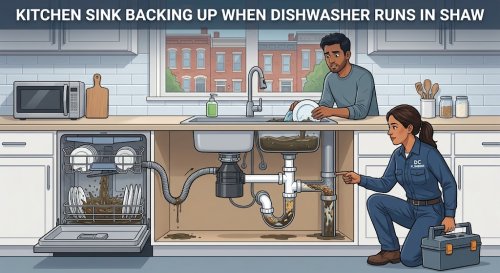
When a kitchen sink fills with dirty water while the dishwasher is running, it is a clear sign that something is interrupting the normal flow of wastewater. To understand why this happens, it helps to look at how a standard modern kitchen plumbing setup is organized beneath the countertop. Dishwashers do not drain directly into the main home sewer line on their own. Instead, a dishwasher's flexible drain hose routes upward and connects to either the inlet nipple on a garbage disposal or a dedicated branch tailpiece located just above the sink trap.
Because the dishwasher discharges water under pressure from an internal pump, it forces water outward quickly. That water relies on gravity and clear downstream piping to flow down through the P-trap, into the branch drain in the wall, and out toward the main building drain. If there is a restriction anywhere along that shared path, the water pumped out by the dishwasher cannot escape fast enough. Taking the path of least resistance, it surges backward up through the sink basket or garbage disposal and pools into the basin.
Primary Causes of a Kitchen Sink Backing Up During a Dishwasher Cycle
Pinpointing the exact cause requires looking at where the blockage or restriction is located. Not all kitchen drain problems are identical, and different symptoms point to different trouble spots.
1. Garbage Disposal Inlet and Chamber Buildup
In many homes, the dishwasher drain hose connects directly to a side inlet on the garbage disposal. Over time, food debris, congealed grease, and soap scum accumulate inside the disposal chamber and around that small inlet port. If the internal passage narrows or becomes partially choked with organic waste, the high-volume output from the dishwasher cannot pass through freely, resulting in an immediate backup into the sink basin.
2. Partial Blockage in the P-Trap or Tailpiece
The P-trap is the curved section of pipe located directly beneath the sink. Its primary job is to hold standing water to block sewer gases from entering the kitchen. However, this U-bend is also where hair, soap residue, and heavy food particles settle. A partial clog in the P-trap might allow a slow trickle of water from a hand-washed sink to drain away, but it will choke under the rapid surge of water delivered by a running dishwasher pump.
3. Branch Drain or Wall-Pipe Restrictions
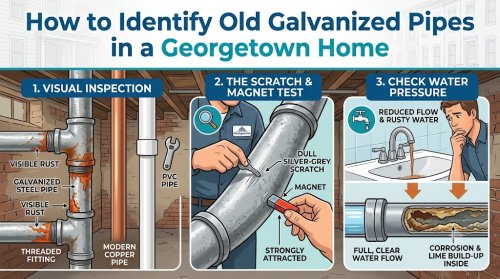
Beyond the P-trap, wastewater enters the horizontal or vertical branch drain hidden inside the wall. In older residential properties throughout Washington, DC—including historic rowhouses with aging cast iron or galvanized steel drainage lines—decades of interior pipe corrosion can significantly reduce the internal diameter of the pipe. When a dishwasher pushes a large volume of water into an already narrowed branch pipe, the water backs up because the downstream infrastructure cannot handle the volume.
4. Improper High Loop or Air Gap Configuration
A less obvious mechanical cause involves the dishwasher drain hose routing itself. Plumbing codes generally require a dishwasher drain line to feature a "high loop"—where the hose is secured as high as possible beneath the countertop—or a physical air gap installed on the sink deck. Without this elevated loop, wastewater from the kitchen sink can easily flow backward by gravity or siphon directly into the dishwasher during normal sink use, or create erratic drainage pressures during a wash cycle.
Safe Homeowner Troubleshooting Steps
Before calling for professional help, a homeowner can safely perform a few basic checks to diagnose or even resolve minor restrictions. Always prioritize safety and avoid using chemical drain cleaners, which can damage older pipes, splash dangerously if standing water remains, and complicate future mechanical clearing.
- Inspect the Disposal Inlet: If you have a garbage disposal, look underneath to ensure the dishwasher hose connection is secure, unkinked, and not visibly blocked at the inlet nipple.
- Run the Disposal: If the sink is empty or draining very slowly, run the garbage disposal with a steady stream of cold water to clear out any loose food debris trapped in the grinding chamber.
- Check the Air Gap: If your sink features an air gap cylinder on top, remove the decorative cap and check for accumulated debris, food particles, or grease plugs that might be choking the vent hole.
- Test Drainage Speed: Observe how the main sink basin drains water on its own without the dishwasher running. If the sink drains sluggishly on its own, the restriction is likely located further down in the trap or branch line rather than exclusively within the dishwasher hose.
Never attempt to force rigid plumbing snakes or mechanical augers through complex fixtures without understanding how the internal components are assembled, as improper tool use can crack porcelain, damage plastic slip joints, or puncture flexible lines.
Professional Diagnostic and Repair Options
When basic homeowner checks do not resolve the backup, professional intervention is necessary to identify the root cause. Plumbers utilize several targeted diagnostic and repair methods depending on the severity and location of the obstruction.
Professional Snaking and Augering
A professional plumber will often detach the P-trap to inspect for physical obstructions or run a motorized drain auger through the wall branch drain. Unlike consumer-grade manual tools, professional cables can reach deep into the secondary drainage lines to break apart hardened grease, soap buildup, or compacted food waste.
Hydro Jetting for Grease and Scale
In kitchens where heavy grease usage or decades of interior pipe scale have severely narrowed the drain lines, mechanical snaking may only punch a small hole through the blockage. High-pressure hydro jetting uses specialized streams of water to scour the entire interior circumference of the pipe, completely removing grease, scale, and debris and restoring the pipe to its original diameter.
Drain Line Repair and Replacement
If an inspection reveals structural damage, such as a collapsed pipe, severe bellied sections in underground or basement drain lines, or advanced corrosion in older metal piping, targeted pipe replacement may be required. In older multi-story buildings or rowhomes, repairing shared stack connections requires careful coordination to ensure proper venting and slope are maintained.
Factors Influencing Repair Costs and Complexity
Plumbing repair costs for kitchen drainage failures vary widely based on several practical factors:
- Location of the Blockage: Clearing a localized clog in a P-trap or disposal inlet takes significantly less labor than clearing a deep branch line or main sewer stack.
- Pipe Material and Condition: Working with modern PVC piping is straightforward, whereas working with fragile, corroded, or historic piping materials requires specialized handling and often a larger repair scope.
- Accessibility: Drain lines hidden behind finished basement drywall, beneath concrete slabs, or inside tightly packed kitchen cabinetry require more time and care to access without causing collateral cosmetic damage.
- Equipment Requirements: Standard snaking involves basic labor, while advanced diagnostic camera inspections or high-pressure hydro jetting involve specialized machinery.
A clear, professional estimate should always differentiate between basic diagnostic fees, standard clearing labor, and any potential repair or replacement parts needed to fix underlying structural defects.
Frequently Asked Questions
Can I use chemical drain cleaners to fix a dishwasher backup?
Chemical drain cleaners are strongly discouraged. If the chemicals fail to clear the blockage, corrosive liquid can remain trapped in the pipes or disposal unit, creating a severe splash hazard when a plumber attempts manual repairs. Furthermore, harsh chemicals can degrade older metal pipes and rubber seals.
Why does the water only back up during the dishwasher's drain cycle?
A dishwasher pump discharges water at a much higher volume and rate than a standard kitchen faucet or hand-washed sink basin. A partial clog or narrowed pipe may handle slow-moving gravity drainage from the sink, but it cannot process the heavy surge delivered by the dishwasher pump.
Could a clogged garbage disposal cause my sink to back up?
Yes. The garbage disposal chamber sits directly in the drainage path of the sink. If food waste clogs the lower grinding chamber or blocks the side inlet where the dishwasher hose attaches, water from both the sink and the dishwasher will fail to drain properly.
What is a dishwasher high loop and why does it matter?
A high loop is an installation method where the flexible dishwasher drain hose is secured to the underside of the countertop as high as possible before dropping down to the disposal or tailpiece. This prevents dirty sink water from flowing backward into the dishwasher during heavy sink usage.
When should I call a professional plumber for a kitchen drain backup?
You should call a qualified professional if the backup recurs repeatedly despite minor cleaning, if multiple fixtures in your home are draining slowly or gurgling, or if the water backing up into the sink appears to be sewage rather than clean wash water.
How can I prevent future kitchen sink and dishwasher backups?
Practice good kitchen habits by scraping food scraps into the trash rather than the sink or disposal, running cold water whenever the disposal is active, and avoiding pouring cooking grease, oils, or starchy foods down kitchen drains.